Weather:
- Ha Noi 24oC
- Da Nang 23oC
- Ho Chi Minh 30oC
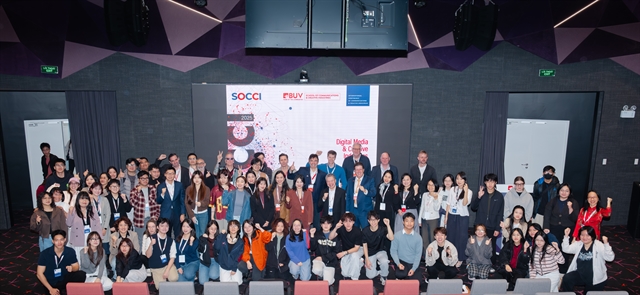
HƯNG YÊN — "Communication and Creative Industries in Contemporary Asia" has taken centre stage at a two-day international conference begain on Tuesday, with academics, practitioners and young researchers gathering to examine how the region’s fast-changing digital landscape is reshaping culture and creativity.
The event, hosted by BUV's School of Communication and Creative Industries (SOCCI), has attracted scholars, practitioners and emerging researchers from Việt Nam and from territories and countries including the United Kingdom, Hong Kong (China), the Philippines and Finland.
The conference aims to foster dialogue on the cultural, social, political and economic implications of digital communications in shaping the future of creative economies across Asia, among which are Việt Nam and ASEAN countries, according to Paul David John Moody, Head of SOCCI.
Speaking at the conference, Professor Rick Bennett, BUV Deputy Vice-Chancellor & Vice-President, highlighted the importance of creative industries in Việt Nam, particularly in children identity, parenting and higher education.
According to the professor, the National Strategy for the Development of Cultural Industries from 2020 to 2030 shows how the Vietnamese Government value the creative industries.
"And once you get in a country like here, once you get the Government really endorsing it and supporting it, that's a great mechanism to be able to say to parents, look, your Government believes in this and so therefore we need to back that up and show why it's so valuable," said Bennett.
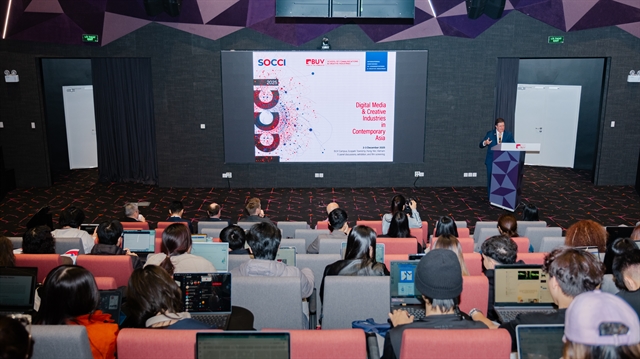
Cultural identity and representation on digital platforms, new content consumption models and balancing local versus global content were among the topics of discussion at the event.
Emerging trends in the communications sector, including emerging trends shaped by digital transformation (AI, VR, AR), new business models of subscription services and influencer marketing and globalisation in relation to communications and creative economies were also examined.
In his presentation on the role of communication and creative industries in soft power, Lê Quốc Vinh, Chairman and CEO, Le Group of Companies President, CSMO Vietnam, said soft power is not built by the Government alone.
"It is crafted by storytellers, creators, brands, journalists, students – by all of us who carry the story of Việt Nam to the world... and creative industries turn culture into influence and economic value," he said.
Participants also highlighted the role of user-generated content, digital consumption behaviours and purpose-driven marketing along with digital communication economics and policy, including the impact of regulation on intellectual property rights, the digital media economy and intersections with other sectors of tourism, education and advertising.
The event proceedings will be published with an ISBN registration and will feature more than 30 high-quality research articles in English, according to the organiser.
Independent artists, regulatory bodies and enterprises operating in communications and cultural industries have also contributed exhibitions showcasing books, publications and creative works of notable value.VNS
