Weather:
- Ha Noi 17oC
- Da Nang 23oC
- Ho Chi Minh 27oC
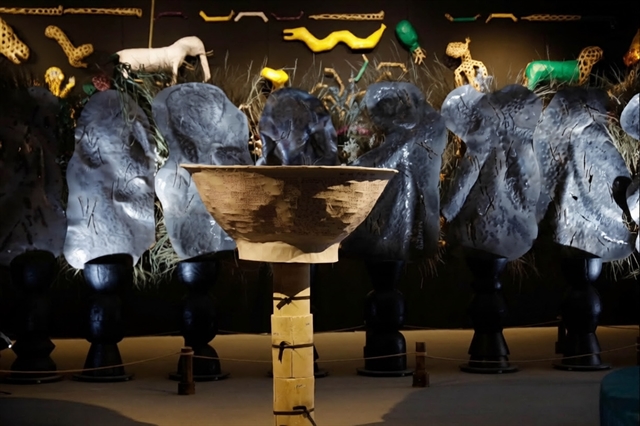
HÀ NỘI — An exhibition titled A Bowl of Love opened on November 12 at the Vietnamese Women's Museum in Hà Nội. Through an interactive ceramic memorial installation and performances, it tells the stories of nearly 350 women who died as a result of gender-based violence.
The art show is a co-production between the bereaved, femicide researchers and artisans from the famous Bát Tràng pottery village to honour and memorialise the women murdered as documented by the press between 2018 and 2024.
In this combination of research, media, organisational collaboration, and participatory art, the organising board aim to enrich international understanding of femicide and contribute to Việt Nam’s efforts to prevent it.
The exhibition is part of the Lost Souls, White Bowls project, which aims to improve the reporting of femicide and inspire reflection and action to end intimate partner femicide in Việt Nam.
The project is carried out by different agencies, including the Institutes of Development Studies (IDS), the Centre for Health and Population Initiatives (CCIHP), the Varan Vietnam, the Vietnamese Women's Museum and Gender-based Violence Prevention Network in Việt Nam (GBVNet).
Femicide, the intentional killing of women and girls with a gender-related motivation, occurs all over the world and is the most extreme manifestation of gender-based violence against women and girls. In most cases of femicide, women are murdered by their partners.
Through a unique collaboration of world-class, award-winning Vietnamese and UK social scientists, artists, documentary filmmakers, heritage ceramists, and activists, the project aims to improve reporting and inspire reflection and action to end intimate partner femicide.
A Bowl of Love combines seven works of contemporary art, traditional craftsmanship, and social science research led by PhD Pauline Oosterhoff, a Dutch medical anthropologist and visual artist. It offers a profound perspective on gender-based violence against women while creating a space for remembrance, sharing, and community connection.
The exhibition does not reconstruct violence through shocking imagery. Instead, the organisers invite visitors to reflect, commemorate, and engage directly through interactive activities.
According to Hoàng Tú Anh, director of CCIHP, the 346 cases documented from media reports do not constitute official national statistics; rather, they represent real people and actual lives. Bringing these stories to light underscores the urgent need to identify and prevent gender-based violence.
"We hope that everyone leaves the exhibition with something they can do: listen when someone reaches out; speak up against control and violence; or help someone in danger access support," she said.
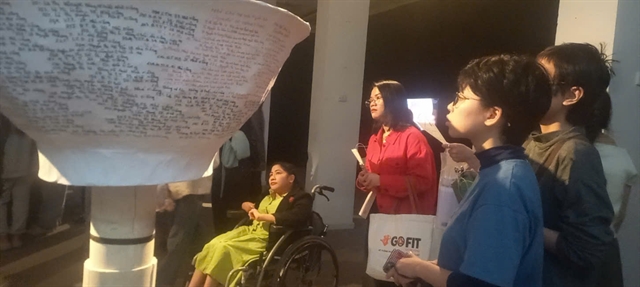
The centrepiece of the exhibition is a large memorial bowl, inscribed with the names and place of death of 346 murdered and suicide women, urging people to better recognise responsibilities to protect women from violence. For behind every statistic lies a human life, and behind every silence may lie a pain that needs to be heard and understood.
Traditionally associated with family meals, care, and togetherness, the bowl – when placed within the context of this exhibition – also evokes trauma, loss, and lives that deserve to be heard.
The symbolic power of the bowls in relation to femicide is enhanced by Vietnamese memorial rituals: bowls are used to burn incense, and the smoke is believed to connect the living and the dead.
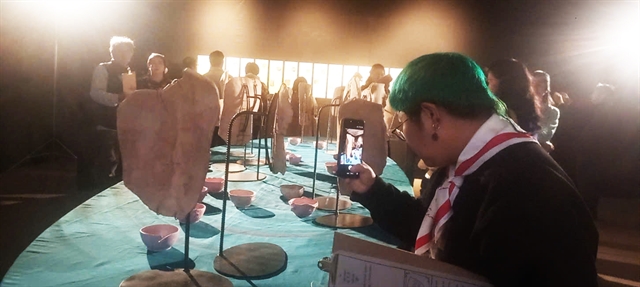
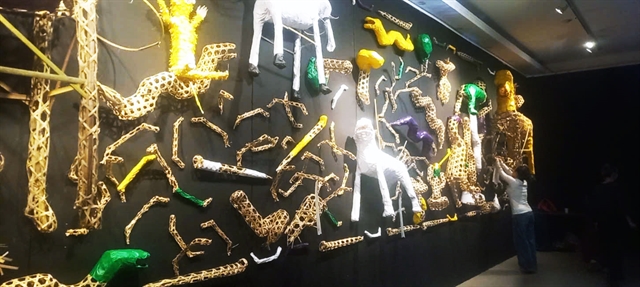
Additionally, Bát Tràng ceramic clay is used to capture the imprints of women’s backs, alongside the stories they carried with them. Materials such as silk, metal, wood, papier-mâché, bamboo frames, and votive paper offerings are also employed in innovative ways, forging a diverse artistic language.
Sixteen women of different backgrounds, such as traders, lawyers, reporters, researchers, social workers and victims of violence, join their hands in producing works of this exhibition. They will take turns presenting at the museum to talk with visitors.
They make ceramic backs and bowls of their own and were characters of a short film by Nguyễn Ánh in which they share stories and opinions about femicide.
Nguyễn Thị Tuyết, director of the Vietnamese Women’s Museum, said that the exhibition reflects the museum’s mission to capture the stories and the pulse of contemporary life. Through installation art and familiar cultural elements, the museum aims to create a forum that connects the public, fosters understanding, and encourages collective action toward positive change.
After their visit, people are asked to write a wish for the femicide victims in cards and hang them at the place. By the end of the exhibition on November 30, the cards will be burnt in the big bowl at a pagoda so that the wishes can be received.
