Weather:
- Ha Noi 28oC
- Da Nang 28oC
- Ho Chi Minh 28oC
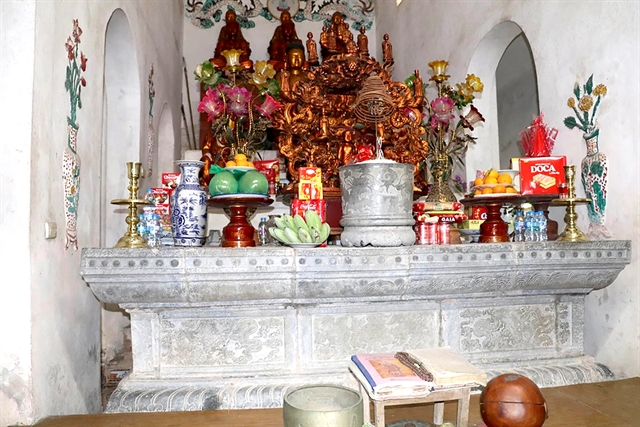
NINH BÌNH — Nestled within the serene grounds of Thượng Nương Pagoda in Ninh Bình Province, the Long Hoa Stone Altar has witnessed more than six centuries of history.
Carved in 1364 during the Trần Dynasty (1225–1400) and recognised as a National Treasure in 2026, it is not only the oldest surviving Buddhist stone altar in Việt Nam but also a striking example of how cutting-edge technology is helping protect the nation's cultural heritage.
Its recognition as a National Treasure not only honours one of Việt Nam's finest examples of medieval stone sculpture but also highlights a broader shift in heritage conservation, where digital technology is becoming an essential partner in preserving the country's cultural legacy.
Built during the Trần Dynasty (1225–1400) and later restored under the Lê Trung Hưng period (1533–1789) and the Nguyễn Dynasty (1802–1945), Thượng Nương Pagoda remains an important historical and architectural monument. At its heart sits the Long Hoa Stone Altar, an exceptionally rare Buddhist altar whose intricate carvings have survived remarkably intact after 660 years.
Around 100 Buddhist stone altars have been identified across Việt Nam, yet few match the Long Hoa Stone Altar in terms of age, craftsmanship and historical significance. Its elaborate decorative programme features dragons, clouds and other symbolic motifs executed with remarkable precision, alongside inscriptions that offer valuable insights into history, religion, epigraphy and the evolution of both Chinese and Nôm scripts.
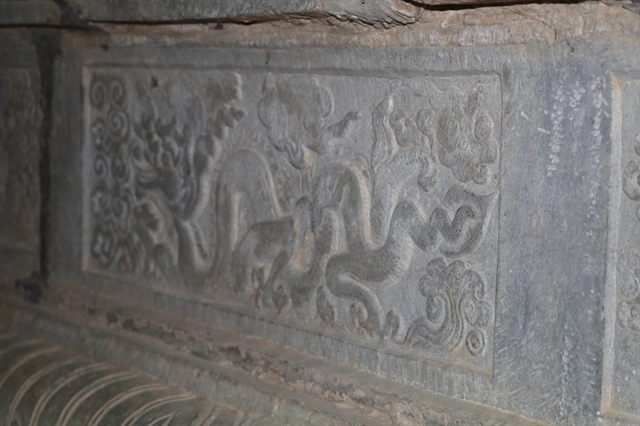
According to Lê Thị Khánh Ninh, deputy head of the History and Culture Research Division at the Ninh Bình Museum, the altar is an original, one-of-a-kind artefact that occupies a unique place in the nation's artistic heritage.
Beyond its role as a sacred object, the altar serves as an important reference for researchers studying medieval stone carving, Buddhist architecture and traditional aesthetics. Its harmonious composition and sophisticated ornamentation demonstrate the exceptional craftsmanship achieved during the Trần period.
Recognition as a National Treasure has also prompted renewed efforts to ensure that the monument is protected using modern conservation approaches.
Deputy Chairman of the Liêm Hà Commune People's Committee Lại Trường Giang said local authorities have worked closely with heritage specialists to strengthen security and management measures immediately after the altar received its new status.
A surveillance camera system has been installed around the display area to enhance protection of the priceless artefact, while public awareness campaigns encourage local residents to take pride in safeguarding their shared cultural heritage.
Equally significant is the commune's investment in creating a three-dimensional digital record of the stone altar. High-resolution 3D documentation and digital archiving are expected to support long-term conservation, academic research and data preservation, while making it easier to introduce the treasure to wider audiences through digital platforms.
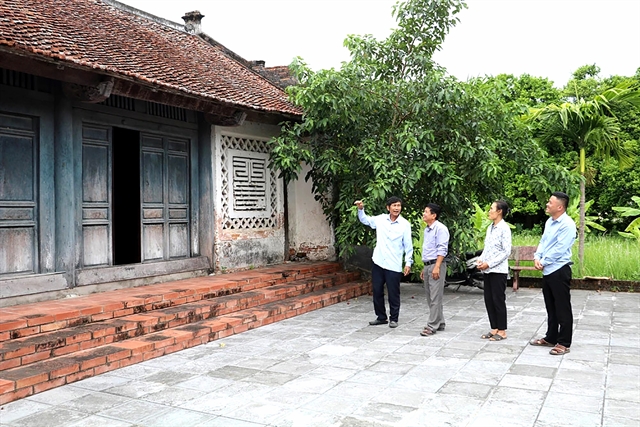
The combination of advanced documentation techniques and traditional conservation reflects Việt Nam's growing emphasis on applying science, technology and digital transformation to cultural heritage. Rather than replacing conventional preservation methods, these tools provide an additional layer of protection, ensuring that invaluable artefacts can continue to be studied even as time inevitably leaves its mark on the originals.
The Ninh Bình Museum is also compiling a publication on the province's National Treasures, introducing their historical significance while expanding access to reliable research for scholars, students and visitors alike.
For the community surrounding Thượng Nương Pagoda, however, the altar represents far more than an archaeological masterpiece.
Representative of the Tam Tứ Hamlet Heritage Management Board, Hà Văn Cường, said the pagoda and local residents have long regarded the altar as a cultural symbol closely tied to the area's identity.
Despite the passage of centuries, many of its original carvings remain clearly visible, preserving vivid evidence of the remarkable skills of ancient stone artisans. Local people continue to help care for the monument while introducing younger generations the stories and traditions it embodies.
Looking ahead, authorities plan to integrate the Long Hoa Stone Altar more closely into educational programmes, scientific research and sustainable cultural and spiritual tourism. By combining community engagement with digital innovation, they hope the centuries-old masterpiece will continue inspiring visitors, researchers and future generations.
In doing so, the Long Hoa Stone Altar demonstrates that protecting heritage today is no longer simply about preserving the past. It is equally about embracing new technologies that allow history to remain accessible, meaningful and alive in an increasingly digital world. — VNS
