Weather:
- Ha Noi 28oC
- Da Nang 26oC
- Ho Chi Minh 29oC
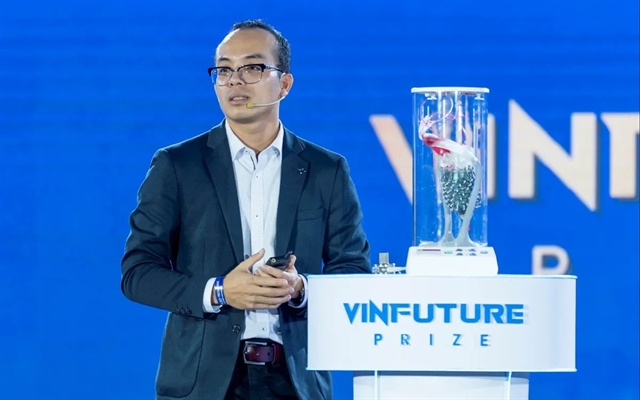
Associate Professor Đỗ Thanh Nhỏ, director of the Medical Robotics Laboratory at the University of New South Wales, Australia, is developing a soft artificial heart that can replicate the motion, pressure and blood flow of a real organ with striking fidelity. In an interview with Nhân Dân (The People) newspaper, he discussed his research journey and his ambition to bring the technology into clinical use.
You began as an engineering student in Việt Nam and are now working at the forefront of biomedical robotics. What shaped your view that technology ultimately has to serve people?
I studied mechanical engineering in HCM City, then went abroad and later worked on surgical robotics for my PhD. Along the way, I had the chance to work with patients and clinicians firsthand, and I also saw how uneven access to healthcare can be.
That stuck with me. It made me realise that technology only really matters if it solves a real problem for someone.
In this field, being technically correct isn’t enough. If a device isn’t safe, or doctors find it difficult to use, or it doesn’t fit into how hospitals actually work or it’s simply too expensive, then it hasn’t done its job.
So for me, the idea that technology should serve people isn’t just words – it’s something I build into every project from the very beginning.
When you started working on a soft artificial heart, what were the toughest challenges in turning that idea into something real?
The biggest challenge was getting different disciplines to speak the same language. Engineers, materials scientists and clinicians all look at the same problem in very different ways.
To move forward, we had to anchor everything to clinical outcomes - what can be measured, what actually matters in practice - and make sure doctors were involved in design decisions from early on.
Technically, there are a few major hurdles. One is materials - they need to be soft and flexible, but also durable and safe for use with the body.
Another is replicating how the heart actually works. It’s not just a pump; it’s a very complex system where contraction and relaxation have to be tightly coordinated.
Then there’s the integration problem - combining soft artificial muscles with control systems that can respond reliably under different conditions, while maintaining pressure, blood flow and the heart’s three-dimensional movement.
One of the hardest things researchers have tried to solve for decades is recreating the heart’s layered muscle structure and synchronised motion. That’s still incredibly challenging.
We’ve never approached it by trying to 'copy' the heart visually. Instead, we model, test, refine - over and over – and we involve clinicians early, so we don’t end up with something that looks elegant on paper but isn’t useful in real life.
What keeps you motivated in a field that is still so complex and uncertain?
The scale of the problem, really. Cardiovascular disease is still one of the leading causes of death. In Việt Nam, it accounts for roughly a third of deaths, and about 1.6 million people are living with heart failure.
Globally, a large share of cases are related to valve disease, which is particularly difficult to treat. Even with advanced devices and procedures, decisions are often based on static images or models that don’t fully reflect how an individual's heart behaves. That can lead to less accurate decisions and higher risks.
What we're trying to do is create something much closer to a patient’s real heart, something that can reproduce its motion, pressure and blood flow. With this, doctors can test devices, plan procedures and even rehearse complex surgeries in a much more realistic way.
Your model is often described as more biologically realistic than traditional devices. What makes it different?
What we're trying to do is not just create a mechanical pump, but to reproduce how heart tissue actually moves and deforms. That means designing materials and structures that mimic how muscle fibres behave, including how different regions of the heart contract. We use soft artificial muscles developed in our lab to achieve that.
We also integrate sensors to track things like pressure and flow in real time. And the control system isn’t fixed - it can adjust depending on simulated physiological conditions.
We’re still some distance from fully replicating a real heart, of course. But the goal is to focus on the aspects that matter most clinically, and build from there.
Some see this not just as a technical advance, but as something with real human impact. Where do you think its biggest value lies?
Scientifically, it helps us better understand how to model living organs and the heart is probably the most complex of them all. Clinically, it gives doctors a platform to train, test procedures and potentially make safer decisions.
But for us, the bigger question is access - how to ensure this kind of technology doesn’t remain limited to a handful of top institutions, and that it can help raise standards in training and care, reduce complications, shorten hospital stays and ease the burden on patients’ families.
How could this kind of model change surgical training or improve outcomes in complex procedures?
We think it could shift how training is done. Instead of relying mainly on experience, doctors and trainees could practise on models that behave much more like real human tissue.
That’s especially important in complex cases. Take mitral valve surgery, for example – we could rehearse different approaches beforehand, assess risks and decide on the best strategy before operating on a patient.
If used properly, that could improve success rates, reduce surgery time and lower the risk of complications.
What about the combination of soft robotics and AI? Do you see that as the next step?
Yes, very much so. Soft robotics makes interaction with living tissue safer, while AI can help with control, personalisation and prediction. Together, they could lead to a new generation of devices that don’t just follow instructions, but can adapt to individual patients.
That said, in healthcare, AI has to be handled very carefully. It needs to be transparent, well-tested and safe. Decisions have to be explainable, and responsibility has to be clear.
When do you know that your research is actually meeting real clinical needs?
It’s usually in the questions doctors ask. At first, they might ask how something works. But when it starts to feel relevant, the questions change – they ask when they can use it, how it fits into their workflow and what standards it needs to meet.
That shift is a very clear signal that the work is moving beyond theory.
Bridging the gap between research and real-world use is always difficult. How are you approaching that?
It’s not just a technical gap – it’s about reliability, safety, reproducibility and cost.
So we try to tackle it on several fronts at once. We work closely with clinicians from the beginning, we standardise how we test and evaluate the system and we collaborate with engineers and industry partners when needed to move towards practical deployment.
As a Vietnamese scientist working internationally, how do you think about connecting your work back to Việt Nam?
For me, it’s about making sure knowledge flows to where it’s needed. That’s not just about bringing technology back, but about building partnerships with hospitals, universities, training programmes, and understanding the local context, including infrastructure and costs.
If these technologies are used in Việt Nam, they need to be adapted to local conditions, not just transferred as they are.
What would you say to young Vietnamese researchers who want to do work that has a real social impact?
I’d say, hold on to the idea of creating something that genuinely helps people, and be prepared to stay with it. Research takes time, and it rarely works out quickly. You also need to think across disciplines, because real problems don’t belong to just one field.
But most importantly, ask yourself early on: who is this work for? Once you know that, it becomes much easier to find the direction, the collaborators and the motivation to turn it into something meaningful. — VNS
