Weather:
- Ha Noi 20oC
- Da Nang 25oC
- Ho Chi Minh 33oC
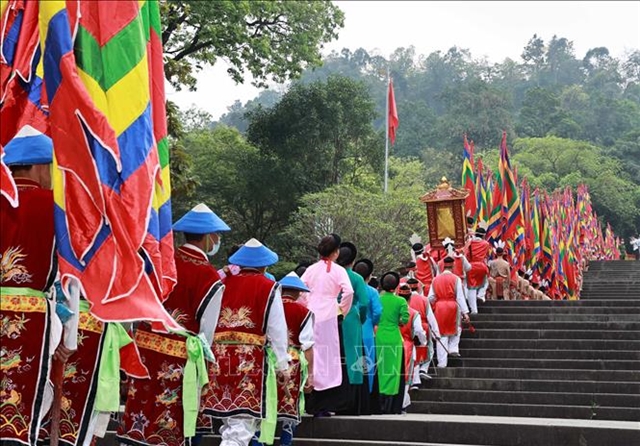
PHÚ THỌ — Spring in Phú Thọ does more than turn a page in the calendar. It puts heritage in bloom, as villages, highland hamlets and sacred sites across Việt Nam’s ancestral land come alive with a dazzling array of traditional festivals, offering visitors rare insights into the spiritual life, customs and cultural memory of the nation’s ethnic communities.
From lowland temples to remote mountain villages, the festive mood of the Lunar New Year sweeps across the province, turning Phú Thọ into a living cultural landscape. Beyond their spiritual value, spring festivals are increasingly opening new opportunities for tourism development, particularly cultural, spiritual and community-based travel.
Spring festivals: a cultural lifeline for tourism
Spring is widely seen as the festival season in Phú Thọ, when celebrations take place in almost every district. Each event represents a distinct cultural space, reflecting local beliefs, customs and the rich spiritual life of communities that have lived on this land for generations.
For the Mường people, one of the province’s oldest ethnic groups, spring festivals carry special meaning. In mountainous areas such as Mường Bi, Mường Vang, Tân Lạc, Yên Lập, Thanh Sơn and Tân Sơn, festivals are a time to strengthen communal bonds and express hopes for favourable weather, good harvests and peaceful village life.
Among the most important Mường festivals are Khai Hạ, Chùa Tiên and Đình Kênh, which emphasise community solidarity and shared aspirations for health, prosperity and harmony.
The Khai Hạ Festival, also known as the going-down-to-the-fields or opening-the-forest festival, is the most representative and widely celebrated. Held in the early days of the Lunar New Year across the four major Mường regions, Bi, Vang, Thàng and Động, the festival marks the start of the agricultural cycle.
Rooted in wet-rice farming traditions, the event is an occasion for the Mường people to give thanks to deities, ancestors and the pioneers who cleared land and founded villages. The rituals bear the imprint of ancient Vietnamese civilisation and highlight the deep connection between people, land and nature.
According to Bùi Văn Khánh, Chairman of Lạc Sơn Commune, the Khai Hạ festival has evolved into an appealing cultural tourism product.
“Visitors can immerse themselves in the festive atmosphere, observe traditional rituals, join folk games and enjoy Mường cuisine,” Khánh said. “Through these experiences, they gain a deeper understanding of the cultural layers that shape each region of Phú Thọ.”
Ceremonial rites during the festival are conducted with solemnity and reverence. The Mường worship earth and water deities, ancestors and village founders, reflecting a worldview that values harmony between humans and nature as well as continuity between past and present, elements that give cultural tourism here its unique appeal.
Beyond Mường traditions, Phú Thọ is also home to Mông, Thái, Dao and Tày communities, each with their own distinctive spring festivals.

In Pà Cò Commune, the Gầu Tào Festival of the Mông people is held each year. Deeply rooted in folk belief, the festival features traditional games, pao ball throwing, khèn (panpipe) performances and vibrant dances. Originally a ritual to pray for health, children and good fortune, Gầu Tào has since become a cultural highlight for visitors seeking authentic highland experiences.
Meanwhile, the Xên Mường Festival of the Thái ethnic group centres on rituals to pray for good harvests and peace for the village. With its ceremonial offerings and communal celebrations, the festival has attracted growing interest from travellers keen to explore ethnic minority cultures.
Reviving heritage, enriching destinations
Alongside the iconic Hùng Kings Temple Festival, Phú Thọ has in recent years invested in restoring and preserving many traditional festivals, gradually affirming their role as vital cultural resources for tourism development.
One such event is the Chúa Gái Procession Festival of Vi Village and Trẹo Village, also known as the He Village Festival, in Lâm Thao Commune, held each year on the eighth day of the first lunar month. The festival is linked to a legend in which the 18th Hùng King sought a husband for Princess Ngọc Hoa, vividly reflecting ancient marriage customs of the Hùng era.
Another cultural highlight is the Du Yến Temple Festival in Chí Tiên Commune, held on the full moon of the first lunar month. The festival commemorates Nguyễn Thị Hạnh, a female general under the Trưng Sisters, and features a unique fairy dance rich in artistic expression. Today, it has become an increasingly popular spiritual and cultural destination in the midland region of Phú Thọ.
Festivals as engines for community tourism
In practice, spring festivals have become powerful drivers of community-based tourism across Phú Thọ’s mountainous areas. During festival periods, visitor numbers rise sharply, boosting demand for accommodation, food services, cultural experiences and local products.
The province has been working to preserve and promote traditional spring festivals in a civilised and sustainable manner, with attention to safety, environmental protection and the safeguarding of indigenous cultural spaces. This approach allows festivals to evolve from purely religious activities into competitive tourism products with long-term value.
Director of the Phú Thọ Department of Culture, Sports and Tourism, Dương Hoàng Hương, said authorities are making concerted efforts to protect the integrity of spring festivals while linking them more closely with tourism development to support socio-economic growth.
In 2026, Phú Thọ aims to build a culturally rich, internationally integrated tourism sector that preserves national identity. During the 2026 Lunar New Year holiday, the province welcomed around 305,000 visitors, up 8.5 per cent year on year, with tourism revenue estimated at VNĐ311 billion, about US$12.5 million.
With its diverse and deeply rooted spring festivals, Phú Thọ holds significant advantages in developing cultural, spiritual and community tourism. Effective festival-based tourism, coupled with cultural preservation, can help create sustainable livelihoods and drive economic transformation in rural and mountainous areas.
Looking ahead, alongside infrastructure investment, product improvement and stronger promotion, Phú Thọ has set a target of welcoming 15 million visitors in 2026, with tourism revenue expected to reach VNĐ16.3 trillion, around $660 million, reinforcing its position as a compelling ancestral and cultural destination in Việt Nam’s northern midlands and mountains. — VNS
