Weather:
- Ha Noi 26oC
- Da Nang 30oC
- Ho Chi Minh 33oC
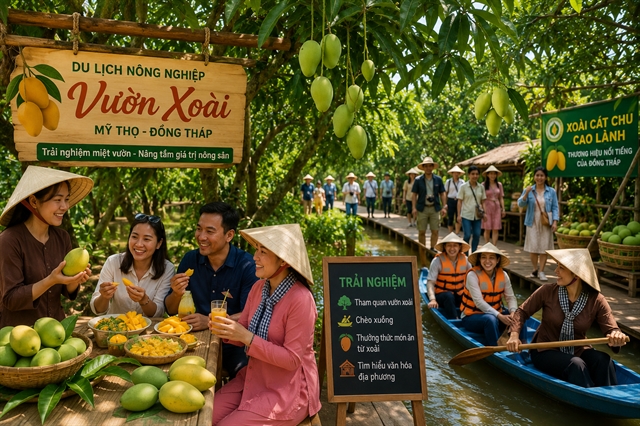
ĐỒNG THÁP — Capitalising on its position as one of Việt Nam’s largest specialised mango-growing regions, the Mekong Delta province of Đồng Tháp is steadily increasing the value of its mango industry through the development of agricultural tourism.
Among the localities leading this approach is Mỹ Thọ Commune, where mango production has been combined with tourism to create new income opportunities for residents while supporting rural economic development.
Making the most of a specialised growing area
Mango is one of the key agricultural products under Đồng Tháp Province’s agricultural restructuring programme.
The province has more than 17,300 hectares of mango orchards, concentrated in localities including Cao Lãnh, Mỹ Thọ and An Hữu.
In recent years, alongside efforts to improve product quality and meet food safety and export standards, Đồng Tháp has gradually shifted from a production-based agricultural model to an agricultural economy.
Under this approach, mangoes are valued not only as commercial produce but also for their ecological, cultural and tourism potential.
On an early July morning at The Mango Trail Farmstay in Mỹ Thọ Commune, visitors leisurely cycled beneath shady mango-lined paths, paddled boats across ponds, fed fish, sampled mango-based dishes and chatted with local residents.
The tranquil orchard setting and hands-on experiences reflecting rural life have become distinctive tourism products, attracting a growing number of visitors.
Hoàng Thị Ngọc Phượng, a visitor from HCM City, said this was the third time her family had returned.
She said they were drawn back not only by the lush surroundings but also by the warmth and hospitality of local people and the authentic cultural experiences of the Mekong Delta.
According to Hồ Thị Thu Thuỷ, manager of The Mango Trail Farmstay, the site covers around 1.4 hectares, with most of the land still dedicated to mango cultivation.
Combining agriculture with tourism has increased economic returns by two to three times compared with selling mangoes alone.
Income from accommodation and visitor experiences, particularly outside the harvest season, helps the farm maintain stable operations and significantly reduces its dependence on seasonal fruit sales.
The tourism site welcomes between 1,000 and 2,000 visitors each year.
At certain times, international tourists account for as much as 70 per cent of total arrivals.
Tourism has also created additional employment opportunities for local residents through tour guiding, introducing mango cultivation techniques and supplying local speciality products.
One of the pioneers in agricultural tourism, Nguyễn Văn Mương has transformed his family home and mango orchard into a venue showcasing local history and culture.
In addition to visiting the Thư Ngọc Hầu Worship House, a provincial historical and cultural relic preserved by his family, visitors can learn about the development of Mỹ Thọ’s specialised mango-growing area while enjoying tea and mango-based dishes.
Mương said many visitors were particularly fascinated by an 80-year-old mango tree, regarded as the second generation of the original "ancestor mango tree" in Mỹ Thọ’s growing region.
He hopes that through simple stories about mango cultivation and local life, visitors will gain a deeper understanding of the area's culture and people.
Adding value from production to visitor experiences
According to Nguyễn Minh Tuấn, chairman of the Mỹ Thọ Commune People's Committee, the commune currently has about 1,310 hectares of mango orchards, producing nearly 11,800 tonnes annually.
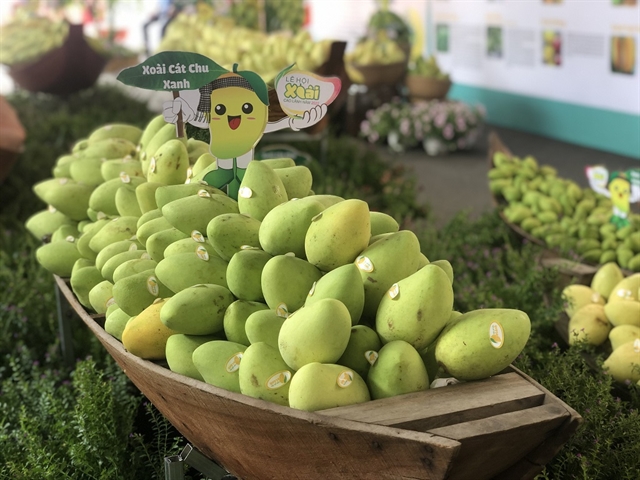
The Cao Lãnh Chu mango variety accounts for around 70 per cent of the total area, while the remainder consists of Hòa Lộc mangoes, green-skinned elephant mangoes and several other varieties.
The locality has been granted 50 growing area codes covering more than 1,134 hectares, facilitating both domestic sales and exports.
Most mangoes are still sold as fresh fruit through traders, while only around 10–15 per cent of production is marketed through partnerships with businesses.
As a result, agricultural tourism is expected to open up new growth opportunities, enhance the value of individual orchards and provide additional livelihoods for local residents.
Tuấn said the commune considered agricultural tourism one of the key solutions for increasing the value of the mango industry while building the Mỹ Thọ mango brand in association with the image of an ecological rural destination.
In the coming period, the commune would encourage residents to improve orchard landscapes, develop visitor reception areas and expand experiential activities such as orchard tours, demonstrations of safe cultivation practices and mango harvesting.
It also planned to develop products under the One Commune One Product (OCOP) programme and strengthen partnerships with travel companies to establish specialised tourism routes.
Alongside tourism development, Mỹ Thọ is promoting the application of science and technology in agriculture, including digital orchard management, off-season flowering techniques and production under VietGAP and organic standards.
Many growers have switched to biological products, reduced the use of chemical pesticides and integrated livestock farming beneath mango trees to improve economic efficiency while protecting the environment.
Trần Phú Hậu's family cultivates 5,000 square metres of organic mangoes, harvesting around 15 tonnes of fruit each year.
The orchard generates annual revenue of approximately VNĐ400 million (US$15,200), with profit margins approaching 70 per cent.
He said the production model not only provided safe, high-quality fruit but also improved the orchard ecosystem, increased product value and made marketing more convenient.
From specialised mango orchards, residents of Đồng Tháp are gradually creating additional value through tourism experiences, services and the promotion of local culture.
Mangoes are no longer simply a source of income from fresh fruit sales but have become a foundation for agricultural tourism, helping increase the value of the industry, raise local incomes and advance the province’s vision of an ecological, modern and sustainable agricultural economy. — VNS
