Weather:
- Ha Noi 34oC
- Da Nang 29oC
- Ho Chi Minh 29oC
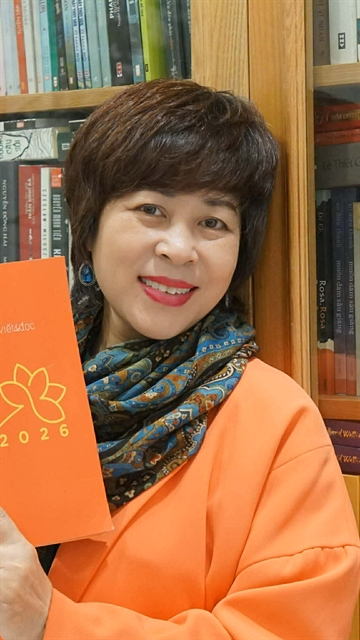
Poetry is entering a new era in which artificial intelligence can generate polished verse in seconds. Yet many writers argue that genuine poetry cannot be programmed. Poet Trang Thanh, journalist and editor at the Việt Nam Writers Association Publishing House, tells Inner Sanctum why lived experience, emotional authenticity and a distinctive human voice remain at the heart of the art form.
Inner Sanctum: You recently served as a judge in a poetry competition, reading thousands of entries. What are your impressions of contemporary Vietnamese poetry?
I was quite surprised by the more than 3,000 poems submitted to the competition, which demonstrated a richness of tone, a wide range of thematic approaches and diverse artistic perspectives.
Among them, rural memories intertwined with reflections on the human condition were perhaps the most prominent sources of inspiration.
However, the most profound impression on me came from works themed around the police force. I was surprised by how richly this subject could be explored and expressed. Above all, I was deeply moved by exceptional poetry collections whose original voices and innovative expressions came from writers whose names have yet to gain wide recognition in literary circles.
Inner Sanctum: Some observers argue that contemporary Vietnamese poetry faces a paradox: the number of poets is increasing, yet genuinely innovative voices with the potential to redefine and advance the genre remain scarce. Do you agree with this assessment?
In the context of poetry competitions, the paradox of having a large number of participants but few truly fresh voices remains a familiar challenge. Although poetry is a demanding and elevated art form, many writers merely add a touch of emotion to rhyming verses to make them sound pleasing to the ear, without offering distinctive perspectives or innovative artistic expression.
The reality is that familiar and appealing phrases still dominate the world of poetry, and many readers become lost in the pursuit of discovery, creation and appreciation of beauty. Writing poetry is difficult and reading it is no easier. If we continue to mistake anything that sounds pleasant for poetry, it will be difficult to discover the true voices of poetry.
Inner Sanctum: The literary world is currently witnessing intense debate over the rise of AI-assisted poetry. In your view, what questions does the use of AI in the creative process raise about the concepts of authorship and originality in poetry?
If an author uses AI to assist in creating a work, the creative process itself loses its claim to complete originality.
If a writer believes there is nothing wrong with using AI to refine ideas or improve expression, then fairness towards AI and transparency with readers should also be regarded as acts of honesty and self-respect.
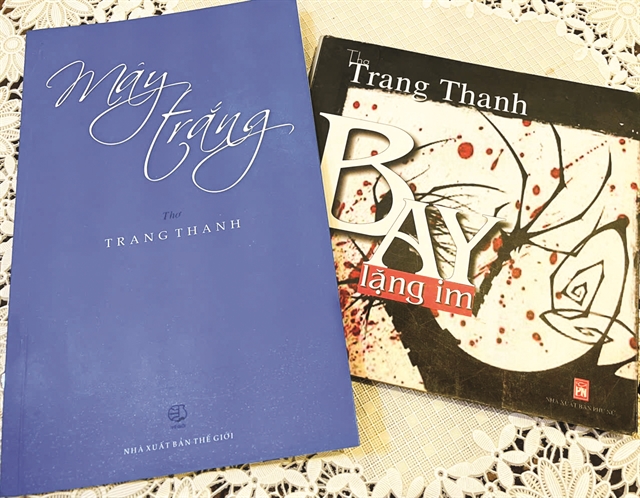
Inner Sanctum: Some argue that while AI can quickly replicate the linguistic structures, stylistic features and imagery of poetry, it cannot truly comprehend lived experience – the source from which poetic emotion is often believed to arise. Do you agree with this view?
In literary creation in general, an author's life experience is always their most valuable asset, serving as the emotional foundation of a work.
Personal imprint and a unique poetic voice are the soul of poetry, and I believe AI cannot yet replace them.
AI merely scans, filters and generates content based on existing data. When I come across a writer whose work feels too new and too polished, yet strangely monotonous and directionless, whose seemingly original ideas are expressed through familiar images and worn symbols, and whose poetic vision never quite takes flight, I find myself pausing to question whether the work is truly the product of human creativity.
However, I also wonder whether, if there were an AI-powered tool for identifying poetry, that tool could guarantee accurate results.
Inner Sanctum: Throughout history, each era has witnessed a shift in creative tools, from the quill pen to social media. In your opinion, is AI a continuation of this trend, or is it posing a challenge to the very nature of creativity?
AI cannot be considered a natural continuation of the evolution of creative tools and methods. AI is challenging the intelligence of both writers and readers.
The use of AI in creative work inevitably changes the very nature of creativity: humanity is challenged, the honesty of emotions is compromised and intelligence is altered.
Inner Sanctum: In your opinion, is it necessary to use a review process to ensure integrity in poetry competitions in the digital age?
Yes, I believe this is necessary and should be implemented whenever feasible, with full transparency.
Inner Sanctum: Do you think that poetry competitions play a role in nurturing a creative community where writers are encouraged to uphold the integrity and dignity of poetry?
Yes, I agree, but only when such efforts are guided by a commitment to genuine artistic and aesthetic values.
A writer must also continue to hone their craft and preserve emotional authenticity. Only under these conditions can poetry attain the status of true art and deserve the admiration often captured in the expression, “beautiful as a poem”. — VNS
