Weather:
- Ha Noi 27oC
- Da Nang 25oC
- Ho Chi Minh 27oC
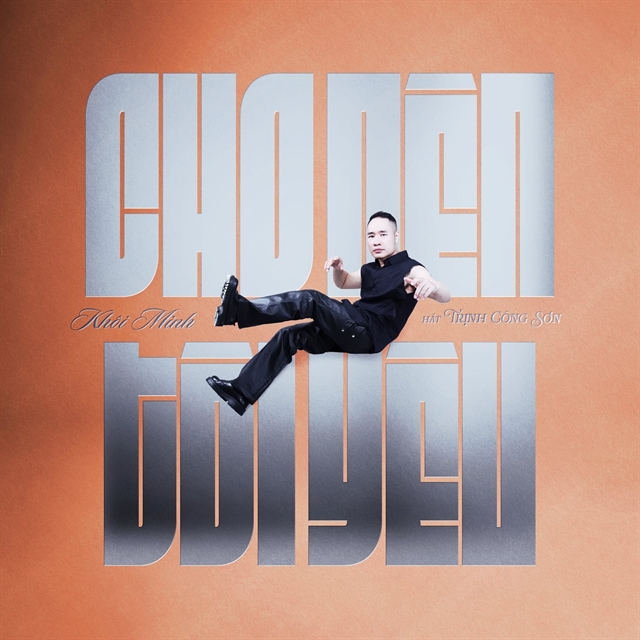
HÀ NỘI — The emotional upheavals and uncertainties of the COVID-19 pandemic led singer–journalist Khôi Minh to create an album with a spirit of healing.
Titled Khôi Minh Hát Trịnh Công Sơn – Cho Nên Tôi Yêu (Khôi Minh Sings Melodies by Trịnh Công Sơn – Therefore I Love), the album presents 10 songs, each contemplative in nature, carrying positive energy and offering listeners comfort in life’s unsettled moments.
One of its notable features is Khôi Minh’s creative reworking of several pieces.
In Hôm Nay Tôi Nghe (Today I Listen) and Mỗi Ngày Tôi Chọn Một Niềm Vui (Each Day I Choose a Joy), he introduces variations that highlight the original themes.
In Còn Thấy Mặt Người (Still Seeing Your Face), he combines the original with new material to form a dramatic narrative, producing striking contrasts.
He also experiments with melodic rap in Ở Trọ (Temporary Stay) and Hành Hương Trên Đồi Cao (Pilgrimage on the High Hill). These rap passages act as dialogues between younger and older generations, offering a fresh lens through which to approach Trịnh Công Sơn’s musical legacy.

Reflecting on the process, Khôi Minh explained that Trịnh’s music carries a strong invitation to create, making it fertile ground for new ideas.
Yet Hành Hương Trên Đồi Cao alone took him nearly a year to find the right balance between his own writing and the original spirit. He emphasised that he sought permission from Trịnh Công Sơn’s family before embarking on these reinterpretations.
For Khôi Minh, the pandemic reaffirmed the role of Trịnh’s music as a source of solace. With its ability to share, soothe and uplift, it became what he most needed to turn to.
Trịnh’s songs are known for their profound philosophies, expressed through refined artistic language. His romanticism was never detached from reality; he confronted human and national suffering directly, using music to encourage peace, mend ruins and sow faith anew.
As Khôi Minh put it: “Trịnh’s music not only consoles people in moments of despair, but also reminds us to see the beauty that still surrounds us. Perhaps that is why, whenever I feel unsettled, listening to Trịnh helps me regain my calm.”
A further highlight is the participation of Meritorious Artist Lan Anh, one of Việt Nam’s leading opera voices, in the duet Giọt Lệ Thiên Thu (Eternal Tear). The blending of two contemporaneous voices creates a fusion of opera and pop, adding depth and contemplative resonance to the piece.
Lan Anh explained that she joined not just out of friendship with Khôi Minh, but also because of her long-standing love for Trịnh’s music since her student days.
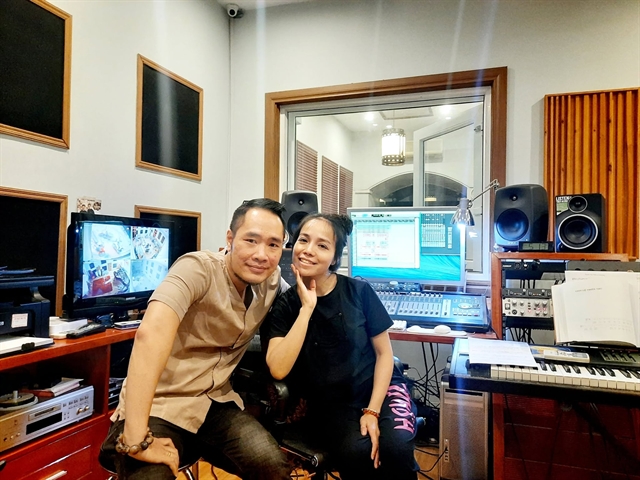
“Trịnh’s songs give singers a sense of great freedom. Singing them does not mean technique is unnecessary; rather, the artistry lies in concealing technique so that it feels as natural as breathing, just like the way the composer conveyed profound philosophies through gentle words that touch the heart,” she said.
The album was arranged and orchestrated by composer Vũ Minh Tâm, who brought a fresh sound while preserving the familiar essence of Trịnh’s work.
He described working with Trịnh’s music as “both easy and difficult”: easy because of its concise, flexible melodic structures that invite creativity, yet difficult because novelty must be found without losing the essence, lyrics and messages already deeply embedded in the public’s heart.
For Khôi Minh, the album is a meaningful tribute to Trịnh Công Sơn, marking the 25th anniversary of the songwriter’s passing on April 1, 2001. — VNS
