Weather:
- Ha Noi 26oC
- Da Nang 26oC
- Ho Chi Minh 26oC
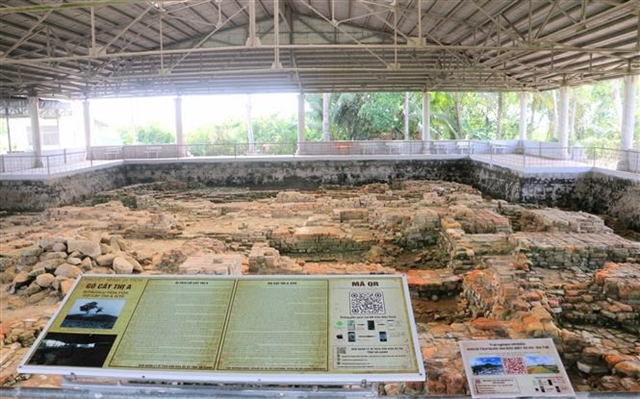
AN GIANG — As Việt Nam drives forward with digital transformation, An Giang Province is intensifying efforts in culture and museums to make artefacts and documents easier to access for residents and tourists. The initiative aligns with Resolution No. 57-NQ/TW from the Politburo, which aims to create breakthroughs in science, technology, innovation and national digital transformation.
Advancing science, technology and digital transformation is vital for national development. It serves as both a prerequisite and a major opportunity for the country to become a prosperous and powerful nation.
In this context, the Management Board of the Óc Eo Cultural Relics in An Giang has swiftly developed a comprehensive plan to digitally transform the operations of the Óc Eo Cultural Exhibition House and key sites within the Óc Eo – Ba Thê Archaeological Relic Area.
Since 2016, the Óc Eo Cultural Exhibition House has preserved and displayed thousands of valuable artefacts from the Óc Eo Culture, dating from the 1st to the 7th centuries AD, including four national treasures. The collection represents the material culture of the Phù Nam Kingdom, an early state in Southeast Asia that exerted considerable influence across the region and Asia from the early centuries AD. The culture has indigenous roots, emerging from the Pre-Óc Eo culture in central and southern Việt Nam, and holds significant historical and archaeological value.
At present, the Óc Eo Cultural Exhibition House displays more than 3,350 original artefacts, each reflecting the rich cultural and religious heritage of the Phù Nam Kingdom. Most have been digitised with QR codes, allowing visitors to scan and access detailed images and explanations of each artefact’s value. This process enhances the visitor experience and makes information more accessible for research and learning.
Trang Mỹ Linh, a tour guide at the Óc Eo Cultural Exhibition House, said visitors can use smartphones to scan QR codes on artefacts. With 3D and VR 360 technology, they can explore the site in virtual reality and gain deeper insights into the objects on display. This also helps improve management of documentary content and enhances service quality for visitors.
In addition to information in Vietnamese, the museum has developed content in English, Japanese and Korean, with plans to add more languages to broaden its reach and better serve both domestic and international tourists.
Ichira Shimoda, a tourist from Japan, expressed enthusiasm for the Óc Eo Culture Exhibition Centre during his trip to An Giang, praising the historical value of the ancient culture, the vivid display of artefacts and the centre’s distinctive character. He highlighted his positive experience with the digital services and said he believed many tourists from Japan and beyond would be keen to visit.
Beyond using QR codes for artefacts, the Management Board of Óc Eo Cultural Relics in An Giang is also applying 3D technology and VR 360 virtual reality tours at seven key sites in the Óc Eo – Ba Thê National Special Relic Site, including Linh Sở Cổ Tự, Linh Sơn Nam and Linh Sơn Bắc. These innovations create a more immersive experience, allowing visitors to take virtual tours, interact with detailed 3D artefacts, explore sites from multiple angles and access information in different languages. The approach helps preserve heritage, promotes it effectively, saves costs and enhances experiential education without requiring physical visits.
Nguyễn Xuân Bằng, Deputy Director of the Óc Eo Cultural Relic Management Board, said that as part of efforts to seek world heritage status for the Óc Eo - Ba Thê archaeological site, the unit is urgently implementing a comprehensive digital transformation plan to be completed by 2026. The aim is to attract more tourists and deepen their understanding of the value of Óc Eo cultural heritage, serving as a cultural bridge to spread these values to domestic and international visitors.
The board is also applying technology to the activities of the Relic Management Board, the Óc Eo Cultural Exhibition House and the Óc Eo Cultural Museum in the future, with an emphasis not only on technology but also on the quality of content.
According to Phạm Văn Tùng of the Óc Eo Cultural Relic Management Board, recent efforts have gone beyond conventional static images by integrating technology to create a smart interactive museum. This makes it easier to recreate the museum space in a realistic way and offers visitors a distinctive interactive experience.
“With the strong support of digital technology and artificial intelligence, we can vividly recreate the Óc Eo - Ba Thê archaeological site and its artefacts, enhancing the information search process and encouraging visitors to engage with the exhibits in person,” Tùng said. — VNS
