Weather:
- Ha Noi 30oC
- Da Nang 28oC
- Ho Chi Minh 27oC

HÀ NỘI — Australian newspaper The Age on February 25 published an article by travel writer Julie Miller highlighting a new and safer way to experience Hà Nội's famed Train Street – aboard the “Hà Nội Five City Gates” tourist train.
Dubbed a “moving cultural space”, the 40-minute journey departs from Hà Nội Railway Station, runs along Train Street and through busy intersections crowded with cars and motorbikes, crosses the Red River via historic Long Biên Bridge, and arrives at Từ Sơn Station in neighbouring Bắc Ninh Province. From there, passengers continue by bus to Đô Temple, one of Việt Nam's most important cultural relics dedicated to the eight kings of the Lý Dynasty.
Named after five historic gates of the Red River Delta region – Cầu Dền, Quan Chưởng, Cầu Giấy, Chợ Dừa and Đông Mác, the train’s luxuriously appointed carriages are designed in a nostalgic Indochine style.
Miller recounts antique decorative items, heritage photographs and varied seating arrangements, including bench seats facing panoramic windows. In her carriage, an old rickshaw plumped with cushions and brightly coloured conical hats hanging from the ceiling added to the retro ambience.
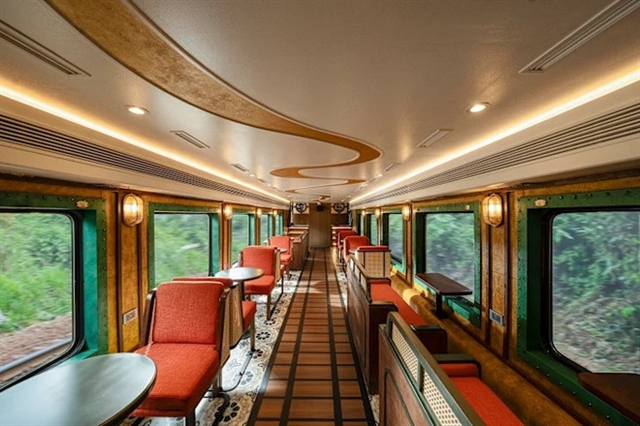
While the upper deck features a glass-domed roof, she notes that the lower level offers the best views of Train Street, where passengers find themselves face-to-face with tourists waving and taking photos as the train whooshes past. The experience, she writes, is both thrilling and amusing, while offering a vivid sense of how closely daily life unfolds alongside the railway tracks.
On board, guests are served a sticky rice snack and cups of jasmine-scented lotus tea, accompanied by intimate performances of traditional Vietnamese music. Train staff dressed in traditional attire pose for photographs with passengers, many of whom embrace the occasion by wearing colourful áo dài.
Beyond the train itself, Miller says scenes along the route struck her. Lines of schoolchildren waving enthusiastically at foreign visitors, worshippers offering incense at the Đô Temple, and quan họ folk singers performing aboard dragon boats on a nearby lake were memorable highlights of the journey. — VNA/VNS
