Weather:
- Ha Noi 15oC
- Da Nang 20oC
- Ho Chi Minh 26oC
This year, several domestic and international art awards, such as the UOB Painting of the Year, Lê Bá Đảng Creative Award and Victor Tardieu Award 2025 are being given to prominent artists. These awards inject fresh energy into the creative community.
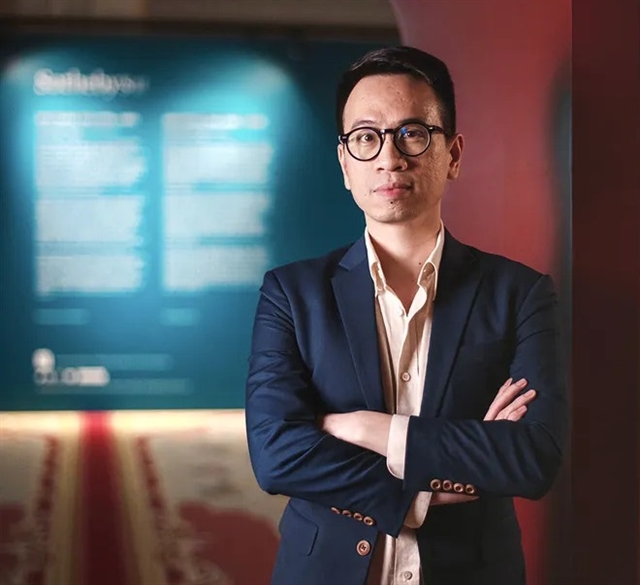
Curator Ace Lê is a Senior Advisor at Sotheby's auction in Việt Nam, and currently works on the Executive Board of the Lê Bá Đảng Creative Foundation and on the Advisory Boards of the UOB Painting of the Year.
He spoke to the media about the role, value and future direction of contemporary art awards in Việt Nam.
How do you assess the role and real impact of domestic art awards today?
Being an artist is a profession like any other, and it comes with professional benchmarks and stages of career development. In Việt Nam as well as internationally, art awards play an important role in recognising the achievements of artists, researchers and art workers more broadly.
Along with professional recognition, awards often bring additional benefits, such as financial prizes, opportunities to participate in accompanying programmes and expanded professional networks.
Professional recognition becomes a notable milestone on an artist’s resume, facilitating both academic advancement and commercial opportunities. The most crucial factor is the credibility of the award, which lies in its professional criteria. A reputable award requires clear criteria, a respected advisory board or jury and professional, sustainable organisation.
That said, each award represents a particular lens, with its own objectives, target participants and positioning. For example, the UOB Painting of the Year focuses specifically on painting, and therefore does not encompass other artistic practices.
Each year, the perspectives of the judging panel may also shift. Artists, therefore, should not overly emphasise winning or losing, but rather view participation as an opportunity for engagement and experience.
With several major awards being launched this year, how might this affect Việt Nam’s creative ecosystem and art market?
The greater the number of awards, the more vibrant the art community becomes. Regardless of perspective, award programmes all play a role in connecting the community. These awards in particular serve as effective bridges between patrons and the creative community, backed by corporations, organisations or individuals.
At a time when State-owned funding remains limited, increased private sector participation is essential to fostering a more diverse artistic ecosystem.
A sustainable art market requires a strong voice from domestic collectors and patrons, and these awards are among the signs of such healthy development.
Having studied and worked internationally, how do you evaluate the quality and stature of Việt Nam’s art awards today?
Generally, professionalism and stature are proportional to the resources invested. Major international awards such as the Prince Claus Award or the Loewe Craft Prize have proven to be powerful launchpads for artists.
One way to assess impact is to look at artists’ careers before and after receiving such awards. Many past winners of the UOB Painting of the Year, such as Goh Beng Kwan (1982), Anthony Poon (1983) and Chua Ek Kay (1991) have since achieved major recognition, including Singapore’s Cultural Medallion, in recent years.
Việt Nam has also seen awards that have operated consistently over many years, such as the Dogma Prize, Hanoi Grapevine’s Finest and the Lê Bá Đảng Creative Award.
These initiatives represent commendable efforts within a context of limited community resources and have generated meaningful impact, particularly for younger artists.
Many international awards now emphasise socially engaged creativity and contemporary issues. Do you think Vietnamese awards follow this trend more closely?
Việt Nam is a unique art market shaped by particular historical conditions, and its artistic development does not follow the same trajectory as global art history.
Therefore, not every international trend needs to be adopted wholesale. Vietnamese art is rich and deeply rooted in local contexts.
Whether one pursues conceptual practices addressing socio-political themes or remains committed to formalist approaches with rigorous studies of form, both deserve recognition and respect.
There will be awards inclined toward conceptual art, others toward formal practice, and some embracing both. Such diversity is healthy, and I believe we are already witnessing developments along these parallel paths.
If you had the opportunity to help establish a new art award in Việt Nam, would you prioritise an academic model or one that encourages experimentation and emerging creativity?
This year, I was formally invited to join the Executive Board of the Lê Bá Đảng Creative Foundation to help relaunch the award. I proposed restructuring it to include three categories: creative practice, research and young leadership.
While there are already many awards for creative practitioners, recognition for art researchers remains scarce.
Similarly, there is a lack of awards for young people passionate about art in management and coordination roles. These represent significant gaps that we need to address. — VNS
