Weather:
- Ha Noi 23oC
- Da Nang 26oC
- Ho Chi Minh 27oC
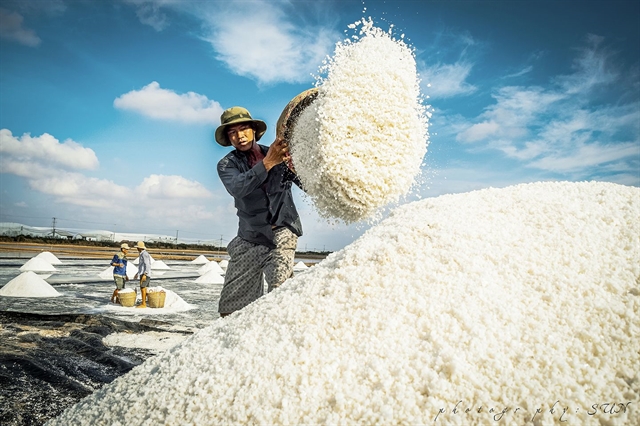
Under the scorching sun of Bạc Liêu, now part of Cà Mau Province, salt-making remains a demanding livelihood. Farmers spend months working in the open fields, monitoring tides, salinity and weather. A single unseasonal downpour can wash away the results of an entire season.
For 75-year-old Trịnh Văn Quang, from Bửu 2 Hamlet in Đông Hải Commune, salt-making has been part of life for more than 40 years. Starting as a hired labourer carrying salt, he gradually saved enough to buy land and establish his own fields. Three generations of his family have followed the trade, yet making a decent living remains difficult.
In February, unseasonal rain devastated production in Đông Hải, affecting around 775ha cultivated by 323 households and dissolving more than 7,750 tonnes of salt. Quang's family alone lost over 30 tonnes.
Sixty-two-year-old Trần Việt Trung, who maintains three hectares of family salt fields passed down through three generations, has also chosen to stay in the trade despite many neighbouring households switching to shrimp farming.
The returns, however, are modest. Trung said he had recently sold five tonnes of salt for VNĐ7 million (US$270), barely covering the labour and production costs.
“To produce white salt, farmers need more than seawater and sunshine. They must put in hard work, experience and patience. They have to read the sky, anticipate the sunshine and monitor the tides. Just one spell of unseasonal rain can ruin an entire crop. Then all the effort, money, sweat and tears simply wash away into the sea,” he said.
The salt fields have also provided opportunities for prosperity. Phan Văn Phúc, 72, from Vĩnh Hậu Commune, began his career after leaving the army in 1979 with just over one hectare of deserted coastal land. Through hard work, careful saving and investment in storage facilities that allowed him to wait for better market prices, he expanded his holdings to more than 40ha and built a substantial fortune.
Their stories reflect contrasting realities within the same traditional trade: farmers who remain financially vulnerable despite decades of hard work, families determined to preserve their inheritance and those who have turned salt production into a successful business.
Rich heritage
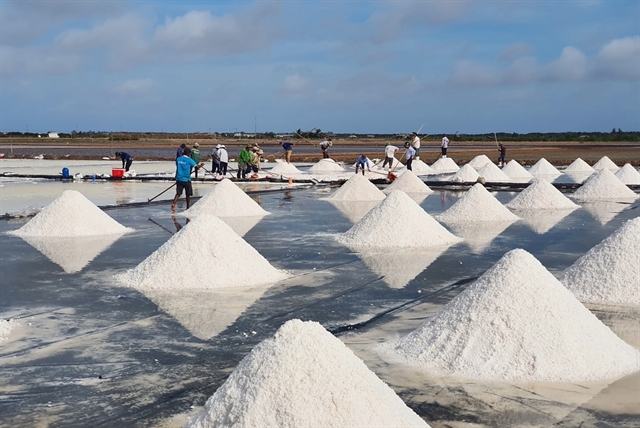
Salt production in Bạc Liêu dates back more than 100 years, closely associated with the settlement and development of Việt Nam's southern coastal region. The locality was once among the country's major salt-producing areas, with its product also known as Ba Thắc salt.
During its heyday, salt warehouses stretched for nearly a kilometre along the Bạc Liêu River. The Dòng Me Canal was built to transport salt from coastal fields into town, before trading boats carried it to Sài Gòn and other markets. Salt was not only an essential household commodity but also an important part of the local economy.
Bạc Liêu salt is particularly valued for its distinctive taste. Its quality reflects the area's natural conditions, including flat coastal terrain, seawater salinity, tidal patterns and abundant sunshine.
But nature alone does not explain its reputation. Generations of farmers have developed practical knowledge of when to draw seawater into the fields, how to regulate salinity, prepare the soil and determine the right time for crystallisation. This combination of natural advantages and inherited expertise has shaped the character of Bạc Liêu salt.
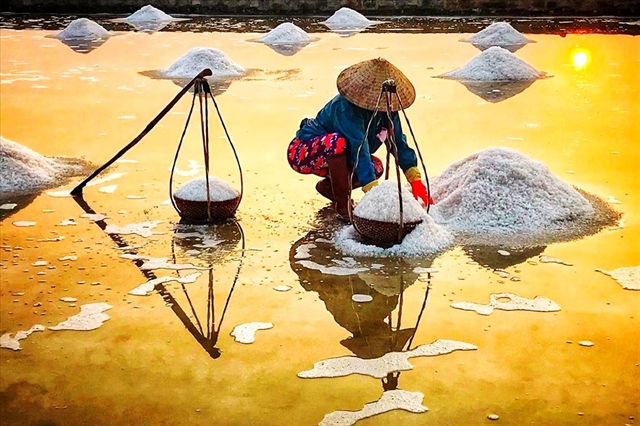
The salt-making season generally begins around November and continues through the dry months, when strong sunshine accelerates evaporation.
Farmers first clear vegetation, level and compact the soil to prevent water seepage. Salt fields are divided into sections for water storage, increasing salinity and crystallisation. Water is gradually transferred between these sections, with farmers carefully monitoring its salinity.
Traditional earthen beds require around 10 to 15 days for salt to crystallise, while plastic-lined beds can shorten the process to seven to nine days and produce whiter salt with fewer impurities.
Water pumps, plastic sheets and other modern equipment have helped reduce manual labour and improve product quality. Yet production still depends heavily on farmers' ability to understand weather patterns, tidal movements and the changing conditions of their fields.
The craft also encompasses spiritual and social traditions. Farmers have long held rituals seeking favourable weather and good harvests. These customs, together with communal ceremonies and local folk music, reflect the close relationship between the people, their occupation and the coastal environment.
National recognition
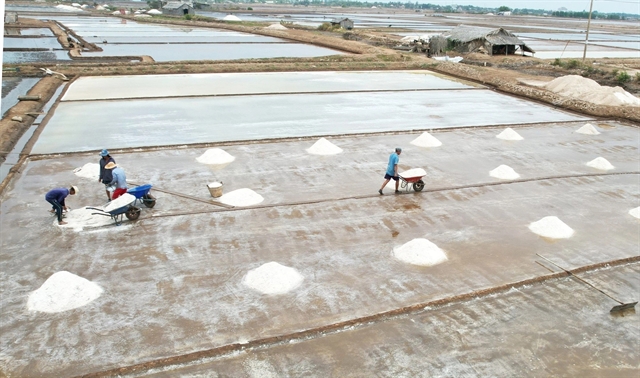
In 2020, Bạc Liêu salt-making was included by the Ministry of Culture, Sports and Tourism in the National List of Intangible Cultural Heritage. The recognition extends beyond the salt itself to encompass the craft's history, production techniques, traditional knowledge, social practices and cultural life of the farming community.
Bạc Liêu salt has also received geographical indication protection, providing a foundation for strengthening its brand and improving its market position.
However, heritage recognition has not shielded the industry from mounting difficulties. Salt-producing areas, which once covered nearly 4,000ha, have contracted significantly since the 2000s as many households switched to shrimp farming. Today, around 1,590ha remain, concentrated in coastal areas including Vĩnh Hậu, Long Điền, Đông Hải and Gành Hào.
Climate change, unseasonal rainfall, rising production costs and unstable prices continue to threaten the trade. Younger generations are also increasingly reluctant to take up an occupation involving hard physical work and uncertain returns, raising concerns about the transmission of traditional knowledge.
According to Lương Ngọc Lân, former director of Bạc Liêu's Department of Agriculture and Environment, preserving salt-making must go beyond protecting the fields or celebrating its heritage status. Farmers need stable incomes and viable livelihoods if they are to continue the occupation and pass their knowledge on to younger generations.
Improving production techniques, diversifying products and strengthening links among farmers, cooperatives and businesses could help reduce risks and increase the value of salt.
Meanwhile, salt fields, historic warehouses, traditional tools and local customs offer opportunities for cultural and experiential tourism, allowing visitors to discover the lives and traditions of coastal communities.
For more than a century, salt-making has helped shape the identity of Bạc Liêu. Its fields may change with time, but the knowledge and memories of the farming community remain an irreplaceable part of its heritage.
For those who continue to work the fields, preserving the craft means more than keeping an old production method alive. It means protecting their livelihoods, cultural identity and the legacy of generations who have given Bạc Liêu salt its distinctive flavour. — VNS
