Weather:
- Ha Noi 25oC
- Da Nang 25oC
- Ho Chi Minh 25oC
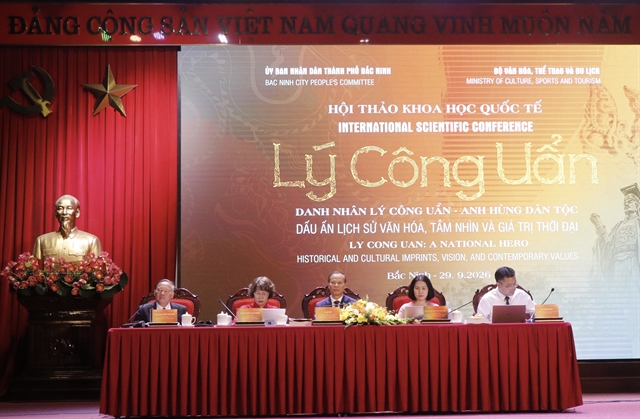
BẮC NINH — An international conference on Lý Công Uẩn, also known as Emperor Lý Thái Tổ, was recently held by the Bắc Ninh provincial People’s Committee in coordination with the Ministry of Culture, Sports and Tourism, under the theme ‘Lý Công Uẩn – National Hero: Historical and Cultural Legacy, Vision and Contemporary Values’.
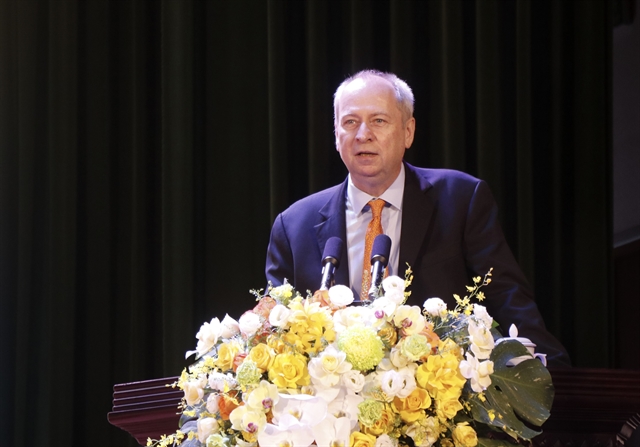
The event brought together scientists, experts and managers from state agencies, universities, research institutes and professional organisations at home and abroad, as well as representatives of the descendants of the Lý Hoa Sơn clan in the Republic of Korea.
Lý Công Uẩn (974–1028), a national hero and historical figure, founded the Lý dynasty. His reign marked an important turning point in the consolidation of the Đại Việt state in the early 11th century.
In particular, his decision to relocate the capital, along with efforts to organise the royal court, implement policies for the people, promote culture and Buddhism, and develop diplomatic relations, reflected a vision of governance closely linked to national stability and development.
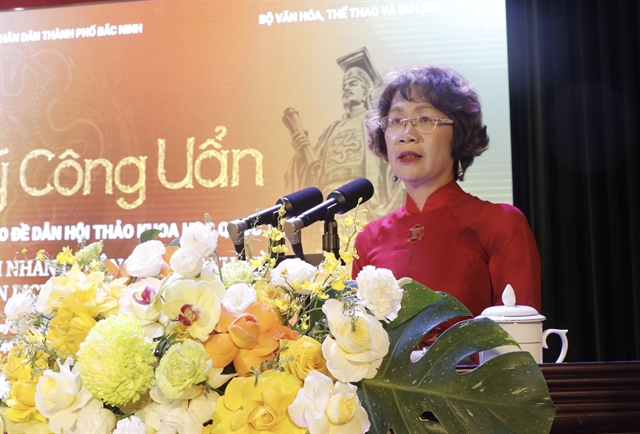
In her keynote report, Nguyễn Thị Thu Phương, Director of the Viet Nam Institute of Culture, Arts, Sports and Tourism, stressed the importance of studying Lý Công Uẩn in the context of Đại Việt’s transition from establishing independence to consolidating the state in the early 11th century.
She called for an assessment of his governing philosophy and activities based on historical sources, with a clear distinction between historical evidence and legends or interpretations that emerged in later periods.
The legacy of Lý Công Uẩn is preserved in a wide range of materials, including historical records, documents, woodblocks, relic sites, festivals, religious practices and community memories, particularly in Bắc Ninh, Ninh Bình and Hà Nội.
Research should therefore clarify the links between these locations, assess the reliability of different types of sources, and avoid conflating historical records, legends and scientific hypotheses. Placing Lý Công Uẩn in the broader East Asian and Southeast Asian context would also help identify his distinctive contributions to Đại Việt’s history, she said.
With more than 60 papers presented, the conference examined ways to standardise historical sources, terminology and chronology, distinguishing between issues supported by sufficient evidence and those requiring further research.
Participants also discussed Lý Công Uẩn’s stature as the founder of the Lý dynasty and a nation-builder, particularly the relationship between his decision to move the capital, state organisation, the development of Đại Việt culture and the creation of conditions for long-term national development.
The conference highlighted key values associated with his governing philosophy, including concern for the people’s well-being, tolerance, merit-based recruitment, peaceful relations and an open-minded approach. It also explored the continued relevance of these values and their potential to engage with contemporary challenges.
These discussions are expected to contribute to the preparation of a dossier for submission to UNESCO, alongside activities marking the 1,000th anniversary of Lý Công Uẩn’s death in 2028.
The research findings and exchanges at the conference will provide further scientific grounds for assessing the life, career, legacy and influence of Emperor Lý Công Uẩn in Việt Nam and internationally.
Phan Mạnh Dương of the Viet Nam Institute of Culture, Arts, Sports and Tourism said the cultural heritage associated with Emperor Lý Công Uẩn and the Lý dynasty in Bắc Ninh Province comprised several layers, including architectural and artistic relics, artefacts, festivals, religious practices, historical documents, legends and community memories.
Prominent sites such as Đô Temple, the tomb complex of the Lý kings, Tiêu Pagoda, Phật Tích Pagoda and Dạm Pagoda not only reflect Lý Công Uẩn’s origins, life and career but also embody the dynasty’s governing philosophy, spirit of autonomy, the role of Buddhism, and the distinctive cultural and artistic achievements of Đại Việt during the Lý period.
These heritage resources are important for traditional education, strengthening local identity and developing sustainable cultural tourism, he said.
He proposed piloting a model of ‘heritage learning spaces linked to the Lý dynasty cultural route” at the Cổ Pháp, Phật Tích and Dạm Pagoda clusters, alongside the development of an interregional cultural programme connecting Cổ Pháp, Hoa Lư and Thăng Long.
This approach could shift heritage visits beyond sightseeing towards in-depth historical learning and experiential activities. It would help preserve and promote heritage in contemporary life while reinforcing Bắc Ninh’s identity as the homeland of the Lý dynasty and one of Việt Nam’s prominent cultural heritage centres. — VNS
