Weather:
- Ha Noi 28oC
- Da Nang 28oC
- Ho Chi Minh 28oC
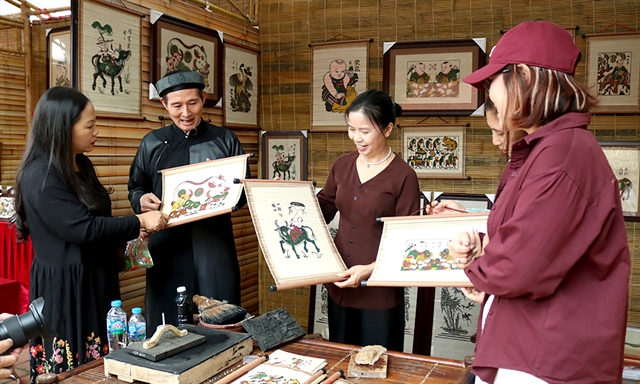
BẮC NINH — Bắc Ninh Province will spend US$5.24 million to bring Đông Hồ folk paintings, a unique art form of the Kinh Bắc region, off UNESCO’s List of Intangible Cultural Heritage in Need of Urgent Safeguarding, while breathing new life into the iconic cultural form in contemporary society.
A project to protect and promote the craft through 2035, with a total budget of over VNĐ137 billion ($5.24 million), has been approved, with the goal expected to be completed by 2040.
In the province's Thuận Thành Ward, Đông Hồ paintings boast a history spanning approximately 500 years.
Unlike many other art forms, the value of the paintings lies in the folk knowledge embodied in manual woodblock printing techniques, which use dó paper coated with shimmering điệp (seashell) powder and natural pigments derived from plants and minerals.
Each painting is not just a work of art; it also tells a story that reflects the aspirations, mindset and spiritual life of Vietnamese people across generations.
Renowned classic paintings include The Mouse Wedding, Glory and Wealth, and Buffalo Boy Playing the Flute.
However, due to rapid changes in market taste and demands, Đông Hồ paintings are no longer as popular as they once were.
This has led to a sharp decline in the number of skilled artisans and a shrinking space for the traditional craft, pushing the art form to the brink of extinction.
Amid the rapid growth of the industrial revolution, the emergence of imitations, mass-produced industrial prints and products made with AI poses a direct threat to authentic Đông Hồ paintings and artisans.
Đông Hồ folk paintings were officially inscribed on UNESCO’s List of Intangible Cultural Heritage in Need of Urgent Safeguarding in 2025.
As a result, their preservation has become a priority task, with cultural officials and others working to save this precious national heritage.
Under the project, by 2035, 100 per cent of artisans and individuals who contribute to protecting, preserving and passing down the craft to future generations will be recognised and entitled to support.
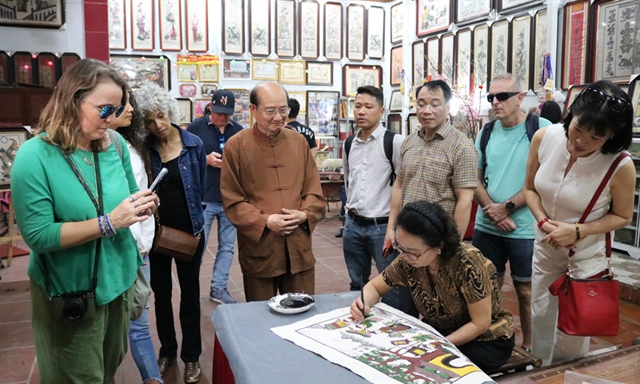
A management board will be established for the craft village, while facilities, equipment and display spaces at the Đông Hồ Folk Painting Conservation Centre will be upgraded.
Painting techniques and production processes will be standardised and inventory, documentation and digitalisation of craft-related materials will be carried out.
A comprehensive system for managing and archiving data on the paintings is currently being accelerated.
Scientific and technological advances will also be applied to preserve printing blocks and paintings. The entire technical process and all visual materials, particularly the centuries-old woodblocks, have been rigorously documented.
Provincial authorities are stepping up market inspections and monitoring to prevent low-quality, AI-generated or machine-printed artwork from being passed off as authentic Đông Hồ paintings.
The application of modern technology must go hand in hand with ensuring the authenticity of the craft and preserving the original essence of shell-powder paintings.
In addition to the digitalisation of management activities, work to restore traditional spaces for painting will be carried out.
A project will be launched to establish a creative exhibition space, improve the landscape of the craft village and ensure a stable supply of natural raw materials, such as dó paper, shells and Japanese pagoda tree flowers for the paintings' traditional yellow colour.
Many young artists have recently taken an interest in the effort to preserve and promote Đông Hồ paintings. They are helping to convert the heritage into an asset, making the art form a key element in the creative economy.
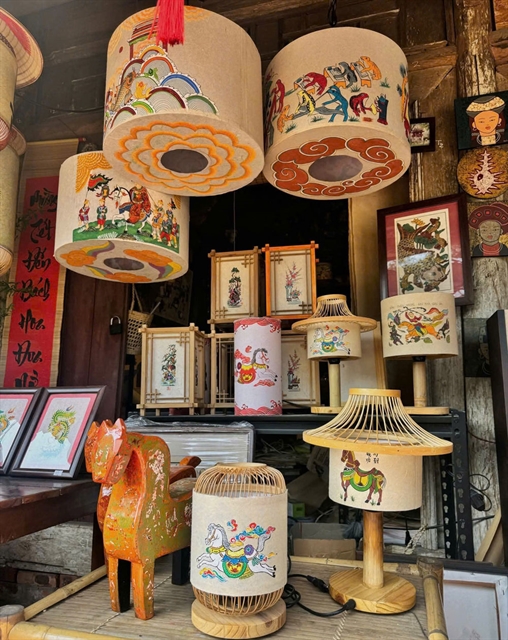
Under their hands, patterns and motifs from Đông Hồ paintings are being used in modern fashion designs, gift packaging and fine ceramics. Their involvement, along with the use of 3D printing and installation art, has created fresh visual experiences, making it easier for younger people to engage with and embrace this heritage.
Another goal of the conservation project is to make Đông Hồ paintings a distinctive product and the craft village an attractive destination for visitors.
The project aims to draw in around 10,000 tourists, 30 per cent of them from abroad, to visit the village, take part in the painting process and buy souvenirs as part of a tour package.
These tours would not only help popularise the paintings, but also create livelihoods for villagers while generating revenue for direct reinvestment in conservation efforts. — VNS
