Weather:
- Ha Noi 23oC
- Da Nang 27oC
- Ho Chi Minh 26oC
by Lê Hương
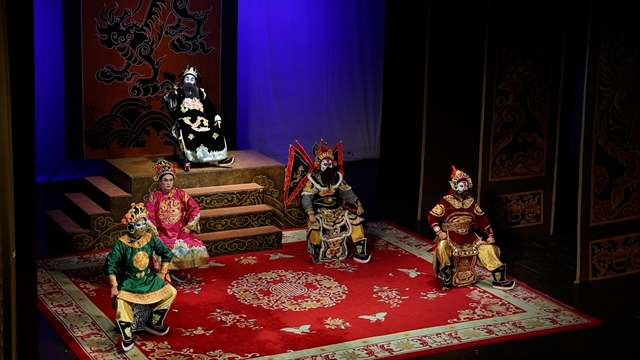
On a Saturday evening in Hà Nội’s Old Quarter, the curtain is not simply something that separates the audience from the stage: it becomes a doorway.
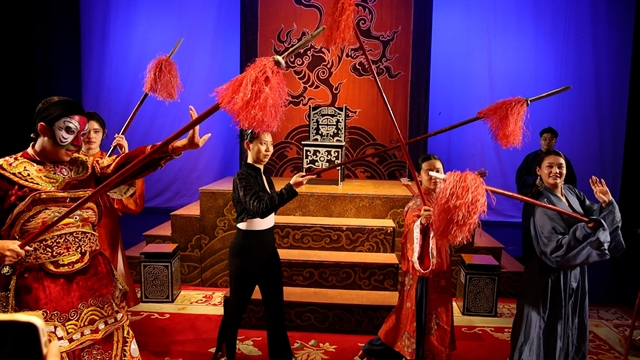
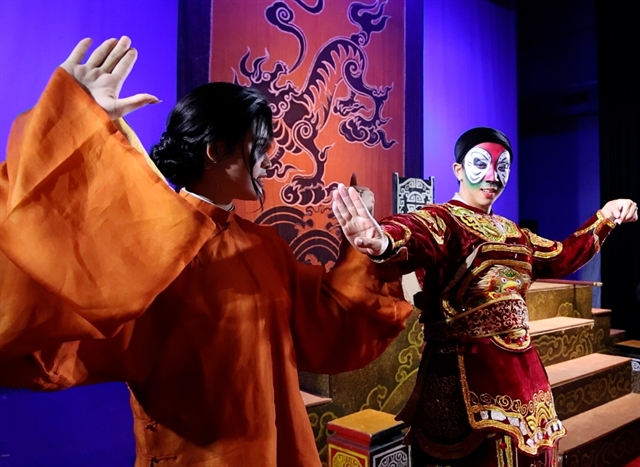
At Hồng Hà Theatre on Đường Thành Street, visitors are invited to step behind the curtain before taking their seats for a live tuồng classical opera performance. There, they can meet artists, explore costumes and stage props, learn about the art form’s distinctive movements and singing, and try out some of its basic conventions themselves.
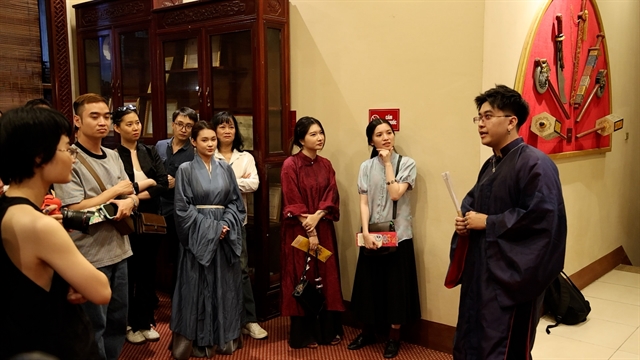
For many, the experience offers a new way to approach an art form that can otherwise seem difficult to understand.
With its stylised language, gestures and conventions, tuồng can be challenging for audiences unfamiliar with its codes. Its movements are often symbolic rather than realistic, while its classical language and distinctive singing can make a performance difficult to follow without some background knowledge.
The new tour, titled "Màn Đường" initiated by Gu Hà Nội, seeks to bridge that gap. Màn Đường is the name of a traditional stage device used to change scenes during a tuồng performance.
“We cannot expect to give people all the knowledge about tuồng in just one session,” said Lê Duy Trung, founder of Gu Hà Nội. “However, we select the most fundamental and essential elements, such as where the name comes from, how its artistic language works, how the movements are performed and how its singing differs from other forms of music.”
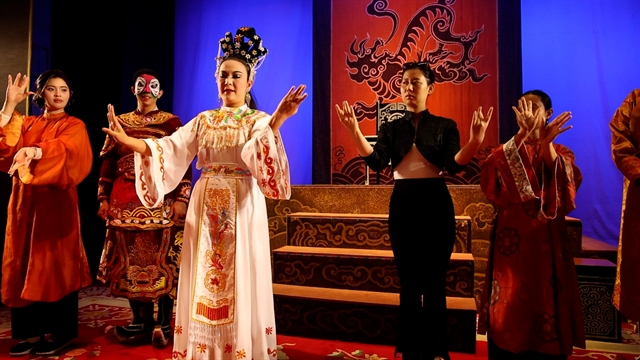
Tuồng is a form of classical opera with stylised acting techniques that have been handed down over hundreds of years.
Its artistic language relies heavily on conventions, with a gesture, movement or piece of stage business often carrying a meaning beyond what is immediately visible. The tour gives visitors a chance to begin decoding that language.
Before watching the performance, they are taken behind the stage curtain to learn about the history of tuồng and some of its basic principles of singing, movement and performance. They can then put those lessons into context when the actors appear on stage.
For French visitor Mathilde Herero, the experience made the performance much more accessible.
“I found it very interesting. The experience allowed us to understand a little more about Vietnamese culture, theatre, gestures, dance and makeup,” she said. “It was really nice and now I can’t wait to see the play.”
The experience also helped her place tuồng within a broader cultural context. “It allowed me to understand the meaning, where the origin of theatre came from. And I think tuồng theatre is part of Vietnamese culture in itself. I feel very fortunate to be able to see a play and understand it better tonight,” she said.
Discovering their roots
For some visitors, the encounter also opened up unexpected connections between cultures. Chukwuemeka Chimaobi from Nigeria said he understood only about half of the Vietnamese used in the performance, but still found the experience fascinating.
“I had to learn more about the dance, about the song, and some of the things which I see in the movie,” he said. Having lived in Việt Nam for about four years, he noticed similarities between what he saw on stage and aspects of culture in his home country.
For young Vietnamese audiences, the tour can also change the way they see their own cultural heritage.
Đoàn Trần Yến Linh, who had previously been exposed to Western culture and had found it difficult to find information about traditional arts, said the experience felt like discovering “a whole new world”.
“When I tried to learn more about our traditional arts, I found that there wasn't much information available,” she said. “So, having this experience today has made me appreciate my culture and roots much more. I’m sure this is a doorway for me to explore my cultural heritage more deeply.”
Nguyễn Thị Thu Hiền had watched tuồng before, but without anyone explaining its conventions to her, she found it difficult to fully appreciate what she was seeing.
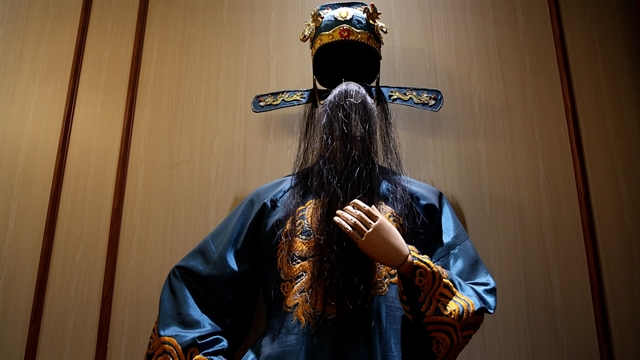
“After this tour, I feel that tuồng is actually very close to me,” she said. “I had the chance to talk to more artists and go backstage to learn about the movements, music and conventions of tuồng. That made me very curious and interested, and made me want to get closer to Việt Nam’s traditional arts.”
She said the experience also changed her perception of traditional culture. “I feel very proud. Vietnamese culture is so rich and, in fact, very close to young people. It is not distant at all, as I once thought.”
A new audience
The idea of bringing audiences backstage is central to the tour. Meritorious Artist Lộc Huyền of the Việt Nam National Theatre of Traditional Arts said young audiences needed more than a brief introduction before being asked to sit through a traditional performance.
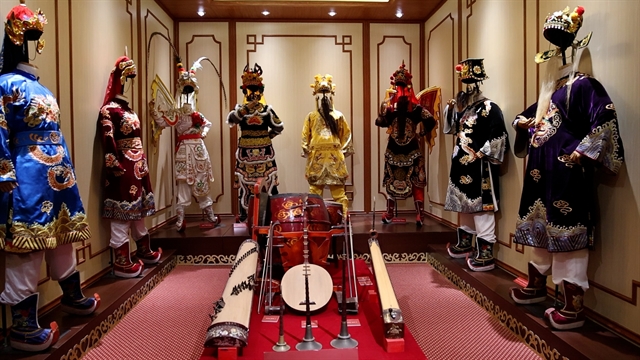
“When you come to the traditional tuồng stage, a courtly and scholarly form of theatre, you need to be introduced to it through talks, meetings with artists and experiences with costumes, makeup and props,” she said.
“After you understand the story, you can meet the actors, put on costumes and makeup, and hold props such as a riding crop to experience performing. Then, when the artists perform, you will understand at least part of it, rather than simply sitting in the audience and listening to a brief summary of the story.”
She believes the initiative could help traditional theatre reach new audiences and create greater interest in future ticketed performances.
Bùi Yến Linh from the communications unit of the theatre sees the approach as part of a broader effort to connect generations.
The theatre has also developed another role-playing game, Nhập Cung (Entering the Palace), in which participants can take on the roles of a guest, a top scholar or a district governor during the performance. Nhập Cung and Màn Đường are offered alongside each other on weekend performance nights at the theatre, giving visitors a more immersive experience.
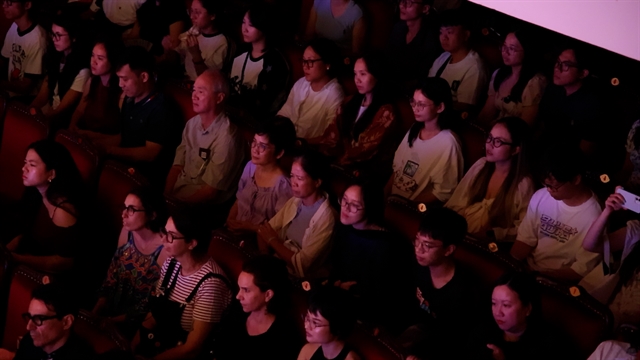
"They represent a potentially effective way of bringing traditional arts closer to contemporary and international audiences," Linh explained.
“They are not only able to experience the art as previous generations did, but also gain a deeper understanding of it. This, in turn, can help inspire and support the creation of new contemporary works.”
The tour does not attempt to turn visitors into tuồng aficionados in a single evening. Instead, it offers them a set of keys – a gesture, a song, a movement, a costume or a piece of stage language – with which to unlock what happens behind the curtain.
“We believe that tuồng, and Vietnamese traditional arts in general, are not difficult or dry,” Gu Hà Nội founder Trung said. “It is simply that we have not yet had the right tools or perspective to approach them. Once people have such tools and ways of presenting the art, they can begin to engage and have a dialogue with traditional art.”
And perhaps that is the most important role of the new tour: not to simplify tuồng, but to give audiences a way into its world. Once the curtain rises, they may see the same stage differently. VNS