Weather:
- Ha Noi 27oC
- Da Nang 27oC
- Ho Chi Minh 28oC
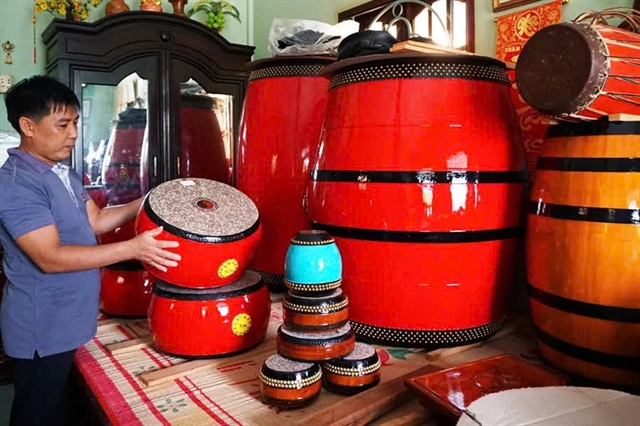
For generations, the deep, rhythmic beat of handcrafted drums has echoed through Việt Nam's festivals, temples and village squares, marking moments of worship, celebration and community life.
In Bình An Village, Tân Trụ Commune in Tây Ninh Province, that enduring tradition continues as local artisans preserve one of the country's oldest drum-making crafts using techniques handed down through generations.
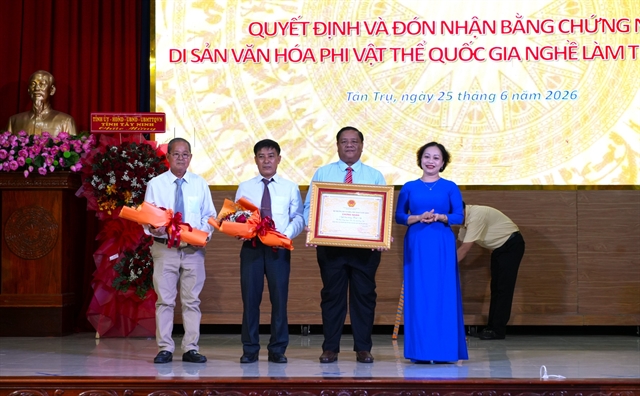
The craft has been inscribed in Việt Nam's National Intangible Cultural Heritage List by the Minister of Culture, Sports and Tourism, marking a proud milestone for the local community and reaffirming the cultural value of one of the country's oldest traditional crafts.
Endowed with primeval forests and fertile plains, Tân Trụ Commune was well suited to raising buffaloes, which local people primarily used to haul timber. Buffalo hides, however, had little practical use.
The founder of the craft was villager Nguyễn Văn Ty, who, over 150 years ago, recognised their potential and began using buffalo hide to make drumheads, laying the foundation for what would become Bình An's renowned drum-making craft.
Craftsmanship
According to the Department of Cultural Heritage, Bình An's drum-making tradition combines masterful craftsmanship with a deep understanding of acoustics and aesthetics. To complete a standard drum, artisans must go through more than 20 stages of production, involving nearly 200 manual operations.
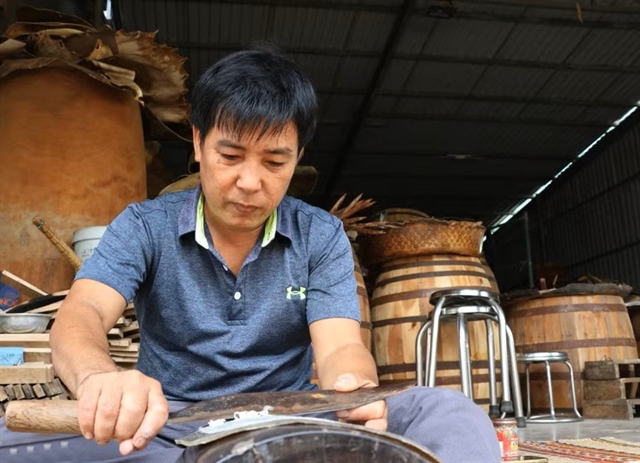
The drum body is typically made from mature sao wood to minimise warping and termite damage. Individual wooden staves are heated over fires fuelled by dried coconut wood before being carefully bent and joined together, creating a seamless shell without gaps.
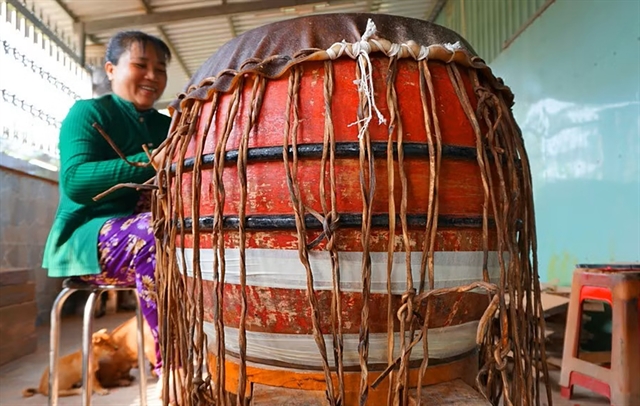
The drumhead is covered with back or shoulder hide from buffaloes to ensure durability and elasticity. Among the most demanding stages are thinning the buffalo hide by hand and stretching it over the drum using a traditional wooden tensioning frame.
The final stage is sound testing, during which the artisan strikes the drumhead with a drumstick to assess its resonance, carefully adjusting the tension until the instrument produces the desired tone.
Once completed, the drums are painted and decorated with traditional motifs, enhancing both their visual appeal and durability.
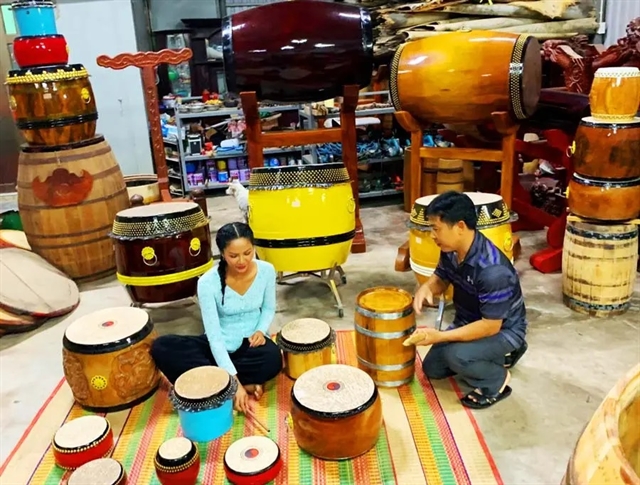
With its long history, Bình An has earned a reputation for producing exquisitely handcrafted drums in a wide variety of styles, sizes and purposes.
Echo of heritage
Its products include drums used in schools to signal class times, drums for religious and spiritual rituals, drums for lion dances and drums for traditional theatre performances.
Each type of drum requires its own production process and crafting techniques, particularly during the crucial stage of tuning, which demands exceptional skill, precision and years of experience.
The largest drum ever crafted by the village measured more than 1.7 metres in diameter and nearly 3 metres in length. For drums of such large dimensions, local artisans must source a flawless, unblemished piece of buffalo hide measuring about 2 square metres to cover the drum head.
Each year, the craft village produces more than 1,000 drums, supplying markets nationwide, particularly during the Mid-Autumn Festival season and spring festival celebrations.
Notably, Bình An drums have consistently earned the trust of numerous lion–dragon dance troupes from Hồ Chí Minh City and other localities with Hoa ethnic communities, as the drums’ sound quality and durability have long been highly valued by artisans there.
In addition to serving the domestic market, Bình An drums are now exported to several countries, helping promote the area's cultural identity beyond Việt Nam's borders.
For residents of Bình An Hamlet, whose families have practised the craft for generations, drum-making is more than a means of earning a living. It is a source of pride and a symbol of family heritage and the cultural identity of their community.
The craft has been passed down through generations through oral instruction and hands-on apprenticeship, with master artisans teaching their successors directly through practice.
To meet the increasingly high, diverse and specialised demands of customers, drum artisans in Bình An Village have continuously improved the traditional techniques passed down from previous generations.
At the same time, they have learned and applied additional methods so that each drum today is not only highly regarded for its sound quality and durability, but also for its aesthetics and diversity.
Official recognition
According to Nguyễn Hồng Dũng, vice chairman of the People's Committee of Tân Trụ Commune, Bình An's drum-making tradition has become far more than a traditional handicraft. It embodies the ingenuity, craftsmanship, diligence and enduring commitment of local people to preserving the cultural legacy handed down by their ancestors.
“Throughout its development, the craft has faced numerous challenges from market forces and changes to social life," he said.
"However, local artisans and residents have remained steadfast in preserving and passing down the craft, while continuously improving product quality.
“Their dedication has helped build the Bình An drum brand, which is now widely recognised across the country."
Artisan Nguyễn Văn An, representing a drum-making workshop with five generations of family tradition, said the inclusion of Bình An’s drum-making craft on Việt Nam’s National Intangible Cultural Heritage List served as a strong source of encouragement for present and future generations to continue preserving and promoting the traditional craft, while passing down valuable experience and techniques to younger artisans, ensuring the sustainable development of the village in the years ahead.
As the steady rhythm of Bình An's handcrafted drums continues to echo through festivals, schools and places of worship across the country, local artisans are proving that heritage can endure without losing its relevance.
With official recognition and renewed efforts to preserve and promote the craft, each drum remains not only a musical instrument but also a living symbol of Việt Nam's cultural identity. — VNS
