Weather:
- Ha Noi 33oC
- Da Nang 29oC
- Ho Chi Minh 29oC
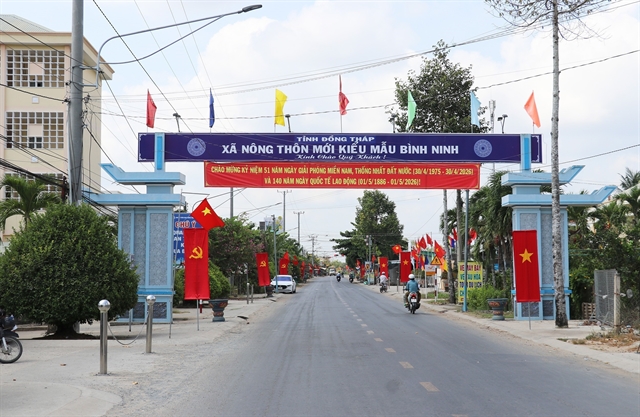
ĐỒNG THÁP — Bình Ninh Commune in Đồng Tháp Province has transformed from a war-ravaged revolutionary base into an exemplary new-style rural area, achieving strong economic growth and sharply reducing poverty over more than five decades.
Located along the Tiền River, a tributary of the Mekong River, the commune once served as a key revolutionary base during the resistance wars against the French and later the US.
During the resistance war against the US, it served as a frontline point to receive and transport weapons from Bến Tre Province, now part of Vĩnh Long Province, to central bases.
The commune also regularly hosted offices of Mỹ Tho and Gò Công provinces, later merged into Tiền Giang Province, now part of Đồng Tháp.
Because of its strategic role, Bình Ninh became a major target of intense attacks by enemy forces seeking to crush the local revolutionary movement.
Between 1954 and 1975, thousands of tonnes of bombs and ammunition were dropped on the commune. On average, each resident endured more than one tonne of war ordnance.
Houses were badly destroyed and people’s lives fell into severe hardship. Despite this, the commune maintained its role as a revolutionary base.
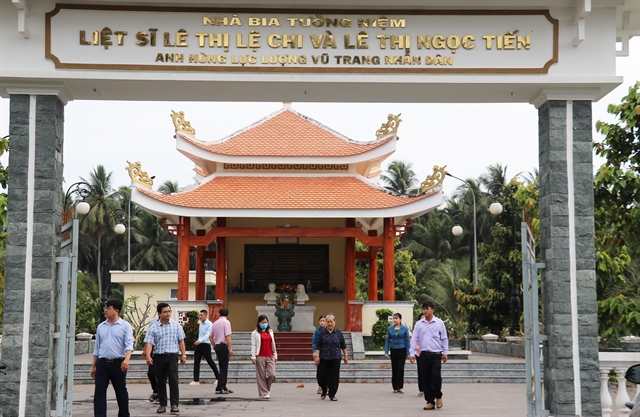
After the liberation of the South and national reunification on April 30, 1975, it faced many difficulties. As a low-lying riverside area heavily affected by war, its economy was nearly exhausted.
Fields were left barren, coconut gardens were destroyed by chemical agents, and transport infrastructure was almost non-existent.
The poverty rate at that time stood at more than 80 per cent.
Drawing on their revolutionary tradition, the local Party organisation and people rebuilt the area.
The commune was awarded the title “Hero of the People’s Armed Forces” on October 20, 1994.
It was officially recognised as meeting the criteria for an exemplary new-style rural commune in 2024.
Significant changes
After 51 years since the liberation of the South in 1975, Bình Ninh has changed markedly.
The poverty rate has fallen sharply to about 0.74–0.75 per cent. Rural infrastructure has been upgraded, with paved roads.
Nguyễn Công Toàn, head of the commune Culture and Social Affairs Bureau, said former dirt roads have been replaced by solid asphalt roads.
“Basic services such as electricity, roads, schools and clinics – once a dream in the 1980s subsidy period – have now met 100 per cent of targets,” he said.
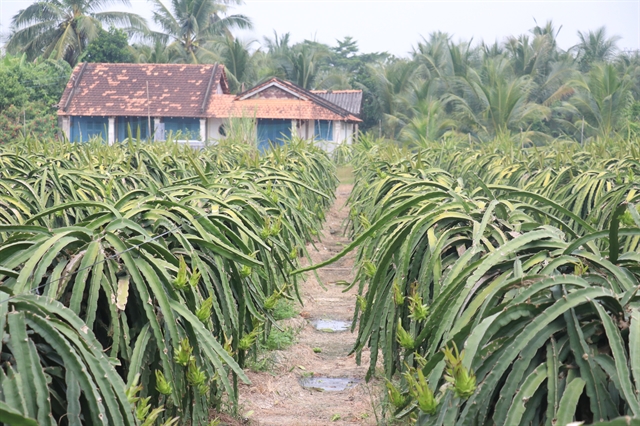
The transformation is linked to a strategy of sustainable agricultural development and diversified production.
The commune focuses on key products such as coconuts, fruit trees, vegetables and livestock.
Dương Thanh Trung, Deputy Chairman of the commune People’s Committee, said: “One of the commune’s key lessons in economic development is improving the internal irrigation system in line with rural transport development, while strengthening the transfer of scientific and technical knowledge to farmers.”
Before the province’s freshwater control programme was introduced, nearly half of the commune’s area along the Tiền River was affected by saltwater intrusion, leaving the soil heavily affected by alum and salinity.
Under the programme, the Tiền River dyke system was fully completed, bringing saltwater intrusion under control.
The irrigation system now serves 3,321ha of farming and livestock production, helping store fresh water, prevent salinity and ensure seasonal farming schedules.
The application of science and technology has delivered clear results.
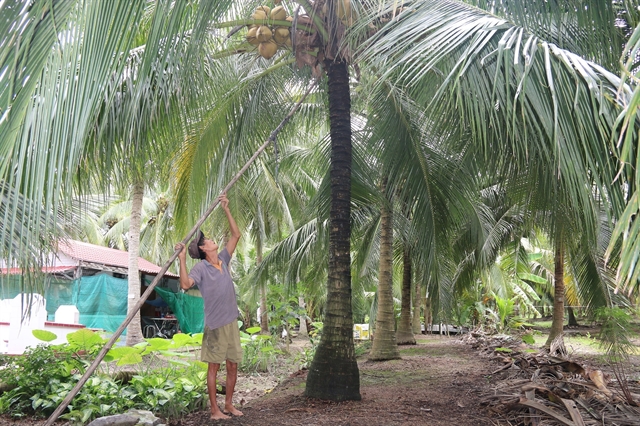
Coconut cultivation covers 2,626ha, with yields rising from 22 tonnes per hectare per year in previous years to 24 tonnes now.
According to local statistics, once coconut trees reach a stable harvesting stage, farmers earn an average profit of about VNĐ91.2 million (US$3,460) per hectare per year.
Production linkages along value chains, combined with the development of planting area codes for export, have been strengthened.
The commune now has 20 products certified under the country’s “One Commune – One Product” (OCOP) programme, including 16 four-star products. This provides a foundation for local agricultural goods to enter export markets.
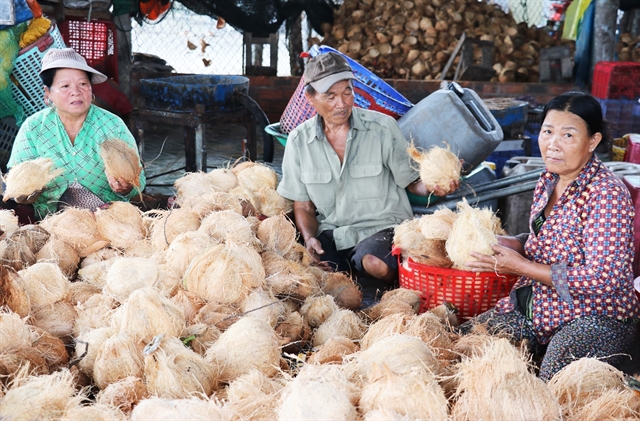
Beyond agriculture, it has promoted industrial and service development.
Last year, nine new enterprises were established, bringing the total number of companies to 58, including three foreign direct investment (FDI) firms. These businesses provide jobs for more than 2,000 workers.
Social welfare is maintained, while defence and security remain stable.
Before July 1, 2025, Bình Ninh Commune was part of Tiền Giang Province. After Tiền Giang merged into Đồng Tháp Province, Bình Ninh and two neighbouring communes, Hòa Định and Xuân Đông, were combined into the existing Bình Ninh Commune in Đồng Tháp Province.
Sustainable growth
Trần Hoàng Nhật Nam, Secretary of the commune Party Committee, said it will focus on leveraging local strengths for sustainable development in the 2025–2030 term.
It targets achieving an average per capita income of VNĐ78–82 million ($2,960–3,110) this year.
It aims to achieve modern new-style rural status by 2030, while restructuring the economy to gradually reduce agriculture and increase the share of industry and services.
In industry, the commune plans to take advantage of Provincial Road No. 864 to attract investment along both sides of the road.
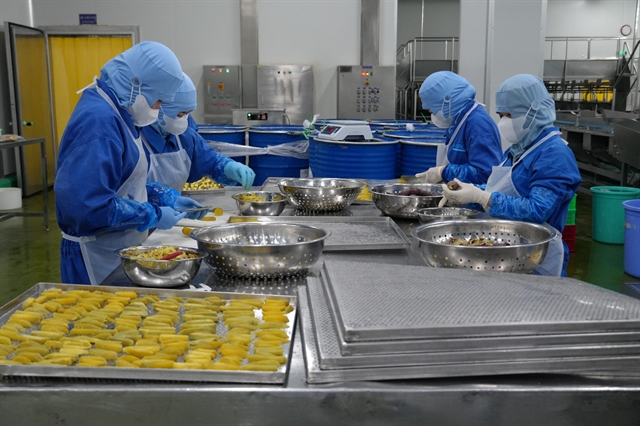
For services and trade, the stretch along the Tiền River from Liên Hoa Pagoda eastwards is expected to attract investment in social housing, townhouses and riverside resort villas. This aims to capitalise on the advantages of Provincial Road No. 864, the Tiền River and urban expansion from the former Mỹ Tho City.
The commune will also promote spiritual tourism and call for more experiential, agricultural and green tourism models.
It will continue to improve administrative reform and digital transformation, enhancing services for residents and businesses. — VNS
