Weather:
- Ha Noi 28oC
- Da Nang 28oC
- Ho Chi Minh 27oC
Thanh Nga and Thủy Nguyễn
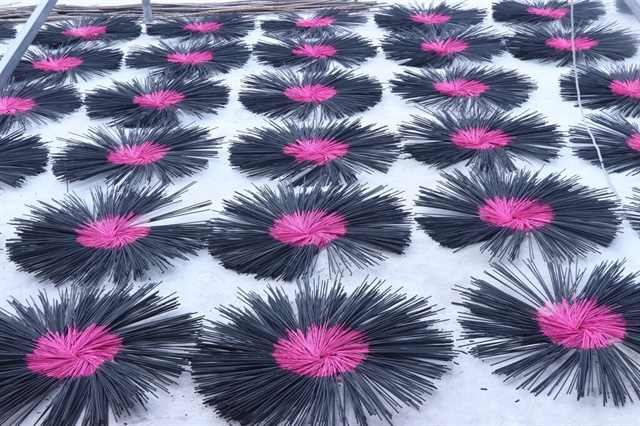
As dawn breaks over Văn Quan Village, the faint scent of incense drifts through quiet courtyards. Bundles of black incense dry in the morning sun while, inside family workshops, artisans roll each stick by hand in a steady rhythm that has changed little for generations.
Located in Diên Hà Commune of Hưng Yên Province, Văn Quan is known for its traditional black incense, a product closely tied to the spiritual practices of the Vietnamese people. For generations, the craft has been passed down within families, becoming both a source of livelihood and a cultural symbol of the village.
In Vietnamese spiritual life, incense holds a special place. From household altars to communal temples, a lit incense stick is present in daily worship as well as during major occasions such as death anniversaries and festivals. More than a ritual object, incense is seen as a bridge between the living and their ancestors, carrying prayers, respect and remembrance. The thin stream of smoke rising from each stick reflects a deeply rooted belief in connection across generations.
It is this enduring role that has sustained villages like Văn Quan, where each incense stick is crafted with care and intention.
Patience and skill
What sets Văn Quan’s black incense apart is its natural ingredients and distinctive production method. The incense is made from a combination of canarium tree resin and charcoal powder derived from sesame and soybean plant stems. These materials are carefully selected, burned, ground and mixed according to family recipes handed down over time.
A defining feature of the village is the use of a low wooden board on which artisans roll each incense stick entirely by hand. Over years of use, these boards become smooth and polished, bearing the marks of the craft. Sitting beside them, workers use their hands to press and shape the mixture around bamboo sticks, ensuring each piece is firm, even and flexible.
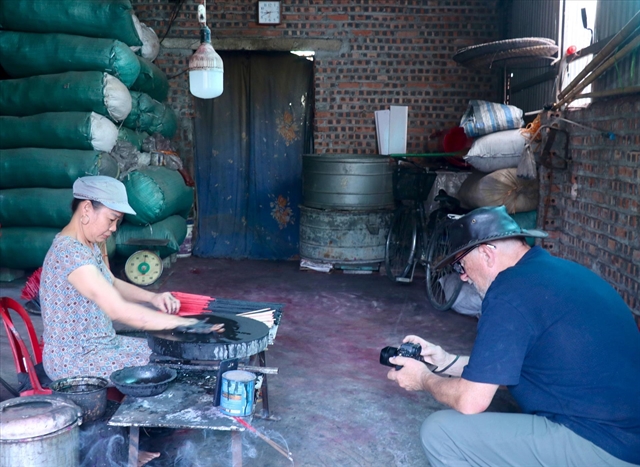
“The wooden board has long been part of our daily work. Rolling incense this way requires both coordination and a good feel for the hands, so that each stick is compact and smooth,” says Ngô Thị Luyên, a resident of Văn Quan.
The process begins with preparing the raw materials. Sesame and soybean stems are burned into charcoal and ground into fine powder. This powder is then mixed with resin and herbs such as cypress leaves, creating a fragrance that is warm yet gentle.
For artisans, the key lies not only in the ingredients but also in the technique. Each stick must be rolled evenly by hand, with careful control of its density and shape. When lit, the incense burns steadily, producing a soft fragrance and light smoke.
Phạm Văn Sỹ, another long-time craftsman, emphasises that the purity of the materials is essential. “We do not use any chemical substances. Everything comes from natural sources. That is why when the incense burns, the smoke is light, the scent is warm and it does not irritate the eyes or darken the altar,” he says.
One notable characteristic of Văn Quan incense is its ability to burn evenly even in slightly humid conditions, a result of both traditional methods and natural materials.
Despite the availability of machines to increase output, many households continue to prioritise manual production. From rolling and coating to drying under sunlight, each step is carried out with care. On warm days, village courtyards are filled with rows of incense drying in the sun, creating a simple but distinctive scene.
Efforts to preserve
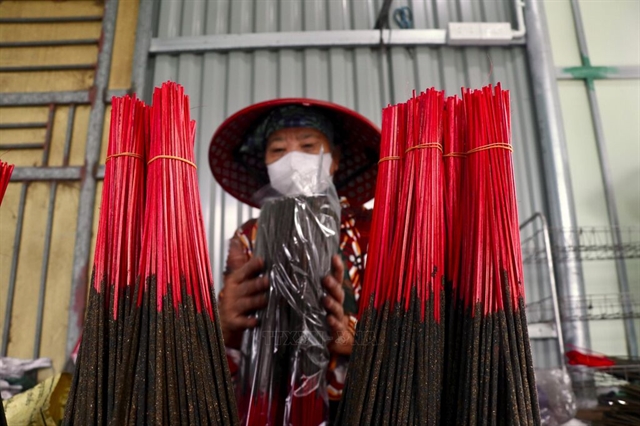
Like many traditional craft villages, Văn Quan faces challenges in maintaining its workforce. The job requires patience, physical effort and skill, while the income remains modest compared with opportunities in industrial zones. As a result, many young people have chosen to seek work elsewhere, leaving the craft largely in the hands of older generations.
“Keeping the craft alive is not easy, but we still try to hold on to it because it is part of our village’s identity,” says Nguyễn Thị Mai, a local artisan.
At the same time, handmade incense must compete with mass-produced alternatives that are cheaper and more varied in appearance. Consumer habits also pose difficulties, as some buyers prefer incense that produces a “lucky rounded ash” after the sticks have burned, which natural incense does not offer.
However, around 300 households in Văn Quan continue to maintain production. For them, preserving the craft is not only about earning an income but also about protecting a cultural identity tied to their community.
Some families have begun to adapt by combining traditional techniques with modern equipment to improve productivity and diversify their products. Others have focused on improving packaging, expanding distribution channels and building brand recognition.
Local authorities have also taken steps to support the village. These include helping households access preferential policies, promoting product branding and linking the craft with cultural tourism to attract visitors.
Đinh Công Chuyển, vice chairman of Diên Hà Commune People’s Committee, says the locality will continue to support residents in preserving and developing the craft. Efforts will focus on strengthening the brand, improving product quality and exploring tourism as a new driver of growth.
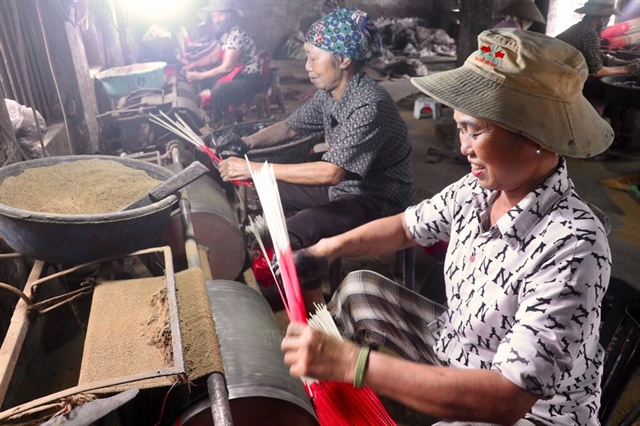
Encouragingly, some younger family members have begun to return to the craft, recognising its long-term value. For them, continuing the tradition of incense-making is about sustaining a livelihood as well as preserving a tradition that defines their roots.
Today, as incense continues to burn on altars across Việt Nam, the black incense of Văn Quan remains a quiet but enduring presence. In every hand-rolled stick lies the quiet persistence of a village determined to preserve its heritage for future generations. — VNS
