Weather:
- Ha Noi 16oC
- Da Nang 23oC
- Ho Chi Minh 27oC
KHÁNH HÒA — With its ancient temple towers, lively festivals, craft villages, and rich cultural heritage, both tangible and intangible, Chăm culture in the south central province of Khánh Hòa is not only a long-standing historical treasure but is also being actively promoted alongside tourism and community livelihoods, bringing fresh energy to Chăm heritage in modern life.
Khánh Hòa is home to nationally significant architectural and artistic relics associated with Chăm culture, including the Hòa Lai Tower Complex, Po Klong Garai Tower and the Po Nagar Chăm Towers. The Po Rome Tower has also been recognised as a national historical and architectural relic. Five artefacts of Chăm culture have been designated National Treasures, notably the statue of King Po Klong Garai, the bas-relief of King Po Rome and several ancient steles.
Among these relics, Po Klong Garai Tower and Po Nagar Towers are regarded as the most representative. Located on Trầu Hill in Đô Vinh ward, Po Klong Garai Tower consists of three structures built in the late 13th and early 14th centuries to worship King Po Klong Garai, who made major contributions to irrigation and local livelihoods. It is considered one of the most intact and visually striking Chăm tower complexes remaining in Việt Nam.
Beyond its architectural value, Po Klong Garai Tower remains an important cultural and religious centre for Chăm Brahman communities in southern Khánh Hòa. Each year, the Kate Festival, held in the seventh month of the Chăm calendar, which usually falls in late September or early October, attracts large numbers of locals and visitors who take part in rituals and traditional cultural activities.
In the field of intangible heritage, several Chăm festivals and rituals in Khánh Hòa have been inscribed on the national intangible cultural heritage list, including the Po Nagar Tower Festival in Nha Trang, the Kate Festival of Chăm Brahman followers and the early-year ritual of the Chăm Community in Bình Nghĩa Village. Notably, the “Art of Chăm Pottery-Making” in the Bàu Trúc Village has been recognised by UNESCO as an Intangible Cultural Heritage in Need of Urgent Safeguarding.
Traditional craft villages such as the Bàu Trúc pottery village and the Mỹ Nghiệp brocade weaving village further enhance the appeal of Chăm heritage. Bàu Trúc, considered the oldest pottery village in Southeast Asia that still preserves purely manual techniques, currently has two cooperatives and 11 production facilities, with around 300 households engaged in the craft. Often described as a “living Chăm pottery museum,” it has become an attractive destination for domestic and international tourists.
Phú Hữu Minh Thuần, Director of the Bàu Trúc Chăm Pottery Cooperative, shared that artisans are dedicated to keeping traditional craftsmanship alive while creating new product lines tied to community-based tourism. Visitors can watch pottery-making in action and even get hands-on with shaping, decorating, and firing their own pieces.
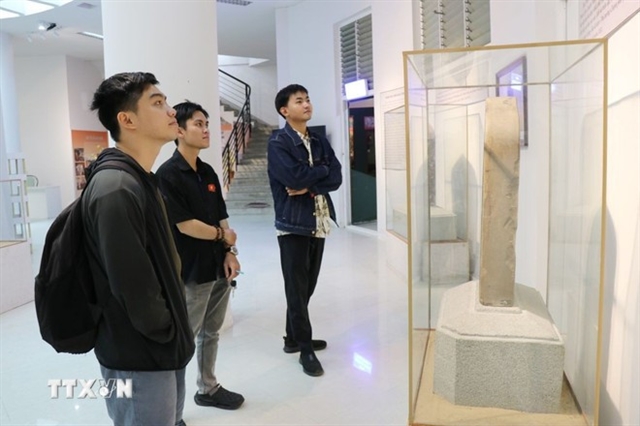
Khánh Hòa has increased efforts to preserve and showcase Chăm cultural heritage. Temples and towers have been restored, festivals and craft villages have been reinvigorated, and folk arts have been studied and brought back to life. The Khánh Hòa Provincial Museum’s Branch 2 (once the Ninh Thuận Chăm Culture Research Centre), the nation’s only institution focused on Chăm cultural research, has gathered and restored over 1,500 artefacts and frequently hosts exhibitions to share Chăm culture with the public.
Nguyễn Long Biên, Vice Chairman of the Khánh Hòa provincial People’s Committee, said the province is linking socio-economic development with heritage preservation to ensure that Chăm communities directly benefit from their cultural assets. Looking ahead to 2030, Khánh Hòa aims to develop Chăm-related cultural and historical tourism sustainably, combining in-depth conservation with experiential tourism to ensure the enduring vitality of Chăm heritage. — VNA/VNS
