Weather:
- Ha Noi 29oC
- Da Nang 28oC
- Ho Chi Minh 29oC
By Lê Hương
Coffee shops are never far away in Việt Nam. From bustling urban boulevards to quiet neighbourhood corners, the aroma of freshly brewed coffee drifts through daily life, a familiar presence that is hard to miss.
The country is also renowned worldwide as a major coffee exporter, celebrated for its wide variety of beans and distinctive flavours. Yet beyond the statistics and global reputation lies a vibrant coffee culture that many visitors are eager to explore.
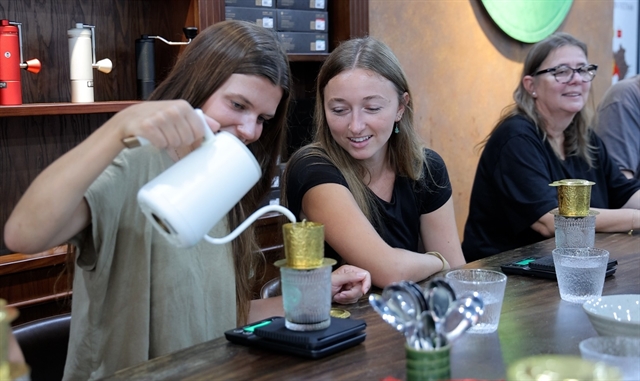
For travellers keen to go beyond simply sipping a cup and instead learn how coffee is made the Vietnamese way, a small workshop tucked away in Hà Nội offers a memorable experience.
At Local Beans Roastery, participants are invited to roll up their sleeves and delve into the art of brewing Vietnamese coffee, discovering the traditions and stories behind each cup.
“I think the care that goes into all the coffee making and all the details to make it present well and taste really good,” said Dante Nuitten, an Australian visitor who joined the workshop during his trip to the capital.
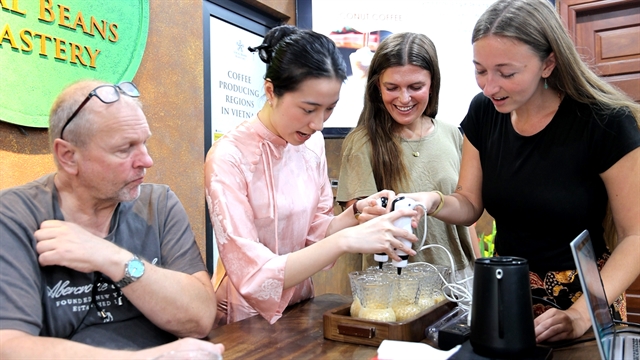
For many international visitors, the experience reveals just how different Vietnamese coffee culture can be from what they know at home.
“It’s very interesting when Vietnamese people make coffee because it’s not the same as in Germany or in Europe,” said Antje Tessmer, a tourist from Germany who was intrigued by the distinctive brewing methods and ingredients.
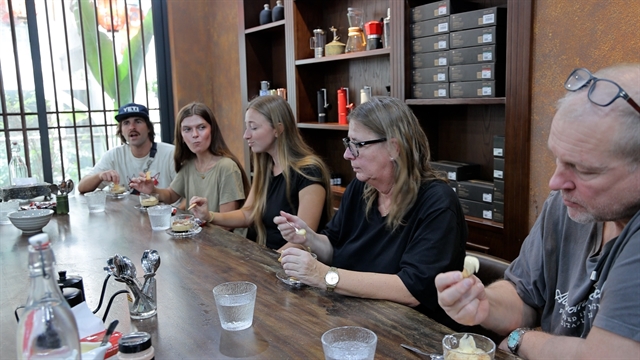
The workshop’s relaxed atmosphere also makes it a place where travellers can meet and share experiences.
“It’s very casual and fun and it’s fun to meet different travellers around if you want to experience the same thing,” said Jessie Gaudreau from the United States.
Founded in 2020, Local Beans Roastery was created with a clear vision: to help visitors experience Vietnamese coffee culture in a more authentic and immersive way.
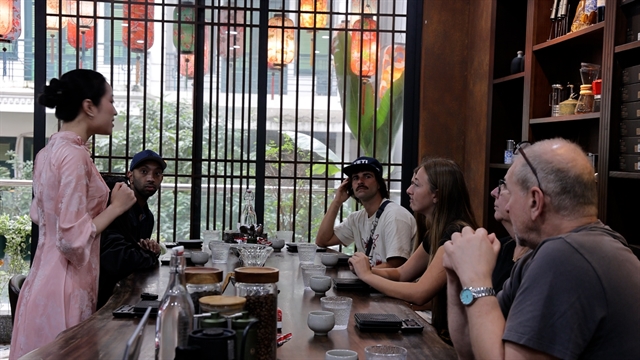
According to founder Nguyễn Mạnh Cường, the concept centres on three key ideas: local, tradition and coffee.
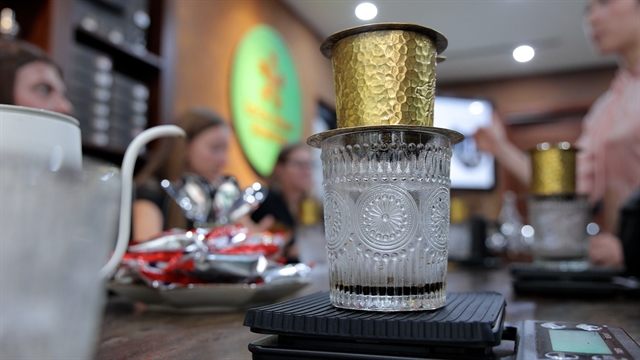
Rather than simply tasting coffee, guests are guided through the process of making a range of popular Vietnamese drinks. Using traditional brewing methods such as the phin filter and pour-over techniques, participants learn to create beverages including egg coffee, salted coffee, coconut coffee and even coffee cocktails.
“To achieve the authentic taste of traditional Vietnamese coffee, precise measurement is essential,” Cường said.
“At Local Beans Roastery, all the necessary tools are provided for accurate portioning, including precision scales, measuring spoons and specialised cups.”
The technical guidance is paired with stories about the origins of Vietnamese coffee, from the plantations where the beans are grown to the local traditions that shape each recipe. This combination turns the workshop into both a cultural introduction and a practical lesson.
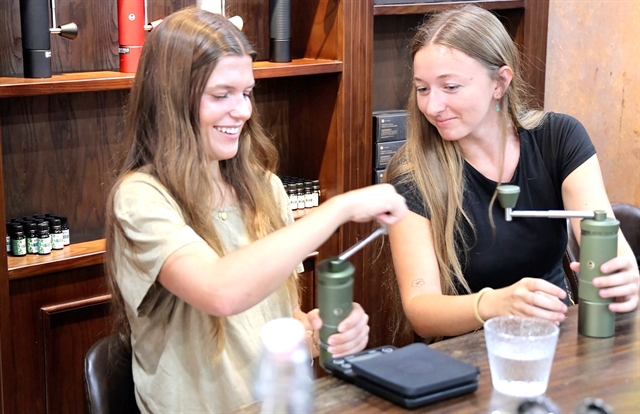
For many participants, the flavours themselves come as a revelation.
“I really like the egg coffee but the coconut coffee was really good too,” said Nuitten, who was struck by how different Vietnamese coffee felt from what he was used to.
“In Australia, we have really good coffee too but it is prepared in a very different way with very different means, like we have really big machines that froth milk and stuff, so it’s just a very different way of enjoying coffee. It’s really interesting.”
The use of unexpected ingredients is one feature that fascinates many visitors.
“I like egg coffee and coffee with coconut. It’s very nice,” said Tessmer.
“It’s not so much coffee, it’s more ingredients with egg or with coconut or with ice, but not for me, normally for coffee.”
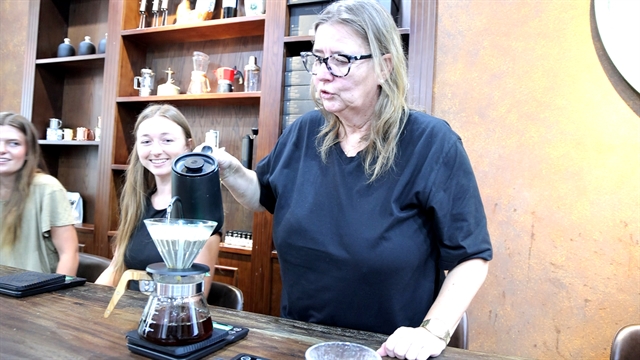
For Gaudreau, who admitted she had never been much of a coffee drinker before the trip, the workshop opened up an entirely new appreciation for the beverage.
“Before, I really wasn’t a big coffee drinker, so I have never experienced anything like this,” she said.
“I have had different types of foam in the past. The egg foam and the salt foam have been unbelievable. It’s so delicious.”
Beyond the flavours, the workshop also introduces visitors to the creativity and effort behind Vietnamese coffee production.
“I think the creativity of Vietnamese people and the hard manual labour that goes into growing coffee, blending coffee and getting the coffee from the plantations into someone’s workshop,” Nuitten said.
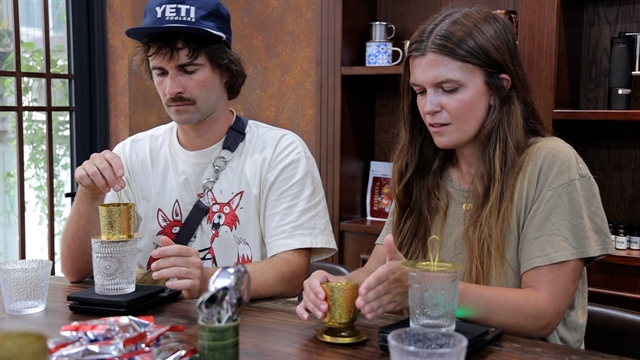
Those insights often inspire guests to continue exploring Vietnamese coffee after returning home.
“I hope I can find the ingredients to make the coffees. I hope I can bring this little piece of Vietnamese culture back to my home,” said Gaudreau.
Tessmer shares the same plan.
“I think I will try to make Vietnamese coffee at home,” she said.
“We made this workshop and I have made a lot of photos from where we make it and we will try it at home.”
Since its launch in 2020, the workshop has steadily grown in popularity and has become a highlight for many tour groups visiting Hà Nội.
Despite the growing interest, Local Beans Roastery has chosen not to expand rapidly. Instead, the team continues to focus on preserving the authenticity of Vietnamese coffee traditions while gradually introducing new drinks made from locally sourced beans.
The goal, Cường said, is not just to teach people how to brew coffee but to help them experience the culture behind it.
For visitors leaving the workshop, the memories are not limited to the taste of a single cup. Instead, they carry home new skills, stories and a deeper understanding of a drink that plays a central role in everyday Vietnamese life.
In many cases, they leave hoping the flavours of Việt Nam will soon be brewing again, this time in their own kitchens. VNS