Weather:
- Ha Noi 23oC
- Da Nang 25oC
- Ho Chi Minh 24oC
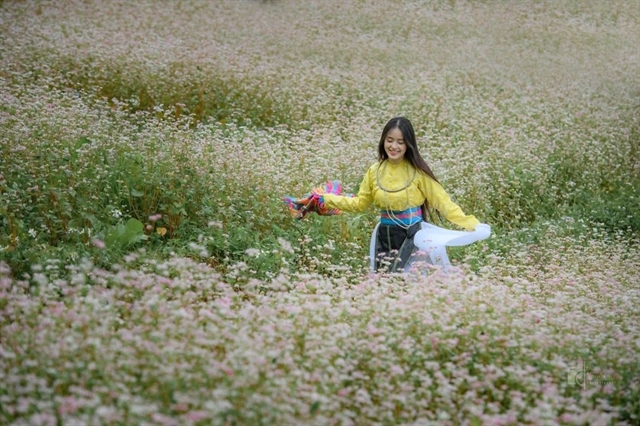
TUYÊN QUANG — Each autumn, buckwheat flowers add soft hues to the grey stone landscape of the Đồng Văn Karst Plateau, attracting visitors to winding roads, mountain villages and cultural sites in the northern province of Tuyên Quang.
The flower has evolved from a crop closely linked to highland communities into an iconic tourism symbol. This year, however, the focus is shifting from simply showcasing flower fields to extending the tourism season, improving services and ensuring greater economic benefits for local communities.
The 12th Buckwheat Flower Festival is about to kick off later this month as Tuyên Quang’s tourism sector maintains strong growth. In the first nine months of 2026, the province welcomed more than 3.24 million visitors, including 567,443 international arrivals, generating an estimated VNĐ8.98 trillion (US$346 million) in tourism revenue.
To extend the flower season, about 400ha of buckwheat is planned across the Đồng Văn Karst Plateau, a member of the UNESCO Global Geopark Network, with sowing staggered from October to December. By early October, more than 242ha had been planted across 12 communes.
The flower fields are also being linked with heritage sites, cultural villages and local tourism attractions, turning the seasonal spectacle into part of a broader travel experience.
Phan Đức Nam, Chairman of the Đồng Văn commune People's Committee, said the locality is focusing not only on flower cultivation but also on improving landscapes, environmental sanitation and tourism services. The goal is to give visitors more reasons to stay longer and return at other times of the year.
Festival activities will therefore be expanded to include local cuisine, OCOP products, distinctive farm produce and community-based experiences. Visitors can explore traditional Mông ethnic homes, sample local dishes, buy products and stay overnight in villages.
At the Thèn Pả Village tourism site, accommodation providers are similarly focusing on experiences alongside lodging.
Vũ Gia Đại, Director of North Pole Travel JSC – a supplier of homestay services at Thàn Pả Village, said visitors increasingly seek to experience local cuisine, culture and daily life rather than simply find a place to stay.
Tuyên Quang now has 1,519 accommodation establishments with around 14,860 rooms and more than 28,000 beds, including 755 homestay facilities. The province also has 83 travel companies and 371 licensed tour guides.
For the Đồng Văn Karst Plateau, its strongest tourism assets are distinctive and irreplaceable, including geological landscapes, traditional rammed-earth houses, highland markets, Mông ethnic culture, linen weaving, cuisine and indigenous knowledge about farming adapted to harsh conditions.
Nguyễn Trung Ngọc, Director of the Tuyên Quang Department of Culture, Sports and Tourism, said tourism development in the geopark should continue to be based on heritage conservation and promotion while improving products and services and increasing community participation.
The province is also calling for better service quality, transparent pricing, stronger promotion of agricultural specialities and improved landscapes at tourism sites.
The success of the buckwheat season is therefore no longer measured simply by the size of flower fields or visitor numbers, but by how long tourists stay, how much they spend and how much local communities benefit.
From a three-month flower season to a tourism season with multiple experiences, buckwheat blossoms are becoming a gateway to the wider cultural and economic value of the stone plateau. — VNA/VNS
