Weather:
- Ha Noi 24oC
- Da Nang 24oC
- Ho Chi Minh 25oC
By Thanh Nga
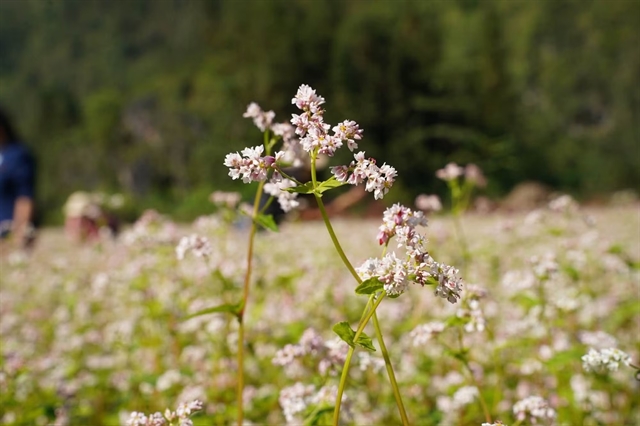
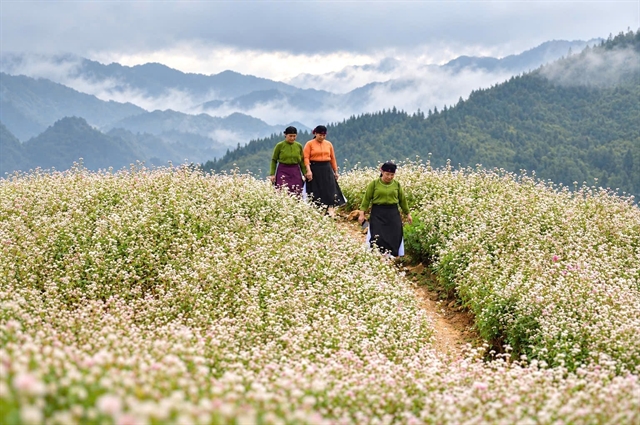
The grey limestone mountains of the Đồng Văn Karst Plateau take on a softer look each autumn, when buckwheat flowers spread across the hillsides in shades of white, pale pink and purple.
We have returned to this rugged corner of Tuyên Quang Province many times, yet the sight of the flowers against the bare rock never loses its appeal. Along winding mountain roads and around quiet villages, the blooms offer a gentler side to a landscape shaped by stone, while inviting us to discover the people and traditions that make this highland region distinctive.
The flowers usually bloom from late October to early December, changing colour from pale pink to deeper purple as the season advances. They have become a symbol of the plateau, where buckwheat has long been part of local life.
According to local legend, when maize and rice ran out before the next harvest, highland residents followed a strange fragrance through the mountain crevices and discovered a plant with triangular leaves and edible seeds. The discovery helped them through difficult times. Today, people here still grow buckwheat to make cakes and brew alcohol, as well as for use in traditional remedies.
Sủng Là is usually our first stop. During the flowering season, purple blooms cover the hillsides, while the village offers more than a chance to take photographs. Visitors can see the old house used as a setting for the film Chuyện của Pao (Pao’s Story) or explore a local market where Mông people gather.
A short drive away, Phó Bảng has a quieter atmosphere. Often described as a “sleepy town”, it lies among pink flower valleys and buckwheat fields stretching along the roadside. Its old houses, with moss-covered walls and weathered façades, lend the town a subdued character. We linger for a while before continuing north.
Lũng Cú, home to the national flag tower, offers another perspective on the plateau. Buckwheat fields spread across the slopes towards the tower, contrasting with the grey limestone peaks. From above, the rugged terrain and patches of pink and purple stretch into the distance.
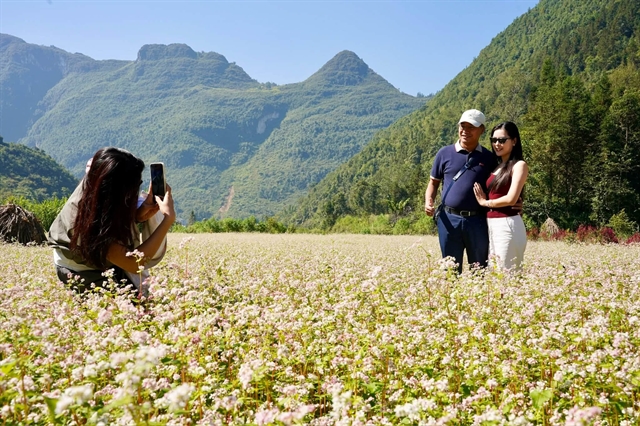
In 2026, Lũng Cú Commune planted about 70ha of buckwheat across 16 villages, including 18.2ha in key tourism areas such as Thèn Pả, Lô Lô Chải, Sán Trồ, Ma Lé and Má Sồ. Residents sow the flowers in several stages to create successive blooms and extend the viewing season.
Each location has its own character. In Thèn Pả, flower fields blend with Mông villages and traditional houses at the foot of the mountains. In Lô Lô Chải, the blossoms add colour to earthen-walled houses and stone fences, set against the everyday life of the Lô Lô community. The fields in Sán Trồ, Ma Lé and Má Sồ open up wider views of the surrounding mountains.
After climbing the stone steps to the Lũng Cú Flag Tower, visitors can explore the villages below, walk alongside the flowers and sample local dishes.
In Lũng Táo, the fields are best appreciated from Ma Lé Mountain, where the summit offers a sweeping view of the flower-covered slopes and limestone peaks. Further along National Highway 4C, Phố Cáo attracts visitors with its yellow earthen houses, children playing in the sunshine and simple buckwheat fields that fit naturally into the village landscape.
Mountains and river
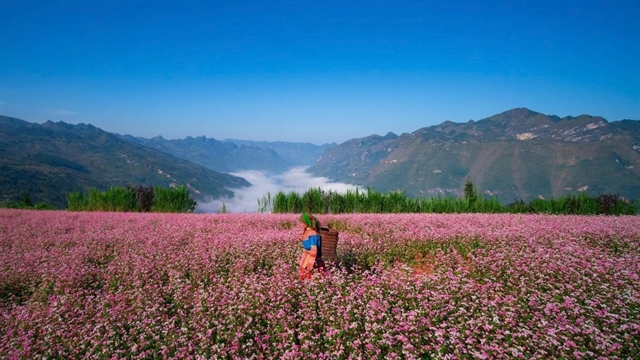
We spend more time at Mã Pí Lèng Pass, one of Việt Nam’s four great mountain passes. The road winds between steep cliffs and deep valleys, with the emerald waters of the Nho Quế River far below. Grey limestone peaks extend towards the north and northeast, forming a rugged landscape that changes with every turn.
At several viewpoints, we stop to catch our breath and take in the view. From above, the Nho Quế winds between the mountains like a green ribbon, while buckwheat flowers on the lower slopes add splashes of colour to the stark terrain.
The 12th Buckwheat Flower Festival in 2026, themed Âm vang miền đá (Echoes of the Rocky Plateau), is scheduled to open on October 25 in Đồng Văn Commune and run until the end of December.
The annual event aims to promote the natural landscape and cultural identity of communities in the Đồng Văn Karst Plateau UNESCO Global Geopark. Visitors can also learn traditional skills such as flax weaving, indigo dyeing and brocade embroidery, make buckwheat cakes and explore the distinctive practice of growing crops in rocky hollows.
Flavours of the highlands
For us, the journey is not complete without trying the local food. In the chilly weather of flower season, the dishes offer another way to discover the region.
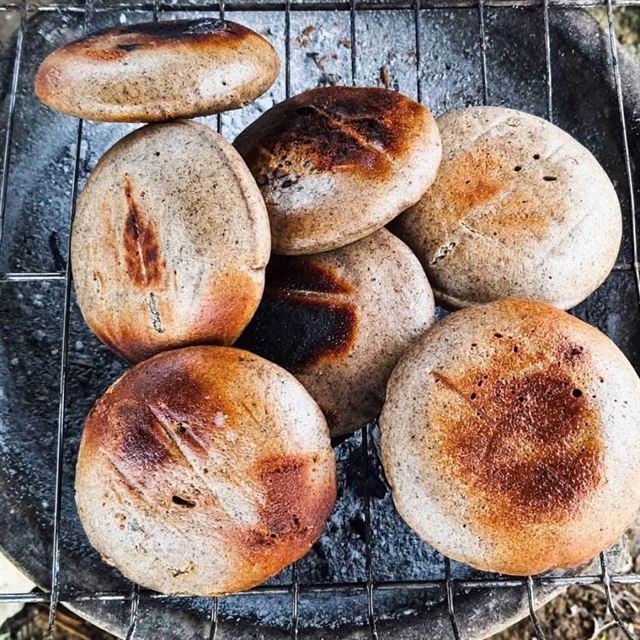
Buckwheat cake, made from ground seeds and shaped into small cakes, costs around VNĐ10,000 each. Its mild, nutty flavour is often enjoyed with thắng cố, a traditional horse meat stew. The rich taste of the stew complements the more delicate flavour of the cake.
Cháo ấu tẩu, a porridge made with the aconite tuber, is another local speciality. The tuber is poisonous unless properly prepared. Cooked slowly with rice, the porridge is served hot with egg, pepper, chilli and herbs. We remember its warmth and creamy texture, with the spices balancing the tuber's characteristic bitterness.
Rêu nướng, or grilled moss, is perhaps the most unexpected dish we try. Associated with the Tày people, it is part of everyday local cooking rather than simply a speciality prepared for visitors. Trying it offers a glimpse into the food traditions of highland communities.
Travel notes
Autumn temperatures on the plateau are considerably lower than in the lowlands, so warm clothes, a hat and a scarf are essential. Comfortable shoes with good grip are useful on steep paths and winding roads.
Entrance fees to flower fields generally range from VNĐ10,000 to VNĐ20,000 per visit, depending on the location. Visitors should avoid trampling or picking flowers when taking photographs.
Mountain roads can be challenging for those unfamiliar with driving in the highlands. Travelling in a group or hiring a local guide can make the journey safer and provide a deeper understanding of the region. — VNS
