Weather:
- Ha Noi 21oC
- Da Nang 26oC
- Ho Chi Minh 28oC
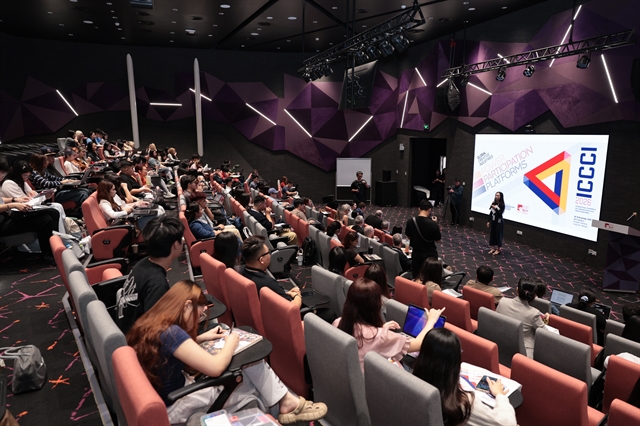
HƯNG YÊN — The British University Vietnam (BUV) on Wednesday opened its second International Conference on Communications and Creative Industries (ICCCI 2026), bringing together nearly 100 researchers and young scholars from 35 universities and educational institutions in Việt Nam and abroad to discuss the changing landscape of global creative industries.
Held at BUV's Ecopark campus in Hưng Yên Province, the two-day conference, themed “Global Creative Industries: Power, Participation and Platforms”, examines how artificial intelligence (AI), digital technologies and global platforms are reshaping cultural production, content creation and audience participation.
As digital platforms and AI increasingly influence how creative content is produced and distributed, the conference provided an academic forum for researchers, lecturers and industry professionals to exchange perspectives on emerging opportunities and challenges facing the sector.
Participants from Việt Nam, the UK, Thailand, Malaysia and Hong Kong (China) are discussing a range of topics, including creative production, AI and automation, transnational audiences and connected cultures, media literacy, film industries and audience development, as well as a dedicated forum for young researchers.
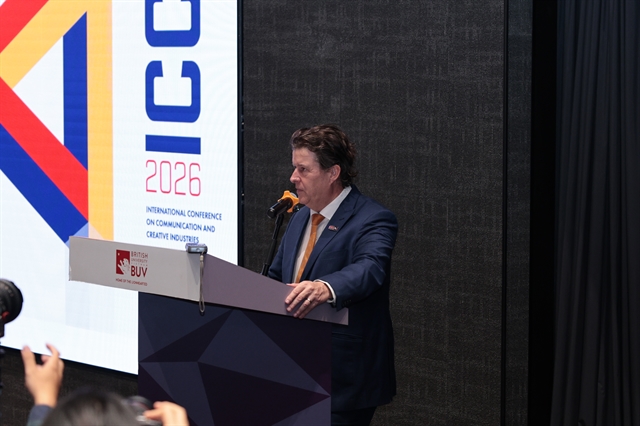
Addressing the opening ceremony, BUV Vice-Chancellor and Vice-President Professor Rick Bennett highlighted the growing importance of creative industries in Việt Nam, noting that changing public perceptions and strengthening links between education and industry remain important priorities.
He referred to the Government's targets for cultural industries to contribute 7 per cent of GDP by 2030 and 9 per cent by 2045, stressing that AI should be used as a tool to support, rather than replace, human creativity. He also noted that the skills gap between graduates and employers was largely related to interpersonal and other human skills rather than technical capabilities.
A key discussion at the conference focused on turning Việt Nam's cultural heritage into intellectual property (IP) with international commercial potential.
Lê Quốc Vinh, founder and CEO of Le Group of Companies, argued that the country's rich cultural resources, from traditional crafts and cuisine to local knowledge and storytelling, needed stronger creative and commercial systems to reach global audiences while retaining their cultural roots.
Sound and listening in media were another focus of the conference. Dr Ross Williams, Head of Film and Media Production at BUV, highlighted the importance of “listening literacy”, arguing that sound was often overlooked in media studies despite its role in shaping meaning. He also raised concerns about representation, ownership and consent in AI-generated voices, particularly whose voices and accents were included in training data and who benefited from their use.
The conference also explored Việt Nam's position in global creative production through industry perspectives. Speakers from Shuttlerock Vietnam and Xilam Vietnam highlighted the contribution of Vietnamese creative professionals to international advertising and animation projects.
The discussion also highlighted challenges facing Việt Nam's animation industry, particularly the gap between those producing content and those owning the intellectual property. Roland Vongphasouk, Studio Director at Xilam Vietnam, said Việt Nam needed to move beyond its role as a production service provider towards producing, co-producing and eventually developing its own original stories and intellectual property.
On the sidelines of the opening ceremony, BUV signed memoranda of understanding with Le Group of Companies, Shuttlerock Vietnam and Xilam Vietnam to strengthen co-operation between higher education and the creative industries. — VNS
