Weather:
- Ha Noi 26oC
- Da Nang 29oC
- Ho Chi Minh 32oC
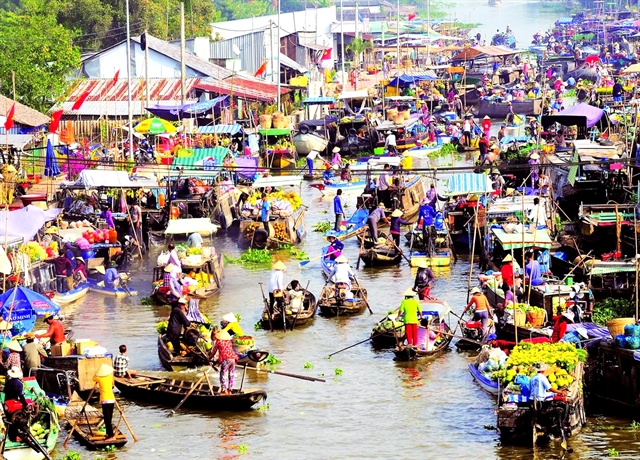
CẦN THƠ — Cần Thơ City is leveraging its riverine landscape and orchard-based agriculture to develop distinctive ecotourism products, aiming to attract more visitors and expand the local tourism economy.
Agricultural and ecological tourism has been identified as one of the sectors with significant potential, and is expected to attract visitors to explore and experience activities in Cần Thơ City.
In recent years, many communes and wards across the city have capitalised on their existing advantages and strengthened linkages to form distinctive tourism products, contributing to the expansion of the city’s tourism development space.
Harnessing the advantages
Tân Lộc Islet in Tân Lộc Ward is a distinctive tourism area located in the middle of the Hậu River.
The locality benefits from fertile alluvial land, concentrated fruit orchards, and stable aquaculture models in ponds and floating cages, creating favourable conditions for the development of ecotourism and agricultural tourism in line with the city’s green tourism orientation.
In addition to its natural resources, Tân Lộc preserves many long-standing cultural values, including a system of early 20th-century ancient houses, communal houses and pagodas, as well as traditional festivals.
At present, several tourist sites in the ward welcome visitors, such as Cô Điệp guava garden, Tân Lộc ecological garden, the woody grape garden, rambutan orchards, the Trần Bá Thế ancient house, Sáu Tia plum wine facility, a tra fish fermented fish sauce facility, and the Tân Lộc coconut garden.
Đào Thị Diễm Kiều, a resident of Trường Thọ 2 area in Tân Lộc Ward, said the number of visitors to the Tân Lộc coconut garden is seasonal, typically concentrated from before the Lunar New Year until around March.
The Lunar New Year period is the busiest time, with approximately 100–200 visitors per day, while visitor numbers decline during the rainy season.
According to Kiều, to effectively tap the ecotourism potential of Tân Lộc Islet, the locality needs to strengthen promotion and connect tourist sites with travel companies in order to attract more visitors.
To promote tourism development, the People’s Committee of Tân Lộc Ward has established an Ecotourism Development Club, bringing together local organisations and representatives of tourist sites.
The club aims to strengthen linkages among tourism destinations while encouraging orchard owners and households to raise awareness and participate in community-based tourism models suited to local conditions.
Nguyễn Thị Thu Hà, vice chairwoman of the Tân Lộc Ward People’s Committee, said that following the administrative consolidation, the locality continues to promote the strengths of orchard-based ecotourism on the islet.
The ward is currently reviewing tourist sites and coordinating with orchard owners and business households to consolidate and promote distinctive tourism products.
However, efforts to attract investment and promote tourism have yet to match the locality’s potential.
According to Hà, in order to maximise the geographical advantages of the islet, the locality has proposed that authorities at various levels continue to support investment in docking facilities as well as road and waterway infrastructure.
The ward is focusing on developing sustainable community-based tourism linked with the conservation of natural resources, building brands for OCOP products and bringing them into tourism exploitation.
At the same time, it aims to strengthen branding for OCOP-standard products in Tân Lộc Ward in particular, integrating them into tourism activities to improve product quality and expand market outlets.
Not only areas with distinctive geographical features such as islets and sandbanks, but several suburban communes and wards of the city are also repositioning their ecological and agricultural tourism development spaces.
At the same time, they are renewing tourism products and strengthening connections to create attractive destinations.
Expanding linkages
Tân Hòa Commune in Cần Thơ City was established through the merger of four localities: Tân Hòa Commune, Nhơn Nghĩa A Commune, Một Ngàn Township and Bảy Ngàn Township (formerly in Châu Thành A District of Hậu Giang Province).
With a natural area of 58.60 square kilometres, the locality has favourable conditions to develop various economic models, among which community-based tourism is considered a promising direction.
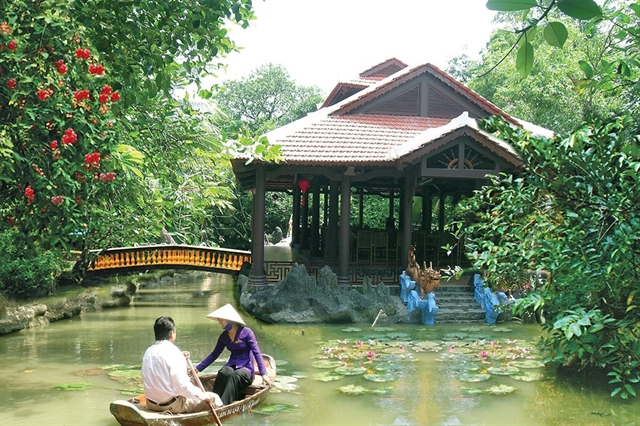
At present, Tân Hòa Commune is gradually forming community tourism products associated with orchard life experiences, river-based tourism, visits to agricultural production sites and the enjoyment of local cuisine.
Several models have initially made an impression on visitors, including Mương Đình Homestay, Ngọc Đào Goat Dairy Farm and various distinctive OCOP products.
However, tourism activities in the locality remain limited, characterised by small-scale operations, a lack of product diversity and insufficiently close connections among residents, businesses and travel companies.
Lê Hoàng Xuyên, secretary of the Tân Hòa Commune Party Committee, said the locality hopes to continue receiving support from the city’s Department of Culture, Sports and Tourism in terms of development orientation, consultancy on building distinctive tourism products, connecting tour routes and promoting the locality’s tourism image.
At the same time, the commune aims to strengthen cooperation with travel enterprises to bring visitors for experiential activities, forming a tourism value chain linked to agricultural production and the consumption of OCOP products.
According to Xuyên, Tân Hòa Commune also attaches importance to linking with neighbouring localities such as Nhơn Ái, Phong Điền, Trường Long and An Bình Ward.
This is significant for forming integrated tourism routes, diversifying products and extending visitors’ length of stay, with the aim of developing tourism in an open and regionally connected space.
Meanwhile, the proactive participation and consensus of local residents in preserving landscapes, safeguarding traditional cultural values, and improving service quality and professional conduct are decisive factors for the sustainable development of tourism in Tân Hòa.
Sầm Long Giang, deputy director of the city’s Department of Culture, Sports and Tourism, emphasised that agricultural tourism is one of the promising sectors expected to attract more visitors to the Mekong Delta region and Cần Thơ City.
In the coming period, the department will focus on advising the municipal People’s Committee on developing new tourism products and training a high-quality tourism workforce.
It will also propose mechanisms to attract investment in river tourism and orchard-based ecotourism, while promoting digital transformation in tourism to reach global visitors.
Cần Thơ City currently has more than 110 tourist sites and attractions offering diverse forms of ecotourism, including river tourism, community tourism and coastal tourism, alongside a system of accommodation facilities that ensure quality and provide diverse services for a wide range of visitors.
The Department of Culture, Sports and Tourism is focusing on advising the development of new tourism products and strengthening linkages associated with cultural and environmental preservation, which will serve as a foundation for accelerating the city’s tourism development and attracting both domestic and international visitors. — VNS
