Weather:
- Ha Noi 26oC
- Da Nang 25oC
- Ho Chi Minh 25oC
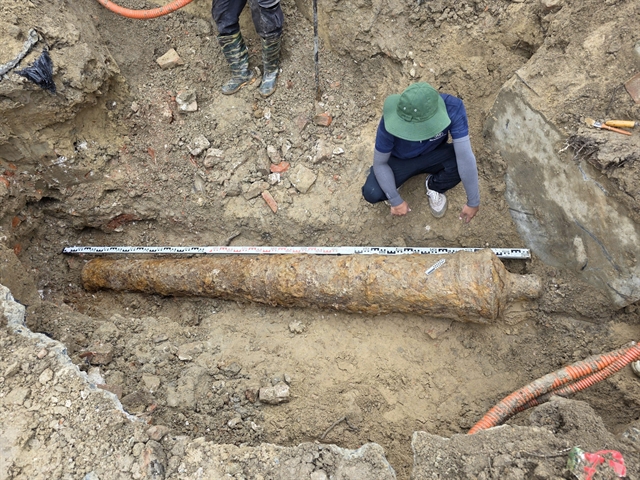
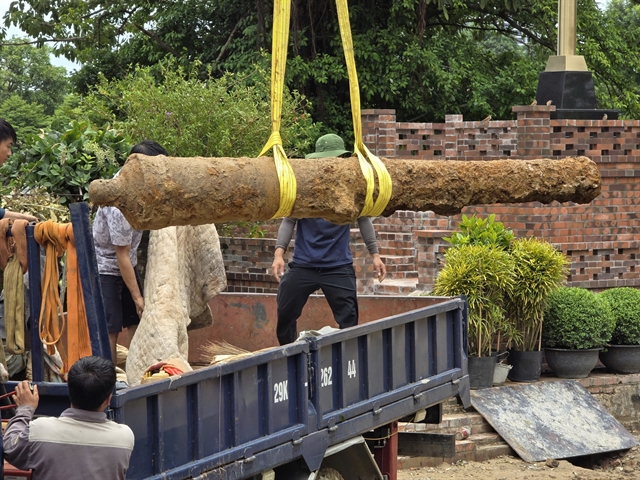
ĐÀ NẴNG – A 2.95m long cannon has been found at a construction site at the Điện Hải Citadel in the central city, making it the 10th cannon excavated at the site, Director of the city’s museum, Huỳnh Đình Quốc Thiện said.
According to him, the cannon was unearthed when a construction team was digging at the citadel in the restoration project.
Thiện said the cannon initially identified as one of many cannons in the defensive weapon system of Đà Nẵng City including the citadel and An Hải garrison in the Hàn River Estuary and Đà Nẵng Bay in 1858-60.
It is believed to have been used in the fight against French-Spanish forces 168 years ago, but further scientific research and examinations will be conducted to clarify details about the cannon, Thiện added.
In 2019, a bronze cannon was found at a construction site on the beach of Đà Nẵng, and it was then identified to have been created in the Netherlands around 350 years ago.
The museum has preserved a collection of 14 cannons including 13 iron cast and one bronze at the citadel and surrounding area from 1979.
According to historical researchers from Huế and Đà Nẵng generations of kings Gia Long, Minh Mạng, Thiệu Trị, and Tự Đức (1813-1850) had set up many bronze and iron cannons at the Điện Hải Citadel near the Hàn Estuary in protection of Đà Nẵng in the 19th century.
The existence of the cannon and the citadel is attached to famous general Nguyễn Tri Phương (1800-1873) under the Nguyễn Dynasty when he commanded an army fighting against the French-Spanish coalition forces (1858-1860).
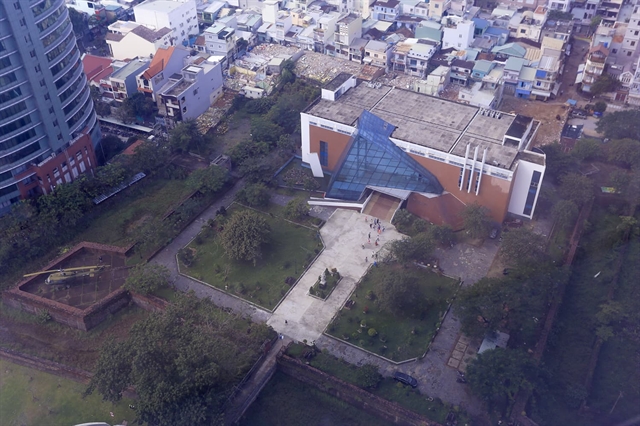
The cannon collection has been submitted in a dossier for recognition as a national treasure, the museum shared.
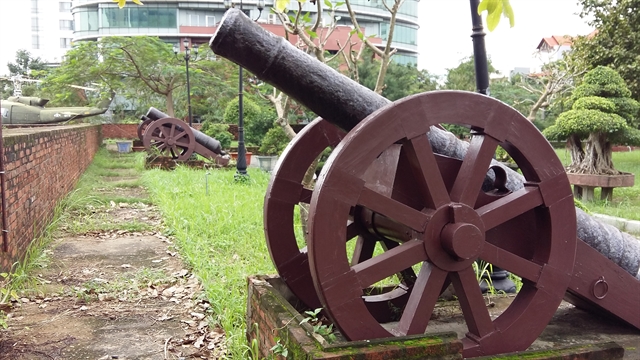
At least 11 cannons, which are on display at the Đà Nẵng Museum, had originally been cast in iron during the Nguyễn Dynasty, between 1802 and 1860.
They form part of a collection of 30 cannons deployed at the citadel to protect Đà Nẵng in the fight against French-Spanish coalition forces in 1858-60.
Điện Hải Citadel was first constructed as a military outpost in the 12th year of King Gia Long’s reign (1813), near the mouth of the Hàn River, to control access to Đà Nẵng port and serve as an important defensive position.
The citadel, which was recognized as a National Special Relic, still has a moat between two brick walls. The relic has been restored to rebuild it according to its original design from more than 200 years ago.
In August, two important military defensive posts – the Chơn Sảng Garrison and Nam Chơn Station – on the Thiên Lý (North-South) route through the Hải Vân Pass during the Nguyễn Dynasty nearly 200 years ago, were found at an excavation at the Hải Vân Pass. VNS
