Weather:
- Ha Noi 28oC
- Da Nang 26oC
- Ho Chi Minh 24oC
CAO BẰNG — For the people living in the mountains and valleys of Cao Bằng Province, heritage is more than something to be preserved. It is increasingly becoming a source of income, employment and a reason for younger generations to stay and build their futures at home.
Since the Non nước Cao Bằng UNESCO Global Geopark was added to the UNESCO Global Geoparks Network in 2018, the province has steadily turned international recommendations into practical programmes, seeking to strike a balance between conservation and economic development.
After two consecutive successful revalidations, the geopark has strengthened its links with the global network while expanding tourism experiences across the province. According to Tô Vũ Ninh, director of the provincial Department of Culture, Sports and Tourism, the UNESCO designation is not merely an honourary title, but a foundation for developing Cao Bằng into a destination centred on heritage, nature and culture.
The strength of the geopark lies in the remarkable combination of geological, ecological and cultural values.
According to Associate Professor Trần Tân Văn, former director of the Vietnam Institute of Geosciences and Mineral Resources, the geopark preserves nearly 500 million years of Earth's geological history, with fossils, ancient rock formations, caves, waterfalls and distinctive karst landscapes offering visitors an open book on the region's natural evolution.
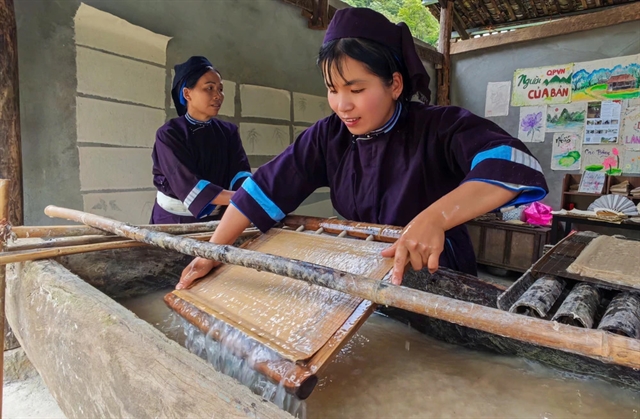
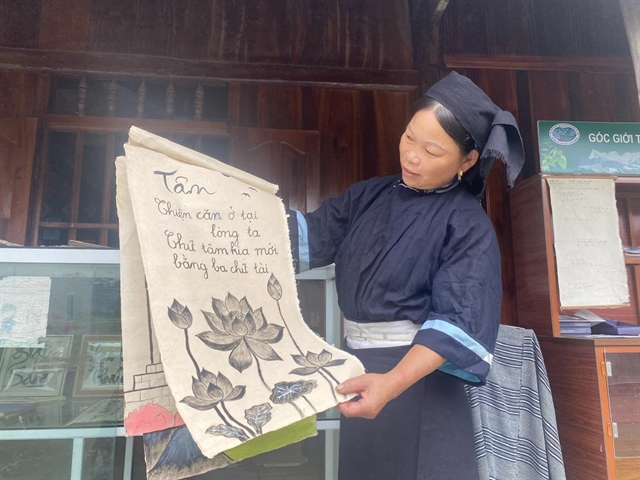
Among its best-known attractions are Bản Giốc Waterfall, Ngườm Ngao Cave, Thang Hen Lake and Mắt Thần Mountain. Equally important are the cultural traditions of the Tày, Nùng, Mông and Dao ethnic communities, expressed through traditional crafts such as knife-making in Phúc Sen, incense-making in Phia Thắp, traditional paper-making in Dìa Trên, tiled roof production in Lũng Rì and the stone village of Khuổi Ky.
The geopark also incorporates major historical sites, including the special national historical site of Pác Bó, Trần Hưng Đạo Forest and the site of the 1950 Border Campaign victory.
From heritage to livelihoods
To bring these values to life, Cao Bằng has developed the geopark as an outdoor museum, with five experience routes including 'Journey to the Roots', 'Exploring Phia Oắc – The Mountain of Change', 'Experiencing Indigenous Culture in a Fairyland', 'A Time of Fire and Flowers' and a route to the Đồng Văn Karst Plateau UNESCO Global Geopark.
The most meaningful change has taken place within local communities, however.
Since joining the global network, visitor numbers to Cao Bằng have grown by an average of 25 per cent annually, except during the COVID-19 pandemic. Rather than concentrating visitors at a few major attractions, the experience routes have helped spread tourism activity to villages and craft communities.
In Khuổi Ky Village in Đàm Thủy Commune, Pác Rằng Village in Quảng Uyên Commune and Khuổi Khon Village in Hưng Đạo Commune, local residents have moved beyond traditional farming to provide homestays, guiding services and local cuisine.
Household incomes from community-based tourism have risen three- to five-fold, while growing visitor demand has created stable markets for local agricultural products, OCOP products and handicrafts, including Trùng Khánh chestnuts, Phia Đén bitter noodles, sausages and Minh Kiến knives.
Tourism has also created jobs for young people, helping reduce the need to leave their hometowns in search of work elsewhere.
In Phia Thắp Village, Quảng Uyên Commune, homestay owner Hoàng Thị Kính said combining accommodation with the hands-on experience of traditional incense-making had not only increased household income, but also strengthened residents' sense of responsibility for preserving their ethnic culture.
A similar story can be found in Dìa Trên Village, where Nông Thị Liêm's family has developed traditional paper-making experiences for visitors since 2020, with support from the geopark's management board. Her family now earns a stable VNĐ10–20 million (about US$385–770) a month.
More importantly, she said, residents have come to see a direct connection between heritage and their livelihoods. When forests, traditional stilt houses, Then singing, Tính lute music and historic architecture become part of the tourism experience, protecting them also means protecting a source of income.
Technology opens a new window
The geopark management board and local authorities have accompanied this transformation with training in guiding tours, tourism management, disaster risk reduction and geological hazards. They have organised study tours, supported craft restoration and established a partner network connecting local households with travel businesses.
Heritage education has also been expanded through 'Children Exploring the Geopark' clubs and the integration of geopark knowledge into schools.
Digital technology is becoming another important tool in bringing Cao Bằng's heritage closer to visitors. A bilingual Cao Bằng Geopark information channel, featuring more than 130 heritage sites, serves as a digital window through which tourists and researchers can discover the destination before and during their trips.
This direction is also in line with the Politburo's Resolution 57-NQ/TW, which identifies science, technology, innovation and digital transformation as key drivers of socio-economic development and calls for greater use of digital platforms and data.
For Cao Bằng, digitalisation can help make scattered geological, cultural and tourism resources more accessible, while supporting new ways of promoting local products and community experiences.
The results are increasingly visible. Cao Bằng welcomed 1.54 million visitors in 2019. By 2025, the figure had exceeded 2.5 million, including more than 97,000 international arrivals, up over 121 per cent year on year. Tourism revenue topped VNĐ2.4 trillion (about $92 million).
For a mountainous province on the northern frontier, the figures tell only part of the story. The deeper achievement lies in turning heritage into an asset that communities can actively protect because they can also benefit from it.
Looking ahead, Cao Bằng plans to develop more experience routes, improve service quality and ensure that tourism benefits reach more communities in remote areas. In doing so, the province is seeking not simply to attract more visitors, but to make the landscapes, traditions and skills they come to discover part of a sustainable future for the people who call them home. VNS
