
By combining the preservation of traditional crafts with the development of handicraft products and community-based tourism, young entrepreneurs are helping create livelihoods for local residents, promote cultural heritage and tap the province’s tourism potential in a sustainable manner.
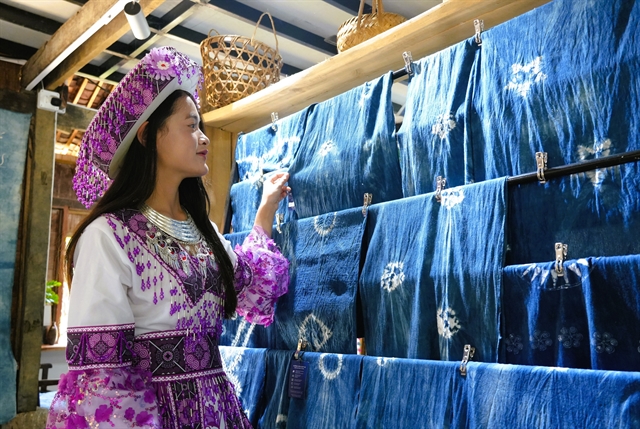
Visitors explore the traditional indigo-dyeing craft of the Nùng An ethnic minority in Quảng Uyên Commune. — VNA/VNS Photo Chu Hiệu
Chu Hiệu & Lương Hương
The cultural heritage of the northern province of Cao Bằng – from the traditional indigo-dyeing craft of the Nùng An ethnic minority in Quảng Uyên Commune to ancient stone houses in Đàm Thủy Commune – is providing a foundation for young people to launch their own businesses.
By combining the preservation of traditional crafts with the development of handicraft products and community-based tourism, these young entrepreneurs are helping create livelihoods for local residents, promote cultural heritage and tap into the province’s tourism potential.
In Khào Hamlet, Quảng Uyên Commune, two young entrepreneurs, Vương Thị Trang and Bùi Thị Hoài, are developing a model combining traditional indigo dyeing with souvenirs and cultural experiences showcasing the heritage of the Nùng An people.
Born into a family of weavers and indigo dyers, Trang grew up surrounded by the sight of family members working at looms and fabrics in distinctive shades of indigo. However, as modern lifestyles have changed, the traditional craft has gradually declined, with only five or six households in the village still practising it.
Vương Thị Trang, one of the founders of the Nùng Indigo project, is pictured with indigo fabric. — VNA/VNS Photo Chu Hiệu
Driven by a desire to preserve their cultural heritage, Trang, together with her friend Hoài, launched the Nùng Indigo project, which aims to preserve and develop traditional indigo dyeing in combination with community-based tourism.
The founders are seeking to incorporate indigo into more contemporary products while retaining traditional techniques and the distinctive cultural identity of the Nùng An people.
The 28-year-old said she learned the craft from women in her village, gradually experimenting with patterns and expanding the use of indigo-dyed fabric in clothing, scarves, bags and souvenirs. In her view, developing new products does not mean replacing tradition, but building on existing values to breathe new life into the craft.
Visitors to the Nùng Indigo workshop can learn about the various stages of indigo dyeing and weaving, as well as beeswax-resist painting and hand embroidery.
The hands-on experience is complemented by displays of handicrafts, local cuisine and accommodation services, allowing visitors to gain a deeper insight into the local culture and way of life.
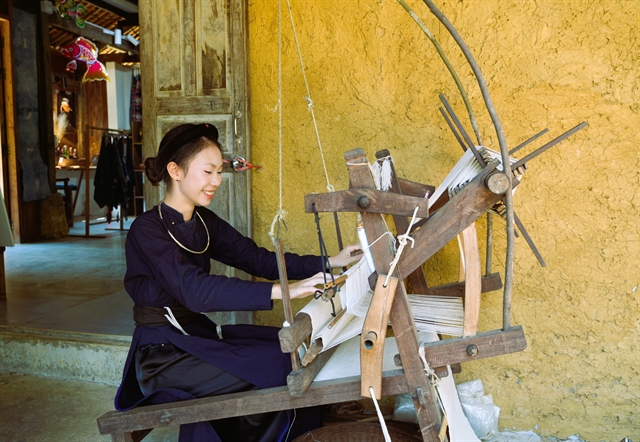
A visitor tries weaving fabric on a traditional handloom. — VNA/VNS Photo Chu Hiệu
Rather than simply purchasing finished products, visitors can learn how each piece of fabric is made, try their hand at some of the traditional processes and hear stories about the craft. The value of these products lies in the techniques, folk knowledge and community identity preserved across generations.
"The project seeks to involve residents and provide them with additional income by introducing the traditional craft, guiding hands-on activities and offering products and services to visitors," Hoài said.
The initiative won a consolation prize at the 2026 Rural Youth Entrepreneurship Project Competition, organised by the Hồ Chí Minh Communist Youth Union Central Committee.
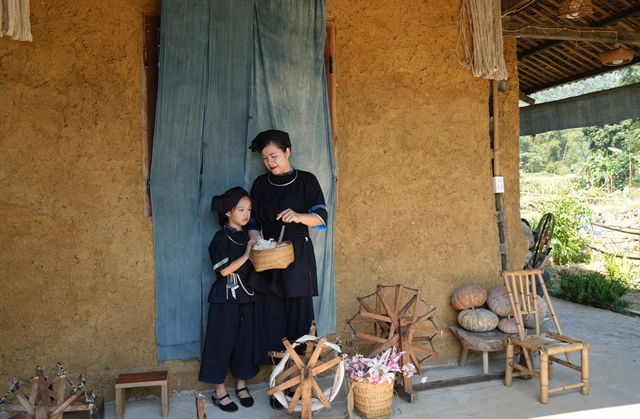
The Nùng Indigo workshop has become an increasingly popular stop for tourists. — VNA/VNS Photo Chu Hiệu
Local strengths
In Bản Mom Hamlet in Đàm Thủy Commune, Nông Thị Thu, 38, chose to return to her hometown and develop tourism after completing her studies and gaining work experience.
To tap into the area’s natural scenery and the traditional culture of the Tày ethnic group, she established Bản Mom Homeward homestay.
After studying tourism and travelling to many places, Thu realised that her hometown of Bản Mom had considerable potential for tourism development. From Bản Giốc Waterfall to its tranquil villages, riverside scenery and local cultural life, the area offers a wealth of resources for tourism.

From Bản Giốc Waterfall to its tranquil villages, riverside scenery and local cultural life, the area offers a wealth of attractions for tourism. — VNA/VNS Photo Chu Hiệu
"The growing trend of tourists seeking nature-based getaways and authentic local experiences is creating opportunities for young people like us to start businesses in our hometowns," Thu said.
However, a standalone accommodation facility may struggle to attract visitors in the long term without complementary products and services.
"I hope to work with local households to develop a chain of services, ranging from supplying farm produce, food and handicrafts to organising farming activities, cooking sessions and cultural performances. Locals would not only help serve visitors but also take the lead in introducing their own culture, customs and way of life," she said.
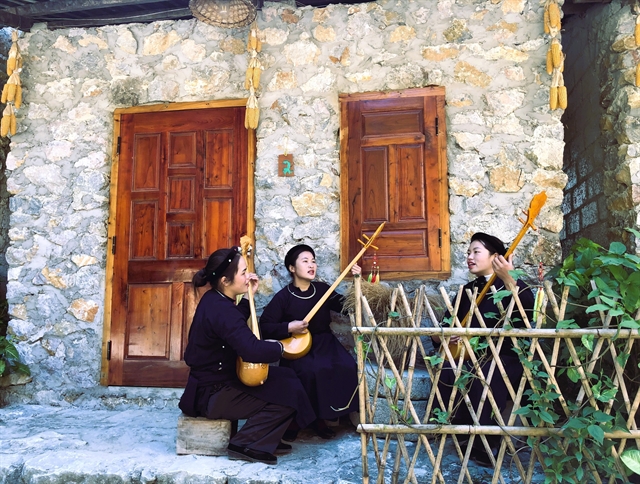
Local women in traditional indigo costumes perform 'then' songs for tourists in Đàm Thủy Commune. — VNA/VNS Photo Chu Hiệu
Thu hopes local authorities will improve transport infrastructure, facilitate access to bank loans and provide training in hospitality. These are essential steps to encourage local residents to participate more actively in tourism, improve service quality and increase the economic benefits they derive from tourism activities in their community.
According to Trần Văn Phú, vice chairman of the Đàm Thủy Commune People’s Committee, several hamlets in the area, including Bản Mom and Khuổi Ky, have preserved their traditional stone houses.
Recognising the area’s potential, Đàm Thủy has drawn up a proposal to restore, preserve and promote the traditional cultural space of Bản Mom’s ancient stone village in conjunction with community-based tourism development.
The locality also plans to invest in transport infrastructure linking hamlets, mobilise resources to restore traditional stone houses and attract investment in tourism services.
Sustaining livelihoods
Nùng Indigo in Quảng Uyên and Bản Mom Homeward in Đàm Thủy are examples of startups that harness local cultural assets while engaging the community.
When locals earn additional income from traditional crafts, handicrafts and tourism services, they are better placed to sustain cultural preservation over the long term.
Phạm Ngọc Sơn, a visitor from Hưng Yên Province, said that on his first trip to Cao Bằng, he was impressed by the tranquil surroundings, the friendliness of locals and the homestays and products that reflect the area’s distinctive cultural identity.
Meanwhile, Trần Thu Uyên, a visitor from Hà Nội, said she appreciated the experiences offered during her exploration of the province's scenic landscapes and the daily lives of local people, including indigo dyeing, handicraft making and staying in a peaceful, airy traditional stilt house.
To ensure the sustainability of these models, Cao Bằng has focused on addressing challenges related to funding, infrastructure, tourism skills, market access and cooperation among local households.
Local authorities have encouraged residents to take an active role, improve product quality and protect the landscape and environment.
To support tourism development, the Cao Bằng authorities have decided that each newly built homestay is eligible for VNĐ100 million (US$3,900) in financial assistance, while renovations and upgrades are eligible for VNĐ30 million per facility.
A further VNĐ50 million is provided for improving houses and auxiliary facilities serving community-based tourism, while the preservation and restoration of stilt houses and traditional architecture are supported with VNĐ100 million per project.
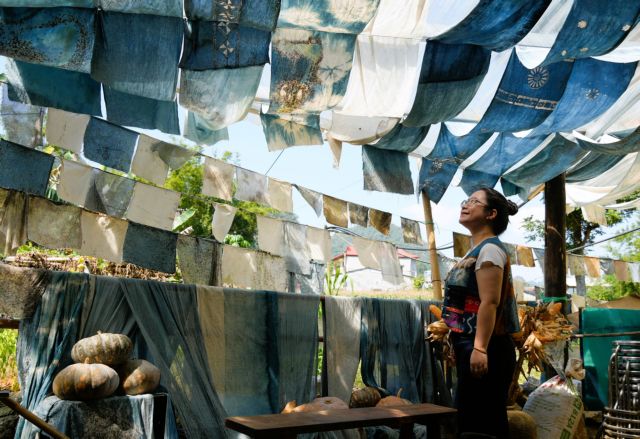
The traditional indigo-dyeing craft has become a foundation for many young people in Cao Bằng to launch their own businesses and tap into the province’s tourism potential. — VNA/VNS Photo Chu Hiệu
The return of young people like Trang, Hoài and Thu to their hometowns shows that their roots are not only a repository of memories but also a place where new businesses can take shape.
By preserving cultural heritage through practical economic activities, indigo hues, traditional houses and local customs can find a renewed place in contemporary life, creating livelihoods and boosting tourism development in the province. VNS