Weather:
- Ha Noi 27oC
- Da Nang 29oC
- Ho Chi Minh 29oC
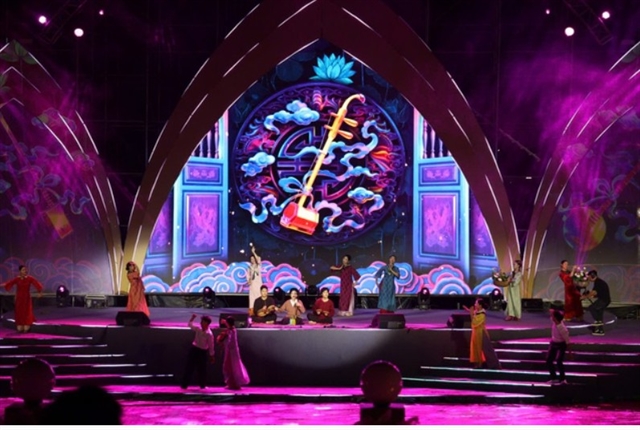
HÀ NỘI — The Capital Law 2026, effective from July 1, has officially established a specialised legal 'launch pad' for Hà Nội's cultural industry to develop into a key economic sector.
Experts say for many years, the development of the cultural industry in the capital has faced a major challenge: how to both preserve the essence of traditional heritage and create sufficient impetus for creative spaces and traditional arts to become self-sustaining and develop.
The Capital Law 2026 and, most recently, Resolution No. 31/2026/NQ-HĐND dated June 15, 2026, of the Hà Nội People's Council have provided a specific answer to this question through concrete policies, they said.
According to the law, culture is placed at the centre of development. Article 2 clearly defines Hà Nội not only as the national political and administrative centre, but also as a major centre for culture, science, technology, innovation, and international integration.
To realise this vision, the law has enacted specific mechanisms and thoroughly decentralised power to maximise the mobilisation of resources.
With its new points, it is expected to create a significant turning point for the capital's cultural development and innovation.
According to lawyer Nguyễn Hưng Quang, Head of NHQuang and Associates Law Office, the Capital Law 2026 inherits the ground-breaking policies of the previous Capital Law 2024 regarding cultural development and innovation.
It adds several related regulations based on resolutions of the Central Committee and the Politburo, such as Resolution 57-NQ/TW of the Politburo on breakthroughs in the development of science, technology, innovation, and national digital transformation; and Resolution 80-NQ/TW of the Central Committee on the development of Vietnamese culture.
New features of the law include regulations on decentralisation to grant authority to the People's Council or People's Committee in matters related to the development of culture, sports and tourism in the city.
The two organs will also cover activities in organising, operating, managing, policy making, and supporting commercial and cultural development zones, cultural industry centres and other types of cultural organisations and institutions.
The law establishes mechanisms for managing and exploiting advertising activities; regulates public-private partnerships in the management, exploitation and use of valuable architectural works; and sets rules for managing and exploiting advertising activities.
At the same time, it paves the way for investment and business activities involving nighttime production and services, aiming to effectively exploit urban potential and promote economic, cultural and tourism development.
"The provisions of Capital Law 2026 have created a superior legal framework for the city to form and develop creative cultural spaces," Quang said.
Regarding policies to attract and utilise creative human resources, the law also establishes a legal framework for supporting artists, artisans, heritage practitioners, athletes, and coaches, according to Quang.
In addition, he said, creative entities connected to science and technology can also benefit from additional preferential policies in the field of innovation.
According to the lawyer, the law includes provisions on "preferential policies and support for people working in the fields of culture and art, artisans, practitioners of intangible cultural heritage, athletes, and coaches". This promises to create a legal framework for attracting and utilising human resources in the cultural field.
To maintain the direction of developing creative cultural spaces and preserve cultural identity, Hà Nội needs a specific plan for each period, from three to five years each, on organising and forming creative cultural spaces, including cultural industry centres with diverse activities, cultural and commercial development zones with different urban and craft village cultural characteristics, and night-time economic zones, routes and points.
Meanwhile, Nguyễn Tấn Phát, a lacquer artist who is deeply devoted to traditional lacquer art, said it is really a good sign that the Capital Law 2026 and Resolution 31/2026/NQ-HĐND have open up mechanisms for direct support to creative industries, craft villages, and handicrafts.
"The most important thing is not just financial resources, but also the motivation for artists and artisans to boldly innovate their thinking, cooperate with designers, apply technology, build brands, and develop products according to the needs of the global market," Phát told Hà Nội Mới (New Hà Nội) newspaper.
Dr Lê Xuân Kiêu, Director of the Văn Miếu - Quốc Tử Giám (Temple of Literature) Cultural and Scientific Activities Centre, stated that the Capital Law 2026 and Resolution 31/2026/NQ-HĐND have created a crucial legal freamework for heritage management units to boldly innovate their operational methods.
"A notable point is the mechanism allowing for increased public-private cooperation, mobilisation of social resources, and the application of digital technology in the preservation and promotion of heritage values," he told Hà Nội Mới.
Based on this, he said, the centre has been proactively developing cultural products centred around heritage, using technology as a means and aiming for public experience, with the Văn Miếu - Quốc Tử Giám night tour using 3D mapping technology being a prime example. — VNS
