Weather:
- Ha Noi 32oC
- Da Nang 30oC
- Ho Chi Minh 27oC
by Minh Hằng
Along the banks of the Hậu River in An Giang Province lies Châu Phong Commune, a culturally rich enclave where Chăm women sustain an age-old craft.
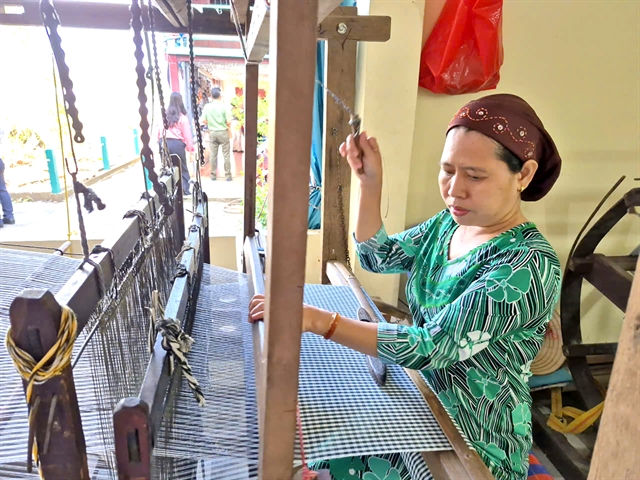
The rhythm of wooden looms composes a symphony, producing vibrant brocades that carry the memory of generations. Recognised as National Intangible Cultural Heritage on March 6, 2023, Châu Phong stands as both a guardian of tradition and a model of community-based revival.
About 60km from the centre of An Giang Province, the village welcomes visitors with river breezes, mosque spires, and the warm hum of workshops. Cars or motorbikes trace lanes to family looms where threads become stories in colour.
Weaving in Châu Phong has anchored Chăm life since the early 19th century, long before industrial cloth reached the delta. For generations, mothers taught daughters to “read” threads, turning a household skill into a shared inheritance.
"At 15, I wove my first pieces of fabric, learning from my mother and grandmother,” said Mây Samah, from Phũm Soài hamlet.
“For Chăm girls, knowing how to weave used to be a point of pride. We can make scarves, clothing, sarongs and handbags. Now weaving also serves tourism, helping us preserve the tradition and earn extra income to support our families.”
Before 1975, nearly the entire community took part. The loom’s cadence marked seasons, festivals and family milestones. Today’s artisans honour those roots by keeping the craft in daily use, not as a relic, but as a living practice.
"Brocade weaving in Châu Phong dates to the early 19th century and once involved hundreds of households," said Mohamad, who runs the Mohamach workshop in Phũm Soài hamlet.
"At its peak, several looms clattered in most homes and the trade bustled. The cloth sold in the domestic market and was exported to Cambodia, Thailand and Malaysia."
Art of weaving
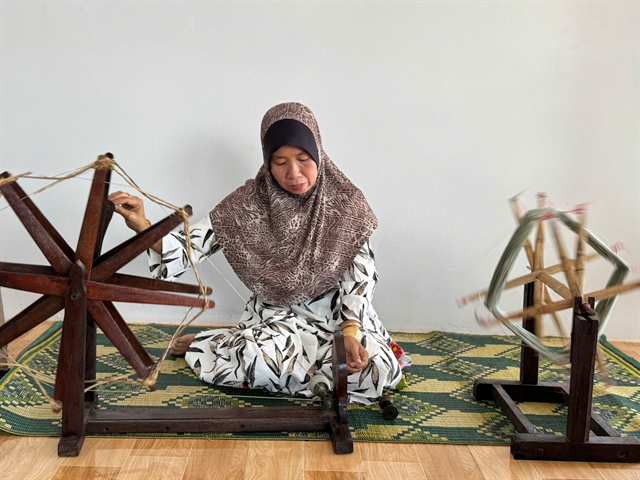
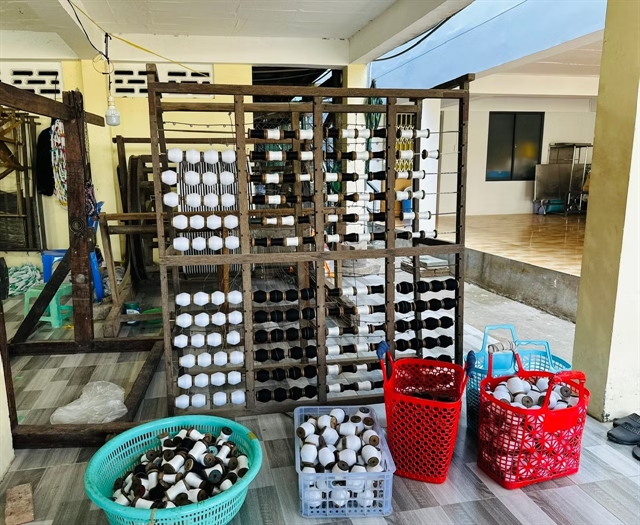
The village’s textiles are made entirely by hand. Cotton and silk are cleaned, soaked and softened; skeins are dyed with indigo, turmeric, leaves and tree bark, yielding blues, golds and warm browns that settle into the fibre rather than sit on its surface.
The decisive stage is warp-setting, a demanding technique in which thousands of taut threads are counted, crossed and held in precise sequence to summon geometric motifs. With each pass of the shuttle, patterns emerge that seem to flicker as light moves across red, orange, yellow and purple fields.
A single scarf or sarong can take days of meticulous work. Evenness at the selvedge, steady tension and colourfast finishes are hallmarks of quality. Despite the time and care required, the craft provides steady income, enabling women to support households while preserving their heritage.
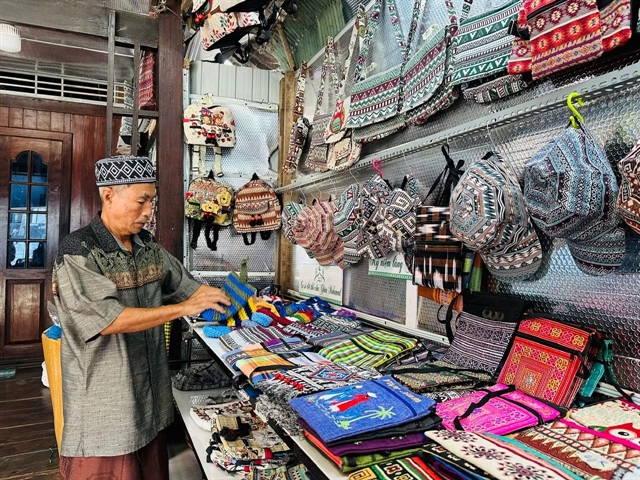
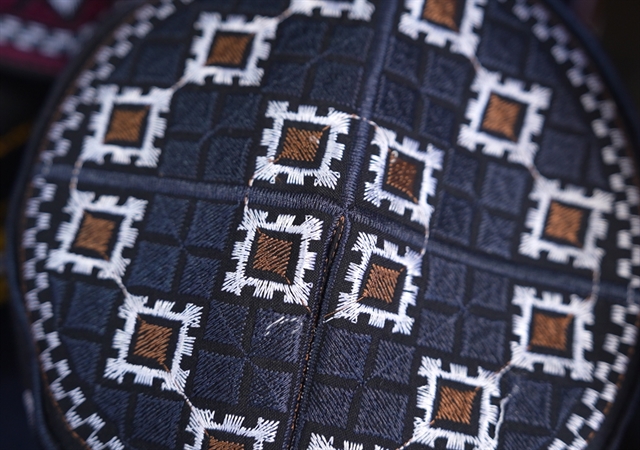
Châu Phong’s design vocabulary is both rooted and responsive. The geometry is purposeful with diamonds, chevrons and stepped lines guide the eye and give structure to cloth meant for daily wear and ceremonial use alike.
While the village prioritises natural fibres and dyes, artisans also adapt to contemporary tastes through scale, proportion and finishing, ensuring traditional fabrics remain elegant, durable and suited to modern wardrobes and interiors.
Third-generation master Mohamad, 68, has spent nearly five decades at the loom, teaching apprentices to memorise the warp and feel their way to accuracy. Weaver Say Mah, Mohamad's wife, embodies the patience and precision the craft demands.
Their workshop are classrooms where technique is shared and values are, too.
The revival has gained structure through the Châu Phong Chăm Village Community Tourism Cooperative, founded in October 2024 with 12 members and led by Mohamad.
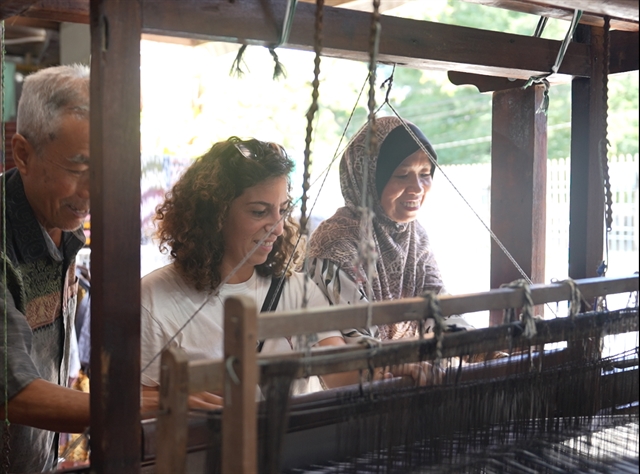
The cooperative links weaving with experiential tourism through small-group visits to family looms, short hands-on sessions, and introductions to Chăm cuisine alongside mosque visits. Local authorities support the effort with vocational training and access to bank loans, and help with digital promotion.
Amid the rush of modern life, the shuttle’s rhythmic click along the Hậu River endures, a testament to the power of tradition and creativity.
From handwoven brocades dyed in vibrant hues to the warm, genuine smiles that greet visitors, these daily labours have long safeguarded the soul of Chăm culture and continue to inspire the next generation to carry this heritage forward.
“Each brocade piece is more than a souvenir. It connects visitors with local culture and symbolises the bond between preservation and development,” Mohamad said. — VNS