
When you find yourself in Hà Nội, near the enchanting Hoàn Kiếm Lake, take a moment to explore beyond the famed Turtle Tower and Pen Tower. A truly captivating experience awaits you along the lake's edge: the vibrant Chinese chessboards.
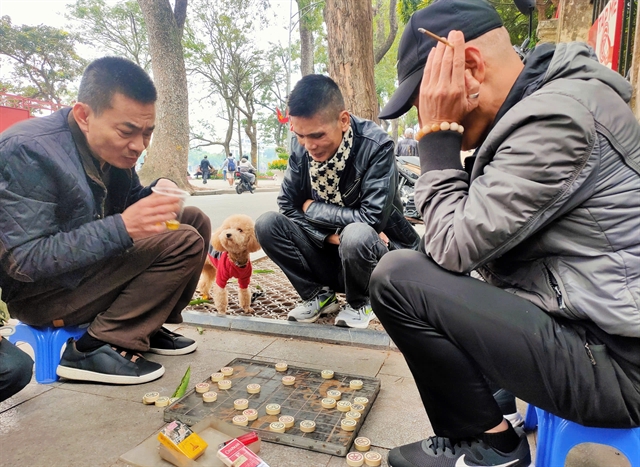
People gather to play Chinese chess games along Hoàn Kiếm Lake. — VNS Photo Đoàn Tùng
By Thanh Nga
HÀ NỘI — As the late-afternoon light turns to gold over Hoàn Kiếm Lake in downtown Hà Nội, small circles gather beneath the trees around wooden boards, and with each deliberate click of a chess piece, an unspoken ritual of thought, patience, and quiet companionship begins again.
Away from the well-known Turtle Tower and Pen Tower, this stretch of lakeside becomes a quiet stage for Chinese chess enthusiasts. At each board, two players face off, while small groups of spectators, often five or six people, lean in to observe, comment and debate each move, their low voices weaving a lively yet unhurried atmosphere around the game.
"The most enjoyable aspect of playing chess by Hoàn Kiếm Lake is the comfort and peace that envelops me as I take in the scenery," Nguyễn Xuân Hà told Việt Nam News. "The laughter, the clattering of chess pieces, and the slow passage of time create a magical experience."
Hà discovered Chinese chess at the age of 10 and has remained devoted to the game ever since. The challenge of planning moves, defending pieces and anticipating an opponent’s strategy continues to hold his attention decades later.
"Playing chess helps me unwind and relieve stress after long days of studying," Hà added.
Now retired and living near the lake, he spends more time at the boards, where the game has become as much about community as competition.
"Chinese chess by the lake has brought me many new friends. People of all ages come together to share their experiences and strategies. The atmosphere is warm and inviting, making me feel part of a close-knit community.”
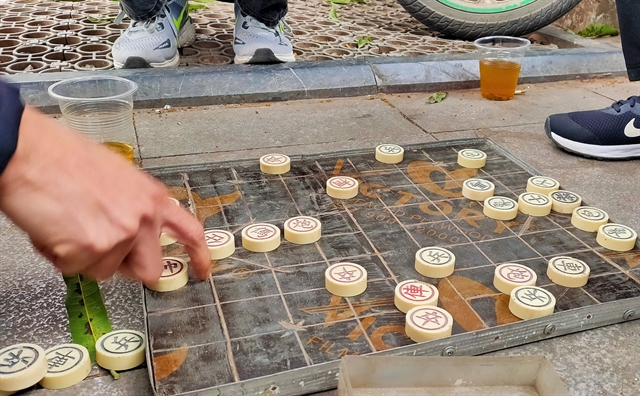
The clicking sound of chess pieces triking the board has a special appeal to those nearby. — VNS Photo Đoàn Tùng
Shared pastime
Chinese chess has long been associated with Thăng Long Imperial City, with records dating back to the 11th and 12th centuries. Its precise origins at Hoàn Kiếm Lake are unclear, but long-time players recall that a public chessboard first appeared on Lê Thái Tổ Street more than two decades ago.
Efforts to preserve and promote the tradition led to the establishment of the Hồ Gươm Chess Club in 2017. Meeting regularly at 2 Lê Thái Tổ Street, the club has become a focal point for cultural and sporting exchange, drawing enthusiasts, experienced players and visitors from across Việt Nam and abroad.
Doãn Duy Mạnh, a seasoned player, believes that success in any endeavour requires careful thinking.
"Chinese chess is not only a means of relaxation but also a rigorous training ground," Mạnh said. "In this game, there is no room for haste - every move demands thoughtfulness."
Once regarded largely as a pastime for older generations, Chinese chess is increasingly attracting younger players. At Hoàn Kiếm Lake, matches bring together a blend of youth and experience, where measured commentary from older players sits alongside the energy and curiosity of younger participants testing their strategies.
The game now bridges generations, uniting players through a shared passion. Phạm Hà Giang, a dedicated 35-year-old player, described Chinese chess as an intellectual sport that reflects personality, strategic thinking and skill, while fostering foresight, patience and perseverance.
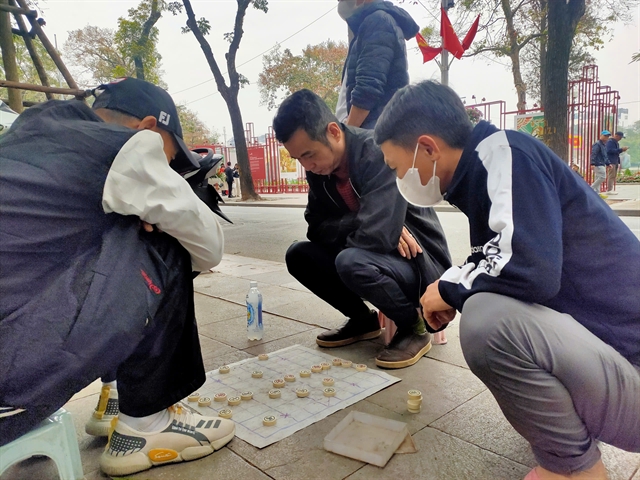
For Hà Nội residents, playing Chinese chess is not just a form of entertainment, but also a way to connect with one another. — VNS Photo Đoàn Tùng
Beyond the board
Playing Chinese chess also helps sharpen memory and improve mental agility. Experienced players say the game reflects an Eastern ethos, emphasising intellect rather than physical strength in achieving success.
Among players, there is a commonly recognised distinction between two approaches: those who focus solely on winning and those who prioritise fair play and mutual respect. While some pursue victory at all costs, others see the game as an exchange of ideas and personality between opponents.
"Watching a Chinese chess match unveils a player’s character," Mạnh said. "Those who think superficially aim for immediate rewards, while the more strategic players calculate moves and set traps.
"Meanwhile, calm and composed players adopt a steady approach, making quick yet effective moves and balancing attack and defence adeptly. Chess matches featuring skilled players always draw eager spectators."
In a city that rarely stands still, these modest chessboards offer a rare pause — a place where time stretches, conversations linger and strategy unfolds one careful move at a time. Here by the lake, the game is never just about winning, but about connection, continuity and the quiet rhythm of Hà Nội itself. — VNS