Weather:
- Ha Noi 16oC
- Da Nang 25oC
- Ho Chi Minh 27oC
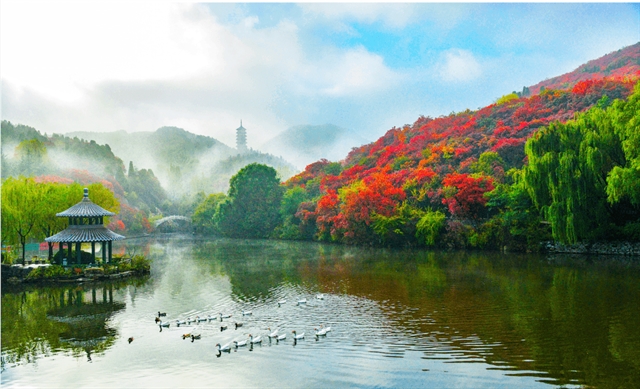
HÀ NỘI — From sacred mountains and natural springs to coastal beaches and ancient Confucian heritage, the attractions of China’s Shandong Province were showcased to Vietnamese travellers at a cultural and tourism promotion event in Hà Nội on November 18.
Co-hosted by the Shandong Provincial Department of Culture and Tourism and the China Cultural Centre in Hà Nội, the Kong Qiu Hometown – Hospitable Shandong showcase sought to introduce the province's highlights to Vietnamese tourists and deepen bilateral cooperation in culture and tourism.
Addressing the event, department representative Wang Xiaojuan highlighted Shandong as the birthplace of Confucius (Kong Qiu) and a major centre of Confucian heritage dating back over 2,000 years.
Alongside its annual International Confucius Cultural Festival every autumn, the province boasts a rich cultural landscape featuring 886 museums filled with national treasures, she added.
Furthermore, Shandong has nurtured numerous brilliant minds and is blessed with picturesque landscapes, including the majestic Mount Tai and Mount Lao, and the clear, blue waters along its coast.
Its cuisine also ranks first among the four great culinary traditions of China, characterised by flavours that are fresh, rich, balanced, and harmonious.
The region is also home to an abundance of local produce, such as Dazeshan grapes, Feicheng peaches, Yantai cherries and apples, Laiyang pears, and Zhanhua jujubes.
She hoped these attractions would impress Vietnamese businesses and encourage them to explore investment opportunities in Shandong, while also attracting more Vietnamese visitors to the province.
Speaking at the event, deputy director of the Hà Nội Department of Culture, Sports and Tourism Nguyễn Trần Quang said, 'In recent years, Hà Nội has consistently prioritised fostering cooperation with Chinese localities in the fields of culture and tourism.'
China is one of Hà Nội’s key international markets. Given the advantages of geographical proximity, convenient transport connectivity, cultural similarities, and an increasingly diverse demand for cultural exchange and travel experiences, there is significant potential for tourism cooperation between Hà Nội and Shandong.
Quang proposed that both sides should step up efforts to showcase their respective images, tourism potential, and tourism products through promotional programmes, trade fairs, and exhibitions.
He also suggested strengthening connections among travel agencies, accommodation providers, transport operators, and other tourism partners from both sides.
Both sides should explore the development of tourism plans that link prominent heritage and cultural sites in Hà Nội with well-known destinations in Shandong.
Efforts should focus on increasing meetings and networking opportunities for businesses from both regions, as well as sharing expertise in areas such as destination management, new product development, digital transformation, and the enhancement of tourism service quality.
The Hanoian official also wished to enhance the exchange of experience regarding heritage management and preservation, as well as the application of digital technology to promote and develop museums and cultural spaces into attractive tourism products.
Also at the event, the organisers also held a photo exhibition that introduced the beauty of the Yellow River, the Qi-Lu region, and the scenic spots along the coast of Shandong.
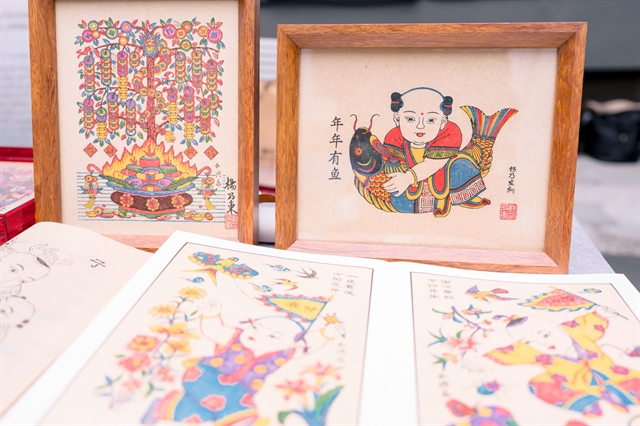
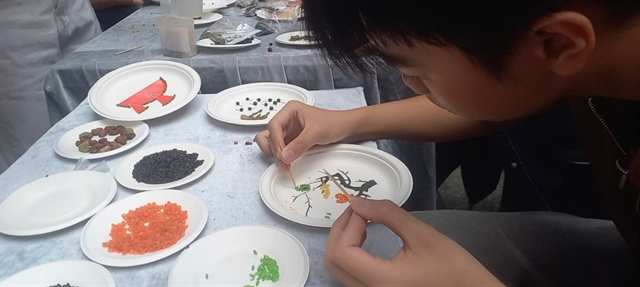
Guests also had opportunities to experience Shandong's traditional crafts such as grain painting, woodblock prints and kite making. — VNS
