Weather:
- Ha Noi 30oC
- Da Nang 28oC
- Ho Chi Minh 29oC
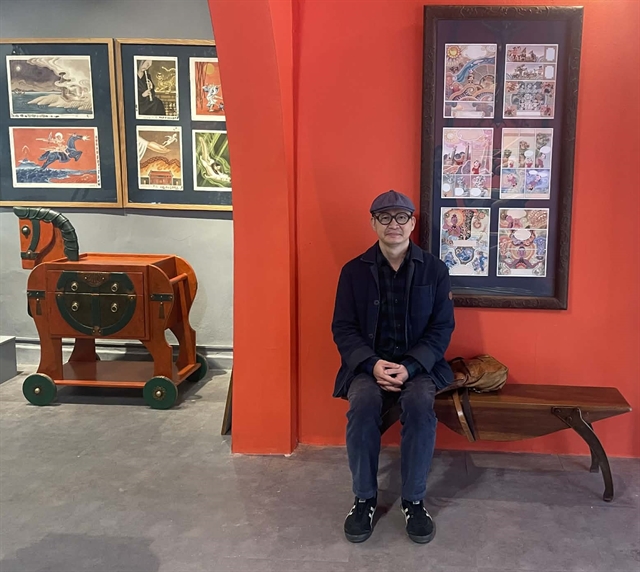
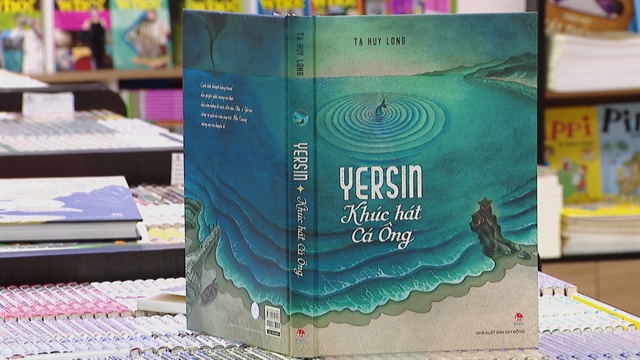
Tạ Huy Long is one of Việt Nam’s leading contemporary comic artists. His graphic novel Yersin – Khúc hát Cá Ông (Yersin – The Song of the Whale), about French bacteriologist Alexandre Yersin’s journey across central Việt Nam, blends history, fiction and folk mythology. The book won the Aspiration Award at the Cricket Children’s Awards earlier in 2026. Long discusses the mythical world behind it.
Inner Sanctum: What made you choose cá ông (the whale) as the recurring symbol in the story of Swiss-French physician and bacteriologist Alexandre Yersin [born in 1863 in Switzerland and died in 1943 in Nha Trang, central Việt Nam]?
At first, there was no whale in the book. I was simply fascinated by Dr Yersin. As I went deeper into his story, I realised that mythical elements have always appeared in my work, from illustrated books about Vietnamese history, legends and folk tales.
Then I happened to read about how whales often appear along the central coast and are closely linked to local beliefs and the legend of whales rescuing people at sea.
The whale carries an Eastern spirit. It represents the sea and a majestic, sacred world. When I drew the land, the whale naturally became the link between Dr Yersin and the land where he chose to stay.
It is a wild, sacred world, but also one that is open to new things. That made the whale a natural image to connect Yersin with the land and people around him.
Inner Sanctum: Which part of the book took the most time and effort?
It is difficult to say because Yersin’s life itself is fascinating. His expeditions in the Central Highlands, his journey to discover the plague bacillus and his years in Nha Trang all have great appeal.
If I had to choose, I have the strongest affection for his life in Nha Trang after all the major upheavals.
I was moved by how a man left the glamour of Paris for a remote land and gradually turned it into a paradise, where Western science and local life came together. He gradually became attached to the land and built a life there. To me, that part of his life is almost like a real fairy tale.
Inner Sanctum: The book is based on historical material but also has elements of mythology and folk poetry. How did you balance the two?
It was a long process. I could not define that balance from the beginning. I started by writing the script, then making sketches. At one point, I laid all the drawings on the floor to see the story as a continuous flow of images and emotions.
I did not want to tell the story through dry historical facts alone. Life has magic, beliefs and aspirations. Those things are also part of history and of people’s lives.
So I chose a semi-fictional approach, with images such as the flying whale, the boy Tín who never grows old and Doctor Mỏ Chim (Bird Beak) stepping out of the past.
Comics are close to cinema. The artist is like a director, choosing a real character and building the world in which that character lives. As long as the core remains truthful, the storytelling can be freer in order to convey emotion.
I created Tín in much the same way. It took me time to find his name. “Tín” is a name, but it also suggests “niềm tin” (faith). To set out on an unknown journey, people need faith.
Yersin was similar. He left glamorous places for remote lands because he believed he could do something for people. That belief was important to his journey, and I wanted that spirit to be present in the story.
Inner Sanctum: Throughout your career, you have remained closely connected to Vietnamese folk culture and history, while pursuing a painstaking drawing style. What keeps you on this path amid today’s fast-paced life?
The more realistically you draw, the more readers feel that they are living in that world. Take the part about the plague, for example, or Yersin’s expeditions through the mountains and forests. Nobody really knows exactly what those places looked like at the time.
When drawing such scenes, I have to imagine the space and reconstruct it through the details. The setting needs to convince the reader.
If the space is convincing, readers can feel that they have stepped into the city, the forest or that particular period. They can feel that they are there with the characters.
That is why I try to draw carefully and go deep into detail. It takes a great deal of time, but for me, those details are important to the way comics tell a story.
Inner Sanctum: You have had a long association with the character Dế Mèn. What about the character still makes you want to continue exploring and creating today?
I like the saying “To live without moving is not to live”, which is often attributed to Yersin. I find its spirit close to Dế Mèn phiêu lưu ký (Diary of a Cricket) by author Tô Hoài, for which I did the illustrations.
For an artist, movement does not necessarily mean physical movement. It can also mean movement in thought, storytelling, consciousness and the creative territories one wants to explore.
Sometimes it is the fable Dế Mèn phiêu lưu ký. Sometimes it is history. Sometimes it is an exploration story like Yersin – Khúc hát Cá Ông. They may look different, but they are all part of the same journey.
I think I can continue drawing because I have the urge to keep moving forward. There are always new things to discover and new areas that I want to explore.
Inner Sanctum: Your book won the Cricket Aspiration Award 2026. What does the recognition mean to you?
The award is recognition of my creative journey. I was surprised and happy.
I came to art through my love of folk stories, fairy tales, myths and Vietnamese history. Those things have stayed with me throughout my career. In my work, I always want to retain a sense of mythology and mystery, as well as a dreamlike feeling.
For me, those elements are not separate from reality. They are part of the way people understand the world, remember the past and imagine things beyond what they can see.
So receiving the award is meaningful because it recognises the direction I have followed in my creative work.

Inner Sanctum: Although it won a children’s award, the book does not seem to be aimed only at young readers and also raises questions for adults. How did you imagine the book would reach its readers?
That is true. It is not entirely a book just for children. Different age groups will respond differently to it. Children may enjoy the adventures and discoveries. Adults may think more about epidemics, upheavals in people’s lives and the journey of creating new vitality for a land.
The same story can therefore have different meanings for different readers. A good work has different layers. When people read it again at different stages of their lives, they can find different meanings.
That is also something I hope for with Yersin – Khúc hát Cá Ông. Young readers may first see the adventure and the journey into unknown places. Later, they may return to the book and see other things in it.
Inner Sanctum: If you could give one message to young artists today, what would it be?
I am still on my own journey, continuing to move and look for new territories. There will be failures and results that are not what we expect. That is part of the journey. But I believe that if we are determined to keep moving, life will open other doors.
We may not always get the result we want, and sometimes the path we choose may lead somewhere unexpected. But if we keep moving, there will always be another possibility. The most important thing is never to stop moving. — VNS
