Weather:
- Ha Noi 25oC
- Da Nang 25oC
- Ho Chi Minh 27oC
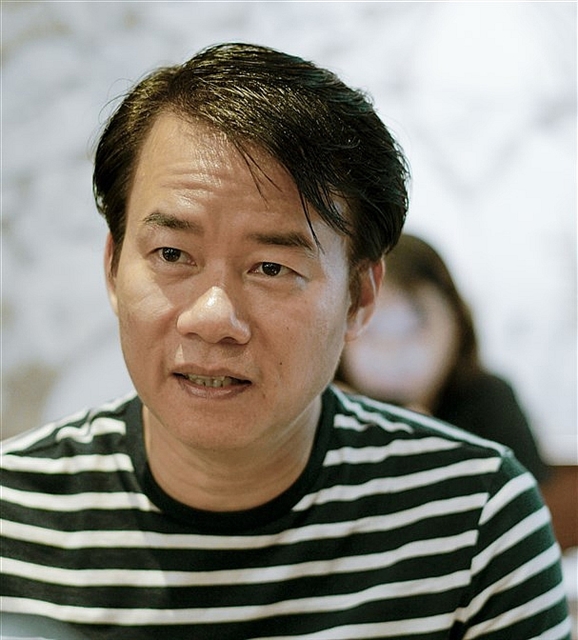
Composer Trần Mạnh Hùng wrote the music for the opera Princess Anio, which was staged in Việt Nam and Japan in 2023 to mark the 50th anniversary of diplomatic relations between the two countries.
Following the success of the opera, Hùng was invited to compose a musical adaptation of Princess Anio, which was premiered at KAAT Kanagawa Theatre in September.
Hùng spoke to the media about his hope for symphonic music development in Việt Nam.
You were invited to compose the music for both versions of Princess Anio, which differ greatly in their musical styles. Is this a rare opportunity?
First, we can broadly understand opera as being written for classically trained voices, while musicals are composed for contemporary singing styles.
Although the two productions differ entirely in their music and style, the musical includes a few musical motifs near the end that recall the opera version, offering a special touch for audiences who have seen the earlier production.
Through this experience, I learn from the Japanese their thorough approach to everything they do and their determination of never letting any effort go to waste.
Wherever they invest their efforts, they explore every opportunity in depth and develop it to its fullest potential.
The love story between Princess Anio and Japanese merchant Sotaro Araki has also been adapted into a manga in Japan.
Is it your first opera?
In 2012, shortly after moving to HCM City, I had some spare time and felt inspired to start writing an opera about Mỵ Châu and Trọng Thủy. However, I only got halfway through before work commitments forced me to put the project on hold.
I believe opera is the ultimate goal that every composer dreams of achieving. It is one of humanity’s grandest and most distinctive forms of classical music, encompassing both instrumental and vocal music. Overtures and interludes in opera are much like symphonies, while its dance sequences are comparable to ballet.
Could you tell a little about your upcoming personal projects?
I will continue composing symphonic works and pursuing my opera and musical projects. I also remain committed to promoting the development of Vietnamese traditional musical instruments.
Although I have devoted considerable time and passion to this work, I still feel that my efforts are just a drop in the ocean compared with the scale of Việt Nam’s music scene.
Do you prioritise composing works for traditional instruments accompanied by a symphony orchestra, or writing specifically for a traditional orchestra?
There are several approaches. The simplest is to have a symphony orchestra which provides the accompaniment in a Western style while preserving the Vietnamese identity through the melodies.
A more complex approach is to combine the systematic principles of western symphonic orchestration with the distinctive national character of Việt Nam’s traditional musical instruments.
A more ambitious approach would be to use exclusively Vietnamese instruments to perform new compositions developed within a consistent Vietnamese aesthetic, or even adapt Western instruments as extensions of a contemporary Vietnamese orchestra.
There is precedent for this. Guitar, violin and organ, for example, have all been adapted to the Vietnamese style of đờn ca tài tử and cải lương. In other words, our predecessors explored this approach with great success, yet today we seem to have forgotten the path they paved.
What do you think about the growing number of foreign orchestras and artists coming to perform in Việt Nam?
Indeed, the number of concerts has grown unusually rapidly in recent times, creating a shortage of repertoire and prompting some to adopt simplistic solutions, such as importing works and artists.
Importing works and artists is an easy option that is likely to win applause. However, unless we build strong domestic capacity in this field by increasing investment in productions featuring Vietnamese artists and composers, this approach could undermine Việt Nam’s cultural strength in the long run.
What would you propose to address this situation?
Guidelines for a national cultural strategy were set out in the Party’s 1943 Outline of Vietnamese Culture, which identified three essential principles: nationalisation, massification, scientifisation.
Personally, I believe that ‘national identity’ should be understood not only in terms of traditional culture but also as encompassing creations that emerge from our own ideas and strengths. We can learn from the West in terms of form, but not to tell their stories. Instead, we should use what we learn to tell our own stories and bring them to the world so that people can understand and appreciate us.
Theatres are increasingly dedicating their stages to foreign productions, while Vietnamese audiences buy tickets to see foreign artists perform works from abroad. There is nothing wrong with that. But if the same domestic resources were also channelled towards Vietnamese artists and productions, could the benefits be even greater? I am sure they could.
Rather than devoting 95 per cent of our attention to celebrating foreign artists and works, we need to gradually increase investment in and support for our own talent and productions. Only when the balance reaches 50-50, will Vietnamese music have the strength it needs.
Do you feel fortunate to have experienced diverse musical genres, from traditional music and pop to orchestral music, and draw on them in your compositions?
I did not fully appreciate how fortunate I was at first. When I began studying orchestral music, I sometimes regretted not having studied Western music from childhood, which would have allowed me to explore it more deeply. But later, when I was in my thirties, I came to realise how valuable my early training in traditional music had been. — VNS
