Weather:
- Ha Noi 30oC
- Da Nang 30oC
- Ho Chi Minh 31oC
ĐẮK LẮK — Xí Thoại Hamlet, Xuân Lãnh Commune of the central province of Đắk Lắk has shaped a unique cultural identity with the distinctive musical art form known as Trống Đôi, Cồng Ba, Chiêng Năm (Double drums, triple gongs, quintuple chieng).
The music is part of the cultural fabric of the Ba Na ethnic minority group, and together with traditional brocade weaving, have been recognised as national intangible cultural heritage since 2016.
The implementation of the Xí Thoại community-based tourism service project has helped preserve these cultural values while creating sustainable livelihoods, and higher incomes for local residents.
Preserving traditional values
The Trống Đôi, Cồng Ba, Chiêng Năm Festival in Xí Thoại Hamlet, which takes place at the end of January each year, attracts strong interest from both locals and visitors thanks to the distinctive artistic expressions of Ba Na culture.
A highlight of the event is the performance of traditional ritual excerpts combined with drum and gong music. Amid the mountains and forests, the resonant sounds of gongs blend with drum rhythms that are sometimes gentle and flowing, sometimes lively and vibrant, creating a unique cultural space at the start of the Lunar New Year.
Local resident Sô Dun Toàn said this festival was the most anticipated cultural activity of the year, with artisans practising for months to present their best performances. It was not only a traditional cultural activity but also a source of pride for the community.
According to Huỳnh Anh Tuấn, Chairman of the Xuân Lãnh Commune People’s Committee, the Ba Na ethnic people in Xí Thoại have gradually restored festivals and cultural heritage, turning them into community-based cultural tourism products, especially traditional dances and drum and gong performances.
Alongside gong-related activities, the locality also organises brocade weaving and traditional handicraft contests, culinary events and exhibitions of ethnic products, providing opportunities for exchange, learning, and cultural promotion.
Developing tourism to raise incomes

Xí Thoại Hamlet has more than 200 households and around 600 residents, 95 per cent of whom are Ba Na people. With support from local authorities, the tourism sector and international organisations, the hamlet has evolved from a mountainous cultural village in 2000 into a community-based tourism village in 2014, and was recognised in 2024 as a traditional brocade weaving craft village.
In the same year, with support from a Netherlands–Việt Nam organisation, a community tourism cooperative with 14 members was established, offering cultural performances, brocade weaving experiences, traditional rice wine, sightseeing and outdoor activities for visitors.
Artisan Đinh Văn Máy said participation in the cooperative enabled him and other artisans to perform more frequently, helping spread Ba Na cultural values while earning additional monthly income.
Visitors have also been impressed. Hồ Đình Lợi from HCM City said he was struck by the powerful gong performances in a majestic natural setting and hoped to return for an overnight stay to explore local tourism products more deeply.
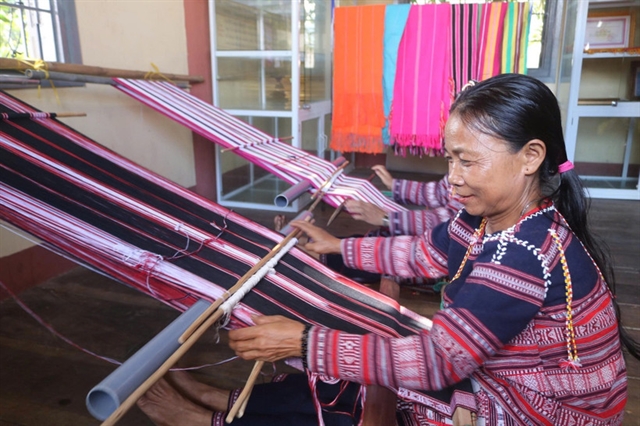
Brocade weaving is another cultural highlight. Handwoven scarves, bags and skirts feature distinctive ethnic patterns. Once at risk of fading due to limited markets, the craft has been revived with official and social support, providing both income and cultural preservation.
According to Nguyễn Thị Ri, a local artisan, each pattern reflects Ba Na life and culture, requiring patience and skill to complete.
Lê Văn Khương, head of the community tourism cooperative, said rural and agricultural tourism was increasingly attractive to visitors seeking authentic local experiences, offering opportunities for mountainous areas like Xí Thoại to promote culture and boost socio-economic development.
The Chairman of the Xuân Lãnh Commune People’s Committee added that the community-based tourism model was a key step in harmonising cultural and natural potential. The commune would continue encouraging homestays, experiential tours, infrastructure investment and skills training to attract visitors, create sustainable jobs and improve local living standards. — VNA/VNS
