Weather:
- Ha Noi 25oC
- Da Nang 31oC
- Ho Chi Minh 34oC
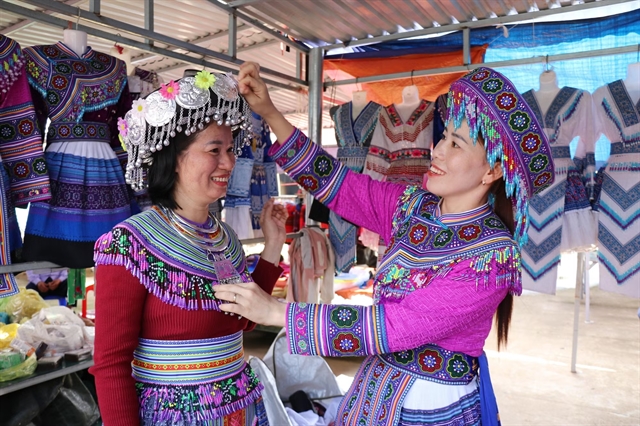
LÂM ĐỒNG — Beyond being a trading place for the Mông ethnic community, Đắk R'măng market (also known as Đắk R'măng love market) in Tà Đùng Commune, the central province of Lâm Đồng, remains a space where the cultural identity of the northwestern region is practised as it has been for generations, creating a unique highlight for local community-based tourism.
Preserving northwestern culture in the Central Highlands
More than two decades ago, many Mông ethnic households from northern mountainous provinces such as Hà Giang, Lào Cai, Cao Bằng, and Lai Châu migrated to the Đắk R'măng area to start new lives. Along with aspirations for a better future, they brought with them traditional customs, cultural practices, and the distinctive features of highland markets in the Northwest.
Therefore, every Sunday morning, Đắk R'măng market becomes bustling as people from nearby villages and communities gather for trade and social activities.
Covering more than 7,000sq.m, the market has over 100 business households. Among the colourful brocade stalls, Mông woman Lý Thị Mai from Tà Đùng is busy introducing her products to visitors. Her family moved to this land in 1998 and began trading at the market in 2020.
Her stall features traditional Mông costumes and accessories, including headscarves, leg wraps, shirts, skirts, and bead decorations.
According to Mai, every stitch requires patience and meticulousness, reflecting the diligence and perseverance of Mông women.
Besides farm produce and household items, the food area is always the busiest part of the market. In the cool rainy-season weather, smoke rising from steaming pots of thắng cố (horse meat stew) mingles with the aroma of traditional spices, creating a distinctive northwestern mountain atmosphere.
Alongside the stalls, vendors prepare food while inviting visitors to taste their dishes.
Lý Seo Cha, who has worked at the market for nearly 18 years, said the most important thing in making thắng cố is preserving its traditional Mông flavour.
“Many locals and visitors come here just to enjoy an authentic bowl of northwestern-style thắng cố. Therefore, I always follow the traditional cooking method without changing it, so that the unique culinary identity of our ethnic group can be upheld,” he said.
Besides thắng cố, other traditional foods such as mèn mén (steamed corn flour), tofu pudding, bánh đúc (rice flour pudding), steamed sticky rice, Bắc Hà corn wine and northwestern spices like mắc khén (Zanthoxylum rhetsa) and dổi (Michelia tonkinensis A. Chev.) seeds are also sold here, bringing the unique flavours of northern mountainous areas to the Central Highlands.
For visitors, the market offers a chance to experience a distinctive cultural space in the middle of the Central Highlands.
Lê Thị Thủy, a visitor from southern Đồng Nai City, said she was impressed by the colourful brocade stalls and traditional Mông dishes.
“I feel like I am visiting a miniature highland market. Local people are friendly, the food is attractive, and the brocade costumes are beautiful and rich in cultural identity,” she said.
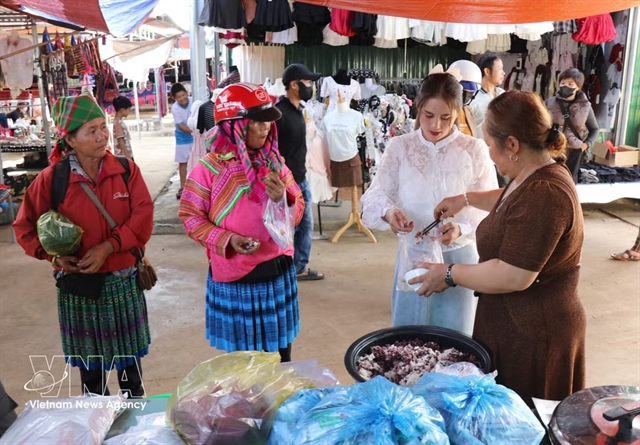
For the Mông community, Đắk R’măng is more than just a place for buying and selling things. After more than 20 years of settling in the Central Highlands, the weekend market has become a place where people preserve their long-standing cultural traditions, meet and communicate in their mother tongue, wear traditional costumes and enjoy the flavours of their hometowns in the Northwest.
From community market to local tourism magnet
Following the merger of Đắk R'măng and Đắk Som communes, Tà Đùng now has 4,397 households with 23,944 residents, including 1,935 Mông households with 13,595 residents, making it home to the largest Mông community in Lâm Đồng.
Alongside traditional cultural values maintained, local livelihoods have improved significantly. Making use of the Central Highlands’ favourable soil conditions, residents have developed key crops such as coffee, pepper, durian, and other fruit trees.
In recent years, high coffee and pepper prices have helped many households secure stable incomes, build better homes, buy new production equipment and give their children better education opportunities. Improved livelihoods have also made the market increasingly vibrant, turning it into a cultural and economic highlight in western Lâm Đồng.
Chairman of the Tà Đùng People’s Committee Trần Nam Thuần said the commune has upgraded market infrastructure and reorganised spaces to facilitate trade.
He said local authorities consider Đắk R'măng not only a place for trading but also a distinctive cultural space of the Mông community. Therefore, they are gradually linking the market with community-based tourism development, connecting it with local tours and routes to enhance its appeal.
Traditional values, including brocade weaving, cuisine, costumes, and community activities, will continue to be preserved and promoted, creating a foundation for sustainable tourism development, Thuần noted.
For the Mông people in Tà Đùng, Đắk R'măng is not merely a weekly rendezvous, but a space preserving memories of their northwestern hometowns and cultural identity in their new land. — VNA/VNS
