Weather:
- Ha Noi 24oC
- Da Nang 24oC
- Ho Chi Minh 25oC
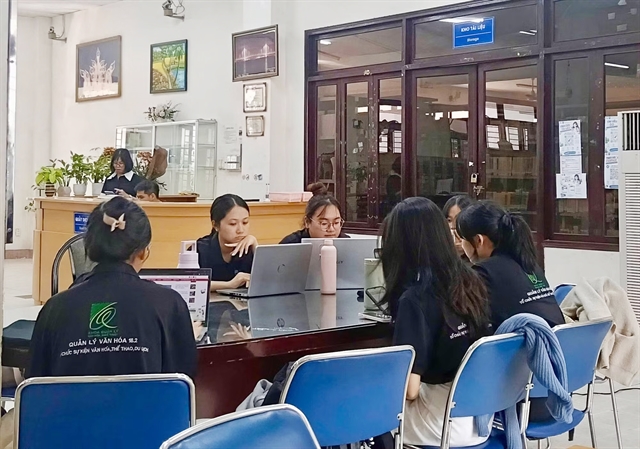
HCM CITY — Digital libraries are expanding access to knowledge at universities, but their long-term value depends on effective resource sharing and efforts to foster reading culture among students, experts say.
The development of digital libraries is opening up new approaches to managing and exploiting information resources at universities. Rather than investing in separate systems, institutions can connect and share learning materials through a common platform, reducing duplication of resources while expanding access to materials for learning and research.
According to Associate Professor Lâm Nhân, Rector of HCM City University of Culture, digital transformation in libraries involves more than digitising documents or investing in software.
It also requires changes to the organisation, management and governance of information resources. Under a shared-service model, institutions can share infrastructure and connect resources while preserving their distinctive operational characteristics, individual data spaces and governance rights.
The introduction of a digital library at the university’s Information and Library Centre represents a practical step towards this approach.
From a systems perspective, Associate Professor Nguyễn Thế Dũng emphasised the importance of a network of interconnected libraries operating according to common standards.
The effectiveness of such a model depends not only on technology but also on policy mechanisms, governance arrangements, digital resources, human resources and operational practices designed around users’ needs.
These requirements demonstrate that technological infrastructure is only the starting point. According to Nguyễn Hải Gian, Director of the Information and Library Centre at HCM City University of Culture, a digital library should be regarded as knowledge infrastructure that directly supports teaching, learning and research, rather than merely an electronic document repository.
To realise its full potential, institutions must pay attention to data quality, metadata standardisation, resource preservation, access rights and the capabilities of library professionals.
Dr Thái Thu Hoài of the Faculty of Library and Publishing at HCM City University of Culture argued that cooperation between libraries and publishers should be deepened beyond the conventional relationship of supplying and using publications.
Collaboration on content, data, copyright and distribution platforms would help diversify learning resources while making knowledge more accessible to learners.
According to Ngô Nguyễn Cảnh, a master's degree holder and doctoral candidate at HCM City University of Law, the development of digital libraries also highlights the need to improve the legal framework governing reproduction, controlled lending of digital materials and the exploitation of textual data.
These issues require careful consideration to meet the demand for resources supporting teaching, learning and research while protecting the lawful rights and interests of copyright holders.
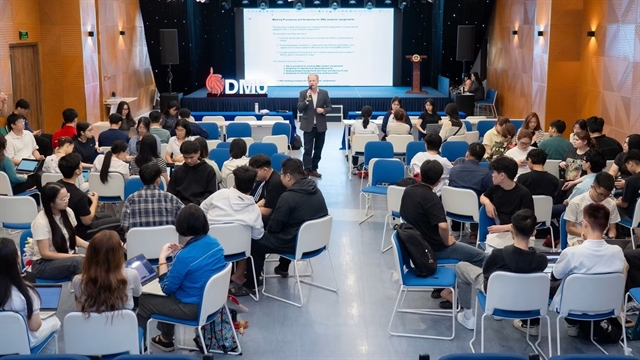
Renewing reading culture
As resources become increasingly accessible in the digital environment, the challenge is not simply to help students find information more quickly, but also to develop their ability to select, evaluate and apply knowledge.
Finding relevant materials is only the first step; learners must also cross-check sources, read with purpose, and use information responsibly in their studies and research.
Digital transformation in libraries must therefore go hand in hand with new approaches to reading guidance and the development of information literacy.
Libraries can work with lecturers to organise activities that teach students how to search for and evaluate materials, engage in in-depth reading and access information relevant to their fields.
When integrated into the curriculum, these activities enable libraries to play a more active role in academic life rather than serving merely as providers of materials when requested.
At the HCM City National University, the 11th Library Day Accompanying Students, held in 2026 under the theme 'Connecting Knowledge – Shaping the Digital Future', featured a range of activities, including a Hồ Chí Minh Cultural Space, a Reading Culture Space, a competition entitled “Becoming a Reader of the Smart Space: Easy or Difficult?”, a science and technology exhibition, and creative interactive zones.
These activities gave students more opportunities to engage with knowledge through experiential learning, exchanges, and practical activities, complementing their use of library resources.
Another approach is to connect learning resources with educational activities and students’ reading experiences.
Recently, Hoa Sen University signed a memorandum of understanding with HCM City General Publishing House to develop textbooks, teaching materials, research works and e-books.
The two parties will also collaborate on seminars, author and book events, creative projects and reading culture festivals, creating further opportunities for students to explore the knowledge, history and culture of HCM City.
The publishing house’s donation of two electronic bookshelf systems and 200 book-purchase vouchers for students supports these efforts to bring reading resources closer to learners.
These models demonstrate that promoting reading culture in higher education requires cooperation among universities, libraries, publishers and learning resource providers. However, reading initiatives are unlikely to have a lasting impact if they are confined to occasional events.
The key is to establish links between available resources, curricula and students’ independent learning needs, enabling them to access, explore and apply knowledge on a regular basis.
To facilitate the sharing of learning resources among educational institutions, the shared digital library model developed by Việt Nam Digital Library Joint Stock Company (ViLIB) aims to connect resources through a common infrastructure while preserving each university’s individual learning resource space and governance rights.
According to Nguyễn Anh Dũng, founder and General Director of Việt Nam Digital Library JSC, the model creates opportunities for resource sharing among libraries, helping to broaden access to knowledge.
A programme to support 1,000 'Digital Knowledge Spaces – Shared Digital Libraries' in disadvantaged areas also aims to expand access to learning materials. The initiative is expected to provide 12 months of platform support and access to approximately 3,000 book titles and other resources, subject to licensing conditions.
For universities, however, the effectiveness of such a model depends not only on its ability to connect resources, but also on how well it meets teaching, learning and research needs and whether its operations can be sustained over the long term. — VNS
