Weather:
- Ha Noi 25oC
- Da Nang 26oC
- Ho Chi Minh 25oC
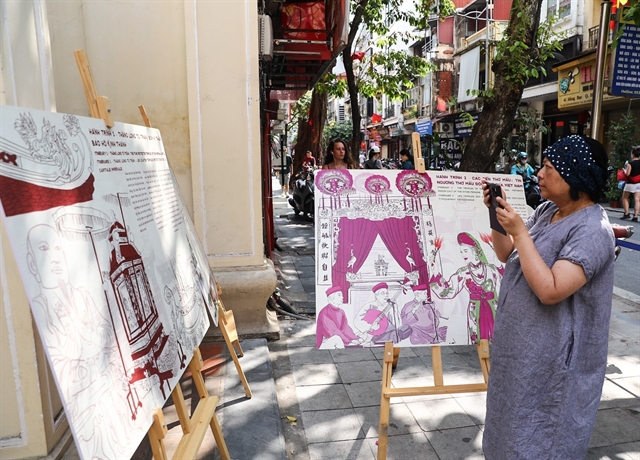
HÀ NỘI — A digital platform has been launched at Kim Ngân Communal House on Hàng Bạc Street in Hà Nội, enabling residents, tourists and students to explore 28 significant historical relics across the capital on their smartphones.
The launch of the Hà Nội Heritage Tourism Journey platform was organised by the French Embassy and the French Institute in Việt Nam, in collaboration with the University of Social Sciences and Humanities under Việt Nam National University, Hà Nội (VNU-USSH).
The platform is organised around four curated journeys: the Four Sacred Temples of Thăng Long, Mother Goddess Temples, Communal Houses Dedicated to Craft Guild Patrons and Hà Nội Pagodas.
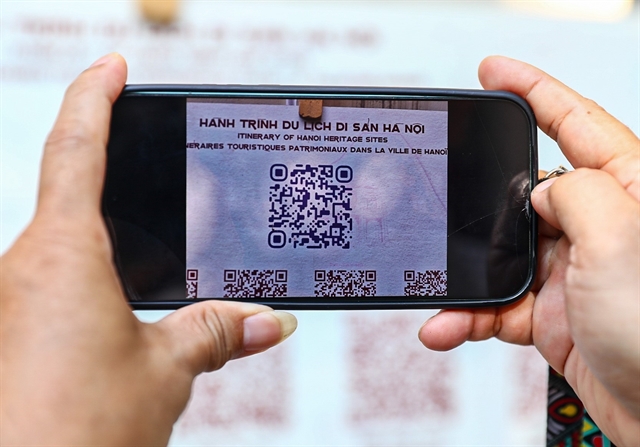
This initiative was previously piloted at Quán Thánh Temple last December. The official launch marks the next phase of development, integrating the entire collection of heritage information into a unified platform featuring interactive digital maps and an on-site QR code
Visitors can select their preferred itinerary and scan QR codes at each site to access research-based information about its history and cultural significance.
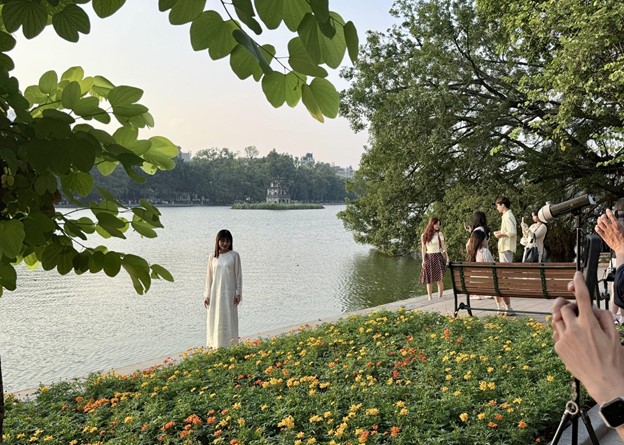
The Hà Nội Heritage Tourism Journey platform is the result of a heritage preservation and promotion project funded by the French Ministry for Europe and Foreign Affairs (FMEFA) through the Équipe France Fund. The project is led by VNU-USSH in partnership with the École française d'Extrême-Orient (EFEO) and the Agence Universitaire de la Francophonie (AUF).
Over roughly one year, a research team comprising nearly 40 experts and 100 students surveyed more than 100 heritage sites across Hà Nội before selecting 28 representative locations.
The team photographed the sites, collected rubbings of steles, translated inscriptions in classical Chinese and Nôm, drew architectural plans, and produced video documentation, creating detailed research records for each site.
Éléonore Caroit, minister delegate for Francophonie, International Partnerships and French Nationals Abroad at the FMEFA, expressed hope that the platform would inspire people to discover Hà Nội from different perspectives – looking up at architectural façades, stepping into narrow alleys and listening to the stories the city has to tell.
She said it was commendable that local authorities had recognised the need to take action to promote the value of heritage. Digitisation would make archival materials more accessible to residents and visitors alike, allowing knowledge to move beyond archives and accompany people on their journeys of discovery through the capital.
She also highlighted the significance of using French alongside Vietnamese and English, describing it as a way to foster greater cultural exchange between the two countries.
Integrating into education, research
According to Phạm Tuấn Long, director of the Hà Nội Department of Culture, Sports and Tourism, the project’s achievements demonstrate how cooperation between Hà Nội and French partners continues to be strengthened through concrete initiatives that help preserve both tangible and intangible heritage.
Hoàng Anh Tuấn, rector of the University of Social Sciences and Humanities under Việt Nam National University, Hà Nội, said the project had adopted an applied research approach, drawing on French knowledge, skills and methods in heritage research, route development, interpretation and the application of technology, while incorporating the expertise of Vietnamese scientists and the experience of local communities.
For grade schools, the platform can serve as a visual learning resource for extracurricular activities, enabling students to explore the capital’s history at sites associated with historical events, architecture and religious beliefs. Meanwhile, the systematised repository of epigraphy, classical Chinese and Nôm texts, and architectural data provides an easily accessible reference source for researchers.
The platform also aims to connect researchers, students, engineers, tourism professionals and local communities in preserving and promoting the capital’s tangible, intangible and digital heritage.
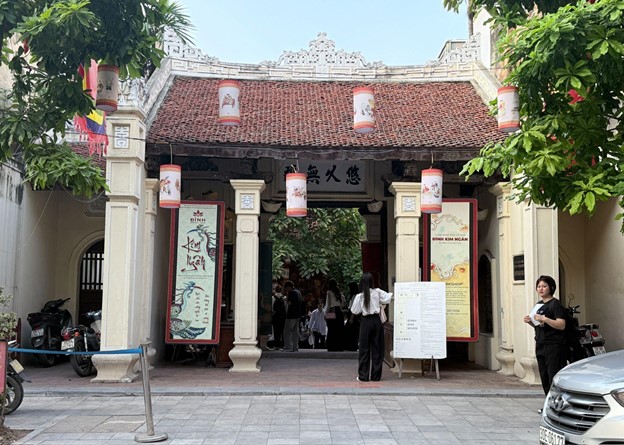
The choice of Kim Ngân Communal House as the venue for the project launch also held special significance. Closely associated with the history of goldsmithing on Hàng Bạc Street, the communal house reflects the links between traditional crafts, the worship of craft ancestors and community life in the Old Quarter.
The site was also restored with technical assistance from the French city of Toulouse, reflecting the heritage conservation cooperation between Hà Nội and France.
The launch of the project reflects the implementation of the Party's Resolution 57, highlighting the role of science and technology in fostering innovation and strengthening cultural connectivity. — VNS
