Weather:
- Ha Noi 29oC
- Da Nang 28oC
- Ho Chi Minh 27oC
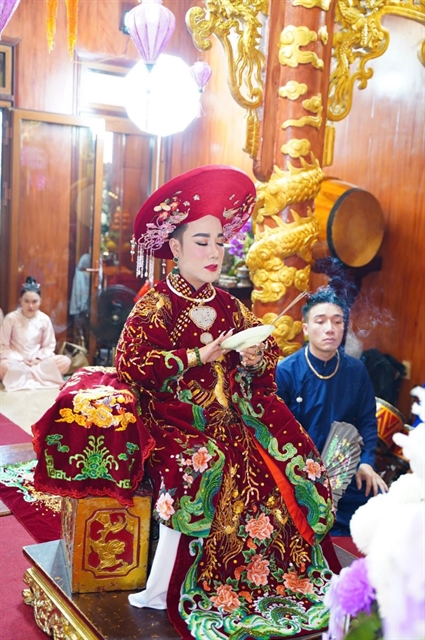
HCM CITY — As cultural heritage moves into the digital sphere, Việt Nam’s Mother Goddess worship is emerging as a promising driver of cultural tourism and international promotion.
Amid rapid digital transformation, the digitisation of cultural heritage, particularly the Mother Goddess worship of the Three Realms (a traditional spiritual belief in Việt Nam that honours female deities who govern the universe), is creating new opportunities for preservation, wider outreach and tourism development.
However, the process continues to face multiple challenges, requiring closer coordination among relevant stakeholders.
Digitising heritage
As digital transformation accelerates, the preservation and promotion of cultural heritage are no longer confined to traditional storage methods but are increasingly shifting to digital environments.
For intangible cultural heritage such as the Vietnamese Mother Goddess worship of the Three Realms, digitisation not only helps preserve documentation but also creates opportunities for promotion, education and cultural tourism development.
One notable initiative is the “Gõ Chầu Thiên Hội” project, carried out by communications students from FPT University in HCM City in collaboration with the Centre for Promotion of Việt Nam’s Intangible Cultural Heritage.
The project aims to digitise, systematise and disseminate the values of Mother Goddess worship through digital technology and creative communication activities.
The project seeks to build a digital archive of the Vietnamese Mother Goddess belief system, including images, videos of rituals, interviews with artisans and researchers, and related materials.
Beyond archiving, it also develops communication products, multimedia exhibitions and experiential activities to bring heritage closer to the public.
Project leader Văn Hồng Thiên said that “Gõ Chầu Thiên Hội” had been implemented across all three regions of the country.
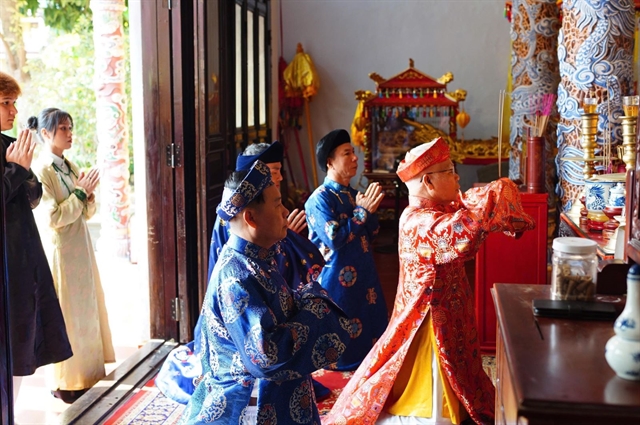
In Hà Nội, the team organised a launch event and seminar at Thủy Trung Tiên Temple, introducing publications and the digital archive.
In Huế, field trips were conducted to document rituals, record hầu đồng ceremonies and interview artisans and researchers.
In the near future, a multimedia exhibition is planned in HCM City, combining images, videos and research materials.
According to Meritorious artisan Lê Văn Ngộ, chairman of the Association for Mother Goddess Worship Heritage in Huế, each region has its own distinctive practices.
The involvement of students in researching and digitising heritage not only preserves valuable materials but also helps younger generations gain a deeper understanding of traditional culture.
Experiential and dialogue activities within the project allow students to engage directly with heritage, meet artisans and interact with practising communities.
As a result, young people not only apply technology but also gain insights into the cultural, historical and spiritual values of Mother Goddess worship.
Linking digitisation with cultural tourism development
Experts emphasise that digitising heritage should go beyond preservation and be closely linked with cultural tourism development.
When heritage is widely introduced on digital platforms, both domestic and international visitors can access information before experiencing it in person, thereby promoting culture and supporting sustainable tourism.
A representative of the Centre for Promotion of Việt Nam’s Intangible Cultural Heritage said that all materials collected from fieldwork would be processed, systematised and integrated into a digital library on Vietnamese Mother Goddess worship.
This platform is intended to serve research, education, communication and cultural tourism development.
With comprehensive digital data, localities can develop tourism products associated with the belief system, such as experiential tours, performance spaces, digital exhibitions and virtual museums.
Tourism expert Phan Yến Ly observes that when heritage is digitised and developed into cultural narratives, it can generate significant value for tourism.
Today’s travellers seek not only sightseeing but also immersive cultural experiences and insights into local spiritual life.
Therefore, Mother Goddess worship, hầu đồng rituals and chầu văn music could become distinctive tourism products if properly developed.
From an international perspective, digitisation also helps promote Vietnamese culture globally.
Maien Thaiso, a foreign visitor, expressed his impression of Mother Goddess worship and hầu đồng rituals, describing them as a unique form of composite art.
He noted that bringing such heritage to digital platforms would allow more international audiences to access it before visiting Việt Nam.
Cultural experts agree that sustainable digitisation requires collaboration among the cultural, tourism, technology and education sectors.
In addition to building digital libraries, there is a need to develop digital applications, virtual museums, online exhibitions and experiential tours.
Digitisation is not merely about storing data; it enables heritage to “live” within modern society, making it more accessible to the public and visitors, particularly younger generations.
When technology is combined with culture, heritage can be not only preserved but also widely disseminated and sustainably developed over the long term. — VNS
