Weather:
- Ha Noi 35oC
- Da Nang 30oC
- Ho Chi Minh 33oC
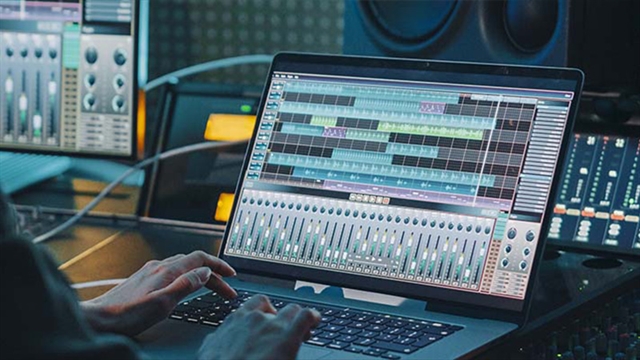
HÀ NỘI — Technology is gradually reshaping how learning materials are developed, educational activities are organised, student progress is tracked and professional skills are enhanced in arts and music.
Rather than simply supporting presentations, document searches and storage, digital platforms and AI are taking on a more active role in arts exploration, practice, creative work and feedback.
According to experts, AI has been tested in areas including artwork analysis, vocal and instrumental training, development of teaching materials and personalised learning.
However, the value of these technologies does not depends on the use of any single technology, but on how effectively they are integrated into teaching methods tailored to each art form.
Meanwhile, virtual and augmented reality, digital media and virtual performance environments are expanding learning and practice beyond the traditional classroom.
An experiment at the Việt Nam National Academy of Music (VNAM) clearly demonstrates this approach. Associate Professor and Doctor of Music Nguyễn Thị Tân Nhàn, head of VNAM’s Vocal Department, said that during the 2024–2025 academic year, the department implemented a folk song teaching model for more than 100 learners, including 50 intermediate students and 50 university students.
The model focused on two key areas: enriching cultural experiences and applying information technology.
First, the Vocal Department invited quan họ (love duet singing) and ca trù (ceremonial singing) artisans from the northern province of Bắc Ninh to engage in professional exchanges with lecturers.
Each lesson began by exploring the cultural context of the art forms before moving on to vocal techniques.
Field trips to Bắc Ninh and the northern province of Phú Thọ, the cradle of xoan singing, gave students opportunities to hear artisans perform traditional songs through oral transmission, participate directly in performances and discuss techniques such as breath control, vocal ornamentation and articulation.
In the second part of the experiment, lecturers were trained in audio recording and sound analysis. Students recorded themselves to identify errors in vocal ornamentation and articulation, used a digital repository of archival recordings, artisan-led lessons and traditional backing tracks, and submitted weekly video diaries for feedback on technique and expression.
Following the experiment, the proportion of students mastering vocal techniques and styles rose from 44 to 72 per cent at the intermediate level and from 60 to 88 per cent at the university level.
According to assessments by 15 lecturers, the rate of active learning increased from 35 per cent to 86.7 per cent, while passive learning fell from 65 per cent to 13.3 per cent.
The findings show that technology does not replace oral transmission, but helps make the teaching process more analytical and visual. Cultural experiences, meanwhile, help learners understand singing techniques in connection with language, performances and the living environment of folk music.
Balancing technology with cultural values
Experimental models using technology have begun to expand learning opportunities and improve the effectiveness of arts education. However, the process also raises a number of issues that need to be addressed, particularly the risk of cultural distortion and overreliance on algorithms when using AI.
Based on an open-ended questionnaire survey involving 100 respondents, Dr Nguyễn Thị Ngọc Điệp of Thủ Dầu Một University highlighted the dual impact of AI when introduced into traditional arts education.
The technology can help users access cultural data, recognise visual forms, recreate artistic styles, restore images, develop ideas and explore new ways of interpreting heritage.
However, heavy reliance on data and algorithms can also lead to cultural homogenisation, distort symbols, mix cultural elements inappropriately, limit hands-on engagement with materials and separate creative works from their local context.
"These risks need to be recognised from the outset of the teaching process," Điệp said.
"In arts education, an inaccurate result is not merely a factual error. It can also affect how learners understand, appreciate and interpret cultural values."
Điệp has also proposed a human-centred model of human-AI co-creation. The process should begin with learners exploring heritage and practising traditional methods, providing a cultural and practical foundation before they turn to AI.
They can then use AI to experiment and develop ideas, while the resulting outputs should be reviewed, refined and critically evaluated against their knowledge and understanding of the heritage.
Implementation should ensure cultural authenticity, verified data, transparent tools, copyright protection and traditional practice, with lecturers, artisans and communities helping to validate the results.
This approach shows that expanding arts education does not mean moving all learning activities online. Technology is valuable for extending learning beyond the classroom, expanding access to learning materials and creating more opportunities for practice, feedback and creativity.
Meanwhile, hands-on practice and engagement with the cultural environment remain essential for learners to understand the depth of artistic works, expressive techniques and the contexts in which heritage emerged.
Overall, the digital transformation of arts education, in line with the Politburo's Resolution 57, has shown promising results through a number of pilot programmes and initiatives.
To turn these early experiments into lasting innovation, successful models need to be further tested, refined and scaled up, ensuring that technology supports teaching and learning while remaining grounded in cultural values and human agency. — VNS
