Weather:
- Ha Noi 26oC
- Da Nang 26oC
- Ho Chi Minh 26oC
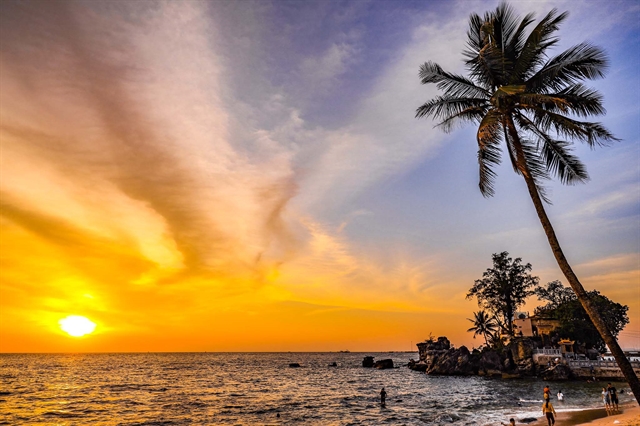
As afternoon fades over Phú Quốc Island, people begin gathering on the rocks around Dinh Cậu, waiting for the sun to sink into the western sea.
Standing on a rocky outcrop where the Dương Đông estuary opens onto the Western Sea, Dinh Cậu Shrine has long been a spiritual place for local residents, particularly fishing families. They come to pray for calm seas and safe journeys, while visitors are drawn by the old shrine, the sound of the waves and the wide views across the western horizon.
By late afternoon, the rocks around Dinh Cậu fill with people waiting for the sun to go down.
The history of Dinh Cậu has never been recorded in one definitive account. Much of it lives on through local stories passed down over generations.
One popular legend dates the shrine’s origins to around the 17th century, when settlers from central Việt Nam began arriving on Phú Quốc. At the time, the sea was both their livelihood and one of their greatest dangers.
According to the story, a group of fishermen was caught in a violent storm while at sea. With little hope of surviving, they were eventually carried by the waves towards a rocky outcrop near the mouth of the river and managed to reach safety.
The event was seen as an act of divine protection. Local people built a small shrine on the rocks in gratitude.
Sacred rocks
Over time, Dinh Cậu became an important spiritual site for the island’s fishing community. People worship Chúa Ngọc Nương Nương, together with Cậu Tài and Cậu Quý, who are believed to protect fishermen and bring peace and good fortune.
The stories may vary, but they all point to the same relationship between the islanders and the sea. For generations, fishing families have depended on the waters around Phú Quốc while living with the risks of storms and rough seas.
The original shrine was a simple wooden structure with a thatched roof. After several renovations, particularly in 1937, it was rebuilt in a more permanent form, with features typical of southern Vietnamese temple architecture, including red-tiled roofs, curved roof edges and a three-entrance gate.
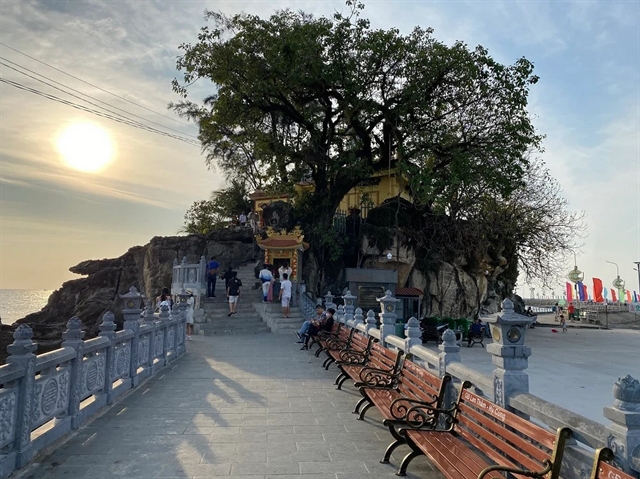
From the mainland, visitors follow a concrete walkway before climbing 29 stone steps to reach the shrine.
The red roof stands out against the sky. Dragon and phoenix motifs decorate the curved roof and other parts of the building, while the entrance bears the name “Dinh Cậu”.
Inside the main sanctuary are altars dedicated to Long Vương, Bà Chúa Ngọc, Cậu Tài and Cậu Quý. Red-and-gold lacquered couplets and carved details on the pillars and roof give the shrine a solemn, traditional appearance.
The setting, however, is what makes Dinh Cậu distinctive. From the rocks, visitors can hear the waves below and look out towards the open sea. The shrine feels less like a monument separated from its surroundings than a part of the landscape itself.
For locals, it is also more than an old temple. Its spiritual significance remains connected to the lives of people who have depended on the sea for generations.
Island rhythms
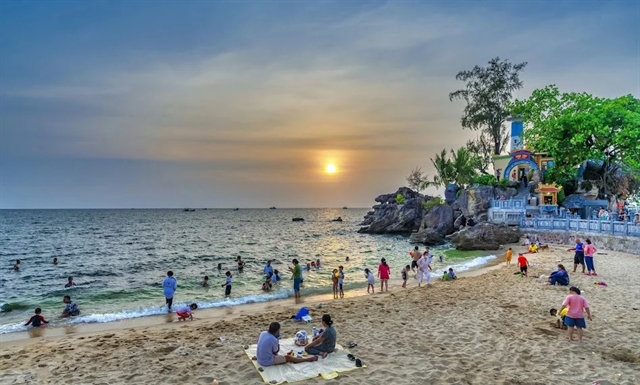
The area around Dinh Cậu is part of the everyday rhythm of Dương Đông. Next to the shrine is Dinh Cậu Beach, a modest stretch of sand where local residents often come in the late afternoon. It may not have the fame of some of Phú Quốc’s other beaches, but it has a quieter, more familiar feel.
People come to swim, sit by the water or meet friends after work. For visitors, it is a chance to see a less tourist-oriented side of the island.
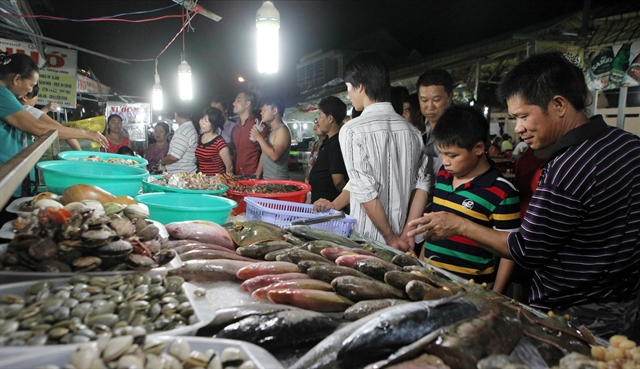
When darkness falls, the nearby Dinh Cậu Night Market begins to get busy. About 100m from the shrine, the market offers local dishes, seafood and snacks, as well as souvenirs and handicrafts made from sea shells and pearls.
It is easy to spend an entire evening in the area, starting with a visit to the shrine and the beach, watching the sunset and then heading to the market for dinner.
Dinh Cậu also remains the centre of an annual festival held on the 15th and 16th days of the 10th lunar month.
The festival is an occasion for locals to honour the deities worshipped at the shrine and pray for favourable weather, good catches and safe journeys at sea.
After the ceremonies, the atmosphere becomes livelier. Traditional activities such as boat racing, stilt walking, pot smashing and sack races bring people together. Depending on the scale of the festival each year, there may also be lion dances and folk performances.
For the local community, the festival is both a religious occasion and a time to gather, maintain traditions and remember the island’s close ties to the sea.
Sunset hour
The busiest time at Dinh Cậu on an ordinary day is often the hour before sunset. The best time to arrive is generally between 5pm and 6pm, depending on the season.
As the sun begins to sink towards the western horizon, people gather on the rocks and around the shrine, looking out to sea.
The light changes slowly. At first, the sun casts a warm golden glow across the water and the shoreline. The colour deepens as the sun drops, turning orange and then gradually shifting towards pink and purple.
The waves catch the changing light. For a few minutes, the rocks, the sea and the buildings along the shore seem to share the same warm colour.
Then the sun disappears. The sky darkens and the first street lights come on around Dương Đông. Some visitors leave the rocks for the beach, while others make their way towards the night market.
Above the water, Dinh Cậu remains where it has always been – a small shrine tied to the island’s fishermen, their stories and their hopes for safe journeys home.
The sunset is only one part of the attraction, but it is perhaps the moment when the place brings all of those elements together most clearly. — VNS
