Weather:
- Ha Noi 24oC
- Da Nang 26oC
- Ho Chi Minh 27oC
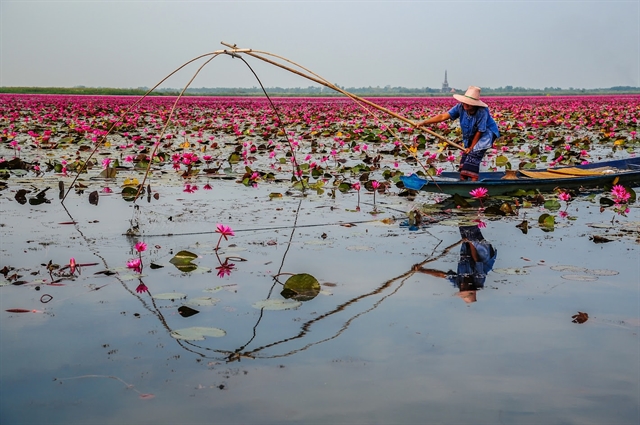
ĐỒNG THÁP — Đồng Tháp is leveraging its ecological, cultural and agricultural strengths while accelerating digital transformation to improve tourism products and visitor experiences, aiming to make tourism an important driver of local economic growth.
In implementing Politburo Resolution No. 26-NQ/TW, dated August 22, 2026, on developing Việt Nam’s tourism sector into a spearhead economic sector in the new era, Đồng Tháp Province has identified tourism as a driver of growth and economic restructuring.
Võ Phạm Tân, deputy director of the provincial Department of Culture, Sports and Tourism, said that to help tourism contribute to the goal of achieving double-digit economic growth, the sector was focusing on effectively tapping the province’s distinctive potential and advantages to build the image and brand of the new Đồng Tháp.
The province has three natural ecological zones: freshwater, mangrove and alum-water ecosystems. Each has its own characteristics, creating favourable conditions for developing a diverse range of tourism products.
The number of domestic and international visitors to the province has increased by more than 15 per cent annually on average, placing Đồng Tháp among the Mekong Delta localities with the highest growth rates.
Since the beginning of the year, Đồng Tháp has welcomed 5.5 million visitors, equivalent to 68.7 per cent of its annual target, including 432,000 international visitors. Direct tourism revenue reached VNĐ2.9 trillion (US$111.54 million), up 4 per cent year on year.
According to Nguyễn Thanh Phong, director of Việt Nhật Tourism Company in Mỹ Tho Ward, the number of visitors booking tours to Đồng Tháp has risen sharply in the first months of the year compared with normal periods.
The province’s many attractions have drawn large numbers of visitors, including Tân Thành Beach in Gò Công Đông Commune; Đồng Tâm Snake Farm, also known as the Centre for Research, Cultivation and Processing of Medicinal Materials, in Kim Sơn Commune; Thới Sơn Islet in Thới Sơn Ward; among others.
In recent years, both domestic and international tourists have increasingly sought experiential travel, exploring rural areas and taking part in activities that reflect local cultural identities, creating opportunities for the development of ecotourism.
At Tràm Chim National Park in Tràm Chim Commune, recognised as Việt Nam’s second Ramsar site and the world’s 2,000th Ramsar site, visitors can immerse themselves in nature, explore wildlife and observe species such as fireflies, butterflies, birds and ducks.
During the annual flood season, visitors can also explore the waterways, sample local specialities and experience traditional livelihoods such as casting nets, fishing with hooks, setting fishing traps and collecting fish from brush traps.
Alongside its ecological resources, Đồng Tháp is placing greater emphasis on preserving and promoting its cultural and historical heritage in connection with tourism development.
The province currently has 295 officially recognised historical and cultural relics and scenic sites, including five special national relics, 33 national relics and 257 provincial-level relics.
The special national relic of the Nguyễn Sinh Sắc Tomb is a prominent destination and also serves as a venue for educating younger generations about historical traditions.
Every year, on the death anniversary of Nguyễn Sinh Sắc, a scholar who was the father of President Hồ Chí Minh, the site welcomes tens of thousands of visitors from across the country.
The special national relic at the Ấp Bắc Victory Site in Tân Phú Commune is another significant destination for educating visitors about the nation’s struggle to defend the country.
Every year, the site welcomes tens of thousands of domestic and international visitors for sightseeing, study and research. Relic sites including Gò Tháp, Rạch Gầm-Xoài Mút, Ấp Bắc and Xẻo Quít have received attention for restoration and upgrading, helping diversify the province’s historical and cultural tourism products.
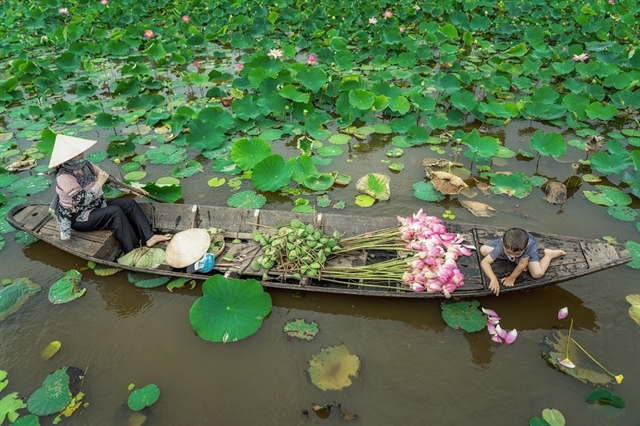
From quantity to quality
Đồng Tháp is focusing on tourism development based on science and technology, innovation and digital transformation.
Deputy Director Võ Phạm Tân said stronger digital transformation was gradually changing the tourism sector’s profile towards greater professionalism.
Connectivity, promotion, and marketing activities have been expanded across digital platforms, while sectoral information and data are gradually being connected and integrated into a shared database.
The province continues to maintain and promote the Đồng Tháp Tourism Information Portal and its smart tourism application for mobile devices, making it easier for residents and visitors to access information about destinations, services, itineraries and tourism events.
At many tourism sites and attractions, QR codes have been installed to provide information and automated interpretation of relics, craft villages and tourist attractions. Visitors can independently search for information and learn about local history and culture through electronic interpretation services.
In Sơn Quy and Gò Công wards and Gia Thuận and Tân Đông communes, among others, visitors can learn about historical relics and sites associated with historical figures from the Gò Công area in the eastern part of the province through the MAP4D digital mapping-based system for managing and promoting tourism and historical relics.
Nguyễn Công Bền, an officer at the Culture-Social Affairs Division of Tân Đông Commune, said that applying digital transformation to promote information about historical and cultural relics through MAP4D has helped domestic and international tourists discover the unique Tân Đông communal house.
Upon arrival, visitors can scan a QR code installed at the main entrance to learn about the history of the more-than-century-old communal house.
Alongside digital transformation, the province is strengthening links between agricultural OCOP products and tourism activities, helping increase product value and expand consumer markets.
Đồng Tháp currently has 1,061 OCOP products, including 820 three-star products, 233 four-star products, four five-star products and four potential five-star products.
The provincial Department of Agriculture and Environment, in coordination with relevant agencies, supports community and agricultural tourism sites in introducing, promoting and selling OCOP products through the provincial tourism information portal.
The province is also supporting the development and improvement of community-based, agricultural, and rural tourism models, as well as homestays and farm stays.
Đông Nghi Agricultural Cooperative in Long Hưng Commune combines agricultural production with farm tourism and experiential activities at its goat farm.
Visitors can learn about goat farming, tour the farm and see six lines of OCOP goat milk products made using organic-oriented production methods. The products have been well received by consumers, with demand increasing recently.
The Resolution of the first Đồng Tháp Provincial Party Congress for the 2025-30 tenure sets the goal of making tourism an important economic sector and turning the province into an attractive destination in the region and across the country.
The province is focusing on developing ecotourism, agricultural and rural tourism as its distinctive and core products, while tapping local cultural values and ecological resources to establish key tourism routes based on the advantages of the Tiền and Hậu rivers.
It is also seeking to capitalise on the potential of the Gò Công coastal area to develop resort and community-based tourism linked to mangrove ecosystem conservation and visits to high-tech aquaculture areas.
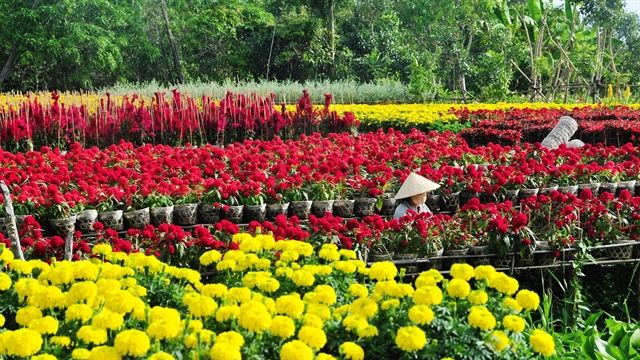
The province currently has more than 150 tourism sites associated with agriculture, communities, craft villages and ecotourism, stretching from the border area with Cambodia to the Gò Công coastal area.
Of these sites, 32 have been officially recognised by the provincial People’s Committee as tourism sites under the 2017 Tourism Law, while 14 OCOP products are linked to tourism.
Đồng Tháp has 91 tour operators, more than 400 tour guides and 455 accommodation establishments with over 7,900 rooms. Of these, 59 hotels are rated from one to three stars, while the remaining 396 accommodation establishments meet business requirements.
In 2026, Đồng Tháp aims to welcome 8 million visitors, including 870,000 international tourists, with total tourism revenue expected to reach VNĐ4.8 trillion. — VNS
