Weather:
- Ha Noi 19oC
- Da Nang 23oC
- Ho Chi Minh 29oC
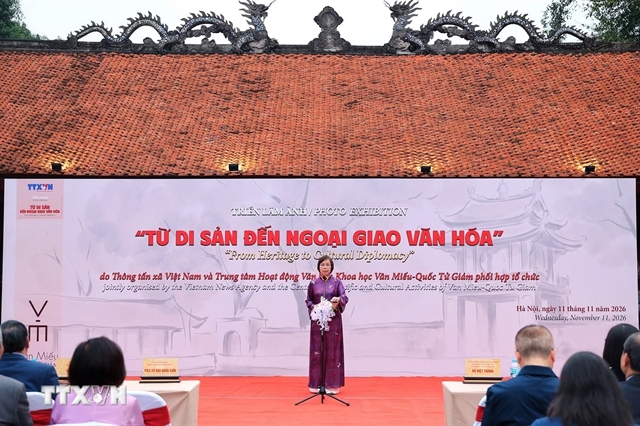
HÀ NỘI — The Vietnam News Agency (VNA), in coordination with the Văn Miếu- Quốc Tử Giám Centre for Cultural and Scientific Activities, on November 11 opened a photo exhibition entitled From Heritage to Cultural Diplomacy at the Special National Relic Site of Văn Miếu- Quốc Tử Giám (Temple of Literature - Imperial Academy), marking the 950th founding anniversary of Quốc Tử Giám (1076–2026).
Attending the opening ceremony were Deputy Minister of Foreign Affairs Ngô Lê Văn, Deputy Minister of Culture, Sports and Tourism Hồ An Phong, Deputy Secretary of the Hanoi Party Committee Nguyễn Văn Phong, and UNESCO Representative to Vietnam Jonathan Wallace Baker, leaders of VNA and the centre, among others.
In her opening remarks, VNA General Director Vũ Việt Trang, who is also Vice Chairwoman of the Party Central Committee's Commission for Publicity, said the 950-year history of Quốc Tử Giám reflects the profound cultural heritage of Việt Nam.
From the country's first national university, Quốc Tử Giám has become a symbol of the country’s tradition of valuing learning, respecting teachers, honouring talent and nurturing generations of Vietnamese with aspirations to study, develop their abilities and contribute to society.
These values are preserved in each architecture in this heritage space and embedded in the hearts and minds of Vietnamese people through a philosophy that cherishing knowledge means cherishing the future, while investing in people lays the foundation for national development, she noted.
The works on display will tell the story of a heritage site preserved, carried forward and passed down through generations. From Việt Nam's first national university to a venue for diplomatic activities, Văn Miếu - Quốc Tử Giám continues to affirm its status as a symbol of Vietnamese culture, connecting the tradition with the present and Việt Nam with the world.
Speaking at the event, Phong stressed that Văn Miếu - Quốc Tử Giám is a heritage site belonging not only to the Vietnamese nation but also recognised by UNESCO as a Memory of the World. Hencce, it should be promoted and introduced through diverse channels, particularly as the country enters a new stage of development. Beyond honouring Việt Nam's tradition of valuing learning, respecting teachers and appreciating talent, the site serves as a venue for introducing the country's long-standing civilisation, culture and national identity to international friends, especially its tradition of valuing and employing talented people, he said.
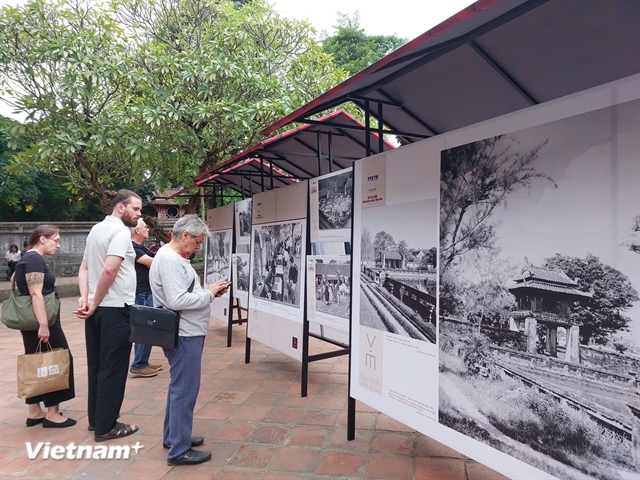
Featuring more than 60 selected photographs from VNA's archives, the exhibition presents images of Văn Miếu - Quốc Tử Giám, ranging from historical moments to today's cultural, educational and diplomatic activities. It highlights the site's heritage values while demonstrating the role of photographic archives in preserving national memories and promoting Vietnam's image to international friends.
The exhibition traces the journey from heritage to cultural diplomacy through photographs of visits by foreign heads of state, senior leaders and international dignitaries to Vietnam.
Among them are images of General Secretary of the Communist Party of Vietnam Central Committee Tô Lâm and his spouse visiting the site with French President Emmanuel Macron and his spouse in May 2025; President Lương Cường enjoying tea with Cambodian King Norodom Sihamoni in its tranquil setting in November 2024; and foreign leaders pausing before the 82 stone steles which were recognised as World Documentary Heritage by UNESCO.
The exhibition also features the vibrant cultural life at the site, from the Spring Calligraphy Festival, calligraphy and folk games to heritage education activities and initiatives honouring young talent.
Through its valuable national photographic archives, VNA aims to bring historical materials closer to the public. Each photograph not only tells the story of Việt Nam's tradition of valuing learning, respecting teachers and honouring talent, but also conveys a message about the power of cultural connections among nations. These values continue to serve as an endogenous strength, providing momentum and a solid foundation for the country to firmly advance in the new era.
Appreciating VNA's coordination with the Văn Miếu - Quốc Tử Giám Centre for Cultural and Scientific Activities in organising the exhibition, Phong said the agency's partnership with Hà Nội goes beyond preserving valuable archival materials, contributing to the development of databases and new approaches to promoting the heritage site's image among visitors and international friends.
Văn Miếu was built in 1070, while Quốc Tử Giám was established in 1076 as Việt Nam's first national university, where generations of talented individuals were educated to serve the cause of national construction and defence. Over 844 years of development, the Confucian examination system held 183 royal examinations, producing 2,898 doctoral laureates and deputy doctoral laureates. Văn Miếu – Quốc Tử Giám is a symbol of Việt Nam's respect for knowledge, talent and teachers, and the tradition of learning. These values are embodied in its architecture, cultural space and the system of 82 doctoral steles, recognised by UNESCO as a World Documentary Heritage. — VNA/VNS
