Weather:
- Ha Noi 26oC
- Da Nang 27oC
- Ho Chi Minh 27oC
By Thanh Nga
As the buckwheat flower season arrives, the Đồng Văn Karst Plateau stirs from its slumber. Once a cherished part of Hà Giang Province, now nestled in Tuyên Quang Province, this enchanting landscape has carved a special place in my soul.
Despite my extensive travels, nothing captivates me quite like this region, where the beauty of nature shifts with the seasons. The lush, winding mountain roads, ranging from the humble to the majestic and from the wild to the charmingly romantic, leave me in awe.
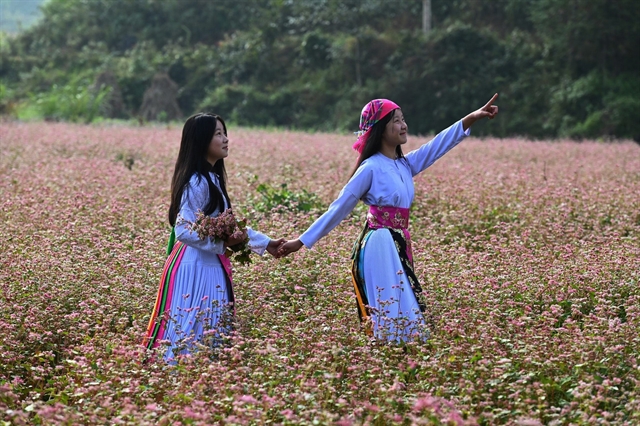
Amid the breathtaking scenery, buckwheat flowers defy the rugged rocks, their pristine white petals transitioning into gentle pinks and finally transforming into a stunning reddish-purple by season’s end.
When the first winter winds whisper through the mountain crevices, the plateau awakens, revealing its unique allure. Though the rocks remain gray and the peaks lofty, a delicate cloak of pink, purple and white flowers blankets the valleys and slopes, creating a breathtaking panorama.
From Đồng Văn and Mã Pí Lèng to Sủng Là and Phố Cáo, carpets of vibrant colours spread without end, softening the rugged highlands and casting a spell upon all who venture here. This flower season not only enchants visitors, but tells a story of resilience and cultural richness in this northern region.
Stretching from October through December, these three months feel like a promise from the rocky land to those who cherish nature’s beauty. Hoài Thu, a flower enthusiast from Hà Nội, expressed her joy: “Standing amid this vast field of delicate blossoms makes my heart feel serene again.”
A journey through nature's canvas
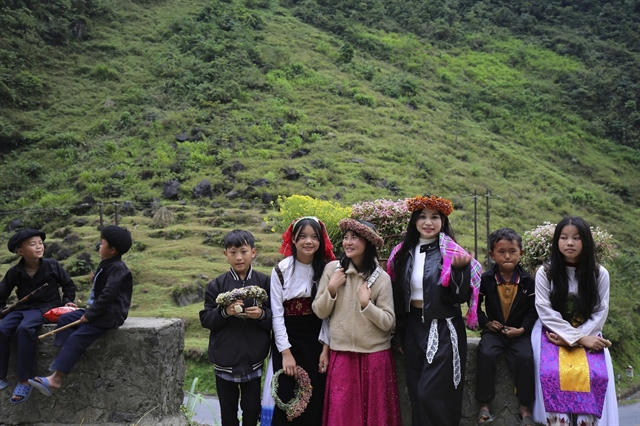
The Đồng Văn Karst Plateau, a UNESCO Global Geopark, is a testament to hundreds of millions of years of geological marvels. In the morning, mist envelops the jagged rocks, lending them a silvery sheen. By midday, the sun bathes each slab in golden warmth, and as evening falls, Mông flute melodies dance through the air, summoning the winds, clouds and the return of blossoming beauty.
The juxtaposition of flowers emerging from the rocks, an enchanting paradox, has become a hallmark of the plateau. From deep valleys to soaring slopes, the landscape is a tapestry of soft blossoms, inviting visitors to witness the vitality of this rugged terrain.
Đồng Văn Commune Party Committee Secretary Nguyễn Tiến Dũng said: “We want visitors to see the flowers as a symbol of new life in this rocky region.”
This year, locals cultivated the buckwheat flowers with care, ensuring they bloomed at their peak for visitors. Walking through beloved sites like Lũng Cú, Sủng Là, Lũng Cẩm and Mã Pì Lèng, it's impossible not to be swept away by the enchanting floral displays.
Lũng Cẩm, with its warm yellow earthen houses, resembles an ancient painting highlighted by the delicate blossoms, while Mã Pì Lèng transforms into a softer spectacle, where flowers weave along the mountain's steep slopes, appearing and disappearing against towering rock formations.
The spirit of the flower season is also embodied by the local residents, who tidy their homes, clear pathways and plant additional flowers in anticipation of guests.
Chairman of the Lũng Cú Commune People's Committee Trần Đức Chung noted: “After the corn harvest, many villages along the road to Lũng Cú Commune cultivated buckwheat flowers, inviting tourists to capture memories and creating an additional source of income.”
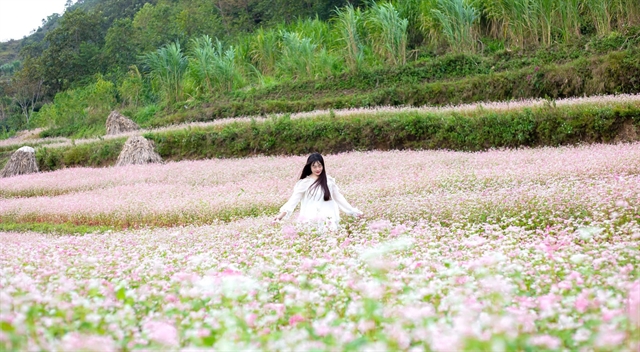
Lũng Cú Village resident Thào Mó Sính said: “Our family has planted about 1,000sq.m of buckwheat flowers. With the blooms in full glory, many tourists come to take photos. Just a small fee of VNĐ10,000 grants them entry into our garden.”
A season of timeless memories
Since 2015, Tuyên Quang has celebrated the buckwheat flower festival, marking a distinctive cultural feature for the northern region.
Each year’s theme varies, but it always resonates with the essence of this rocky plateau, capturing the sounds of the Mông flute, the rhythms of the Lô Lô drum and the vibrant weaving traditions of the Mông people, all present at the love market of Khâu Vai.
As the melodies of the Mông flute echo through the mountains, and the xòe dance and folk songs drift in the air, each visitor can feel the pulse of a land in the throes of development.
For residents, the flower season doesn't just represent nature’s beauty — it also provides a pathway out of poverty through community tourism and agricultural offerings.
Quaint homestays by the flower fields, lively highland markets and warm, simmering rice wine over glowing fires make winter on the rocky plateau both inviting and heartwarming.
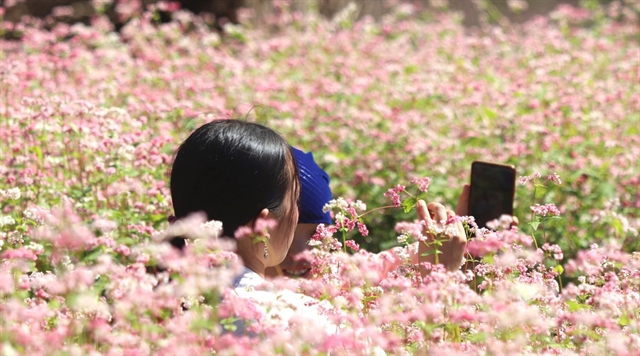
Mua Sính Chứ, a 76-year-old from Lô Lô Chải Village, reflected on the integral role of flowers in their lives: “This flower has long been a part of our culture. Its seeds are food, its stems are vegetables, its leaves are medicine. Now, it helps preserve our village and traditions.
"When visitors come, the Lô Lô people showcase drum dances and weaving, bringing joy to our community.”
This year’s festival, themed 'The Land Where Rocks Blossom', coincided beautifully with the peak of the flowers. Without ostentation, the festival unfolded as a subtle highlight against the blooming backdrop, a blend of music, cultural richness and the warmth of the people.
Nguyễn Trung Ngọc, Director of the provincial Department of Culture, Sports and Tourism, said: “The buckwheat flower season transcends tourism; it honours the culture of our people.”
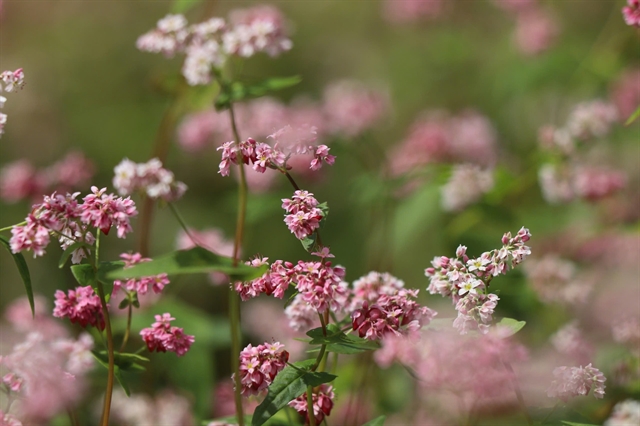
The allure of the buckwheat flower season in Tuyên Quang is magnetic, instinctively slowing down passers-by, as if rushing might cause one to overlook the fragile beauty that surrounds them.
People pause to admire the ever-changing hues of blossoms under the sun, listen to the gentle whispers of the wind through the valleys and embrace the feeling of smallness in the face of nature’s grandeur, opening their hearts to a more expansive, peaceful and generous world. VNS
