Weather:
- Ha Noi 26oC
- Da Nang 26oC
- Ho Chi Minh 26oC

By Nguyễn Hằng
NGHỆ AN — A young teacher from one of Việt Nam’s smallest ethnic groups is stepping into national politics with a message she says begins in the classroom.
Twenty-four-year-old teacher Lo Thị Bảo Vy, a member of the Ơ Đu ethnic group, says that if elected as a National Assembly deputy, she would raise her voice to prioritise education as the most sustainable pathway for her community’s development.
“If given the opportunity to become a National Assembly deputy, I want to begin with education, because education is the most sustainable path to help my village escape poverty and move forward,” Vy said.
Currently, Vy is a teacher at Quỳnh Lập A Primary School in Tân Mai Ward in the central province of Nghệ An Province.
She is among the seven youngest female candidates standing for election to Việt Nam’s 16th National Assembly.
She is also the first person from the ethnic group ever to run for the legislature.
The Ơ Đu community numbers just over 700 people, mainly living in Nga My Commune in the province, making it one of the five smallest ethnic groups in Việt Nam.
If elected, Vy hopes to advocate policies that increase investment in schools in mountainous and remote areas, expand scholarship opportunities and provide stronger support for students from small ethnic groups.
She also wants education to be closely linked with the preservation of indigenous cultural heritage.
As someone born and raised in the community, Vy says she deeply understands the challenges facing education in ethnic minority areas, from difficult learning conditions and a lack of soft skills among students to limited career guidance and the persistent gap in opportunities between mountainous and lowland regions.
Another issue that weighs heavily on her mind is the gradual disappearance of the Ơ Đu language and script.
For her, preserving the language is not just about maintaining a means of communication. It is about safeguarding memories, protecting the roots and nurturing the pride of an entire community.
“I hope the Ơ Đu language will not only survive in books but live again in the everyday lives of our own children.”

Growing up in the fields
Vy’s journey began in Văng Mon Village, Nga My Commune in the province, where her childhood was closely tied to farming fields and long journeys to school.
Born into a farming family with four sisters, she grew up watching her parents toil year-round to earn enough to support the family and fund their children’s education.
As the eldest child, Vy helped with household chores and cared for her younger siblings from an early age.
Despite these responsibilities, she consistently excelled academically.
Recognising her dedication to study, her family encouraged her to sit the entrance exam for the district’s Ethnic Minority Boarding Secondary School after she completed primary education. She passed with high marks.
The school was nearly 80km from home, meaning she could return to her village only once a month.
However, her early independence helped her adapt quickly to the new environment.
With the support of teachers and classmates and through her own determination, Vy continued to achieve strong academic results.
After completing secondary school, she gained admission to the provincial Ethnic Minority Boarding High School, a school regarded as a dream destination for many ethnic students.
During her time there, Vy not only focused on her studies but also actively participated in extracurricular activities organised by the school.
Thanks to her perseverance and commitment, she was recognised as an outstanding student throughout all three years of high school.
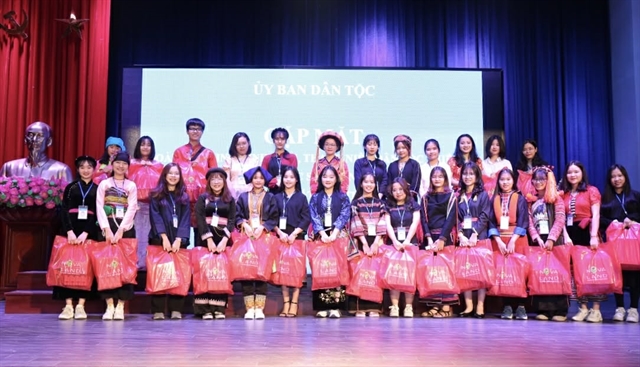
In 2020, she was among 145 students honoured at a national ceremony recognising outstanding ethnic pupils, students and young people.
The event was jointly organised by the Committee for Ethnic Affairs, the Ministry of Education and Training and the Hồ Chí Minh Communist Youth Union.
Becoming a primary school teacher
In the 2020 national high school examination, Vy scored 25 points, a relatively high result. Her only aspiration was to study education.
She subsequently enrolled in the Primary Education Faculty at Vinh University.
Asked why she chose teaching instead of other fields, Vy said she wanted to continue the unfinished dream of her mother, who once received an admission letter to study teaching but could not pursue the career because of family hardship.
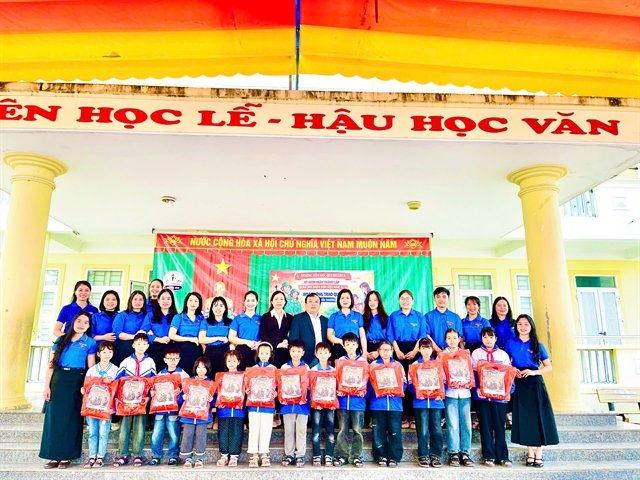
After graduating from the university, Vy successfully passed the civil service recruitment exam and began teaching at Quỳnh Lập A Primary School.
From a young Ơ Đu student, she has now become a primary school teacher with a mission not only to teach literacy but also to instil confidence and resilience in students from mountainous communities.
One of youngest NA candidates
Vy is running in Electoral Unit No.1 of the province, which covers dozens of mountainous communes across the province.
Hoàng Nghĩa Hiếu, Deputy Secretary of the provincial Party Committee, Chairman of the provincial People’s Council and head of the provincial Election Committee, told the media that the locality had agreed to nominate 21 candidates to compete for 16 seats in the 16th National Assembly, in addition to seven candidates nominated by central agencies.
The candidate list broadly meets or exceeds central guidelines on the representation of women, young candidates, ethnic minorities and non-Party members.
“Notably, this is the first time Nghệ An has introduced a young female candidate from the Ơ Đu ethnic group for the National Assembly,” he said. “Vy’s nomination is therefore an important milestone and a source of pride for the Ơ Đu community.”
Her candidacy not only affirms the role of the Ơ Đu people within Việt Nam’s community of 54 ethnic groups but also demonstrates how members of even the smallest ethnic group, with the support of national policies and education opportunities, can grow and take on responsibilities in the country’s highest State body, the National Assembly.

A balanced legislature
With women accounting for 45.37 per cent of candidates and those under 40 representing 21.64 per cent, the 16th National Assembly is moving towards a more balanced structure that blends experience with innovation.
Many of the young female candidates born in the 2000s bring the advantages of a digital generation: global perspectives, strong critical thinking skills and a keen awareness of contemporary issues.
From legal specialists and teachers in remote areas to farmers’ association officials, these women are demonstrating that young women are not only capable of assuming significant social responsibilities but can also inject fresh energy into building a more modern, action-oriented and people-centred legislature.
Selecting younger candidates for the National Assembly is seen as a strategic step reflecting a long-term vision for developing future leadership.
For these young female intellectuals, the election offers an opportunity to contribute directly, gain experience and fulfil their civic responsibility to the nation.
They represent not only their gender or their ethnic group but also a generation of Vietnamese women who are confident, independent and resilient.
Across the country, particularly among female voters, there are high expectations for the “bright blossoms” — women who are expected to help carry forward the proud tradition of Vietnamese women in the cause of national development and defence.
For Vy, her candidacy is not merely a personal story.
It represents the belief that ethnic-group citizens can rise through knowledge and perseverance, provided they have the determination and the right opportunities. — VNS
