Weather:
- Ha Noi 28oC
- Da Nang 30oC
- Ho Chi Minh 27oC
German-born architect Chris Bosse has spent more than a decade living and working in Việt Nam, gaining deep insight into the country’s evolving urban landscape. Through projects by his firm LAVA, including designs for HCM City’s September 23 Park and Hà Nội’s DETECH towers, Bosse told Việt Nam News reporter Thu Ngân about how cities can balance modernisation with cultural identity
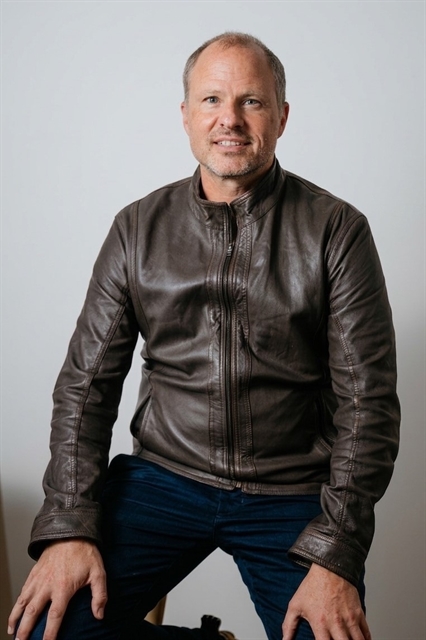
Inner Sanctum: Could you please introduce yourself and your career?
I’m Chris Bosse, co-founder of LAVA and director of LAVA Asia Pacific, as well as former Adjunct Professor at the University of Technology Sydney.
I’ve worked across Europe, Asia, and the Middle East on projects ranging from urban master planning to public spaces, engaging with cities at multiple scales from large-scale strategic visions to detailed, human-centred environments.
Despite frequent international travel, I have visited, lived and worked in Việt Nam for more than 10 years, experiencing first-hand the local energy and cultural depth of its cities, particularly the intensity and vibrancy of everyday life in HCM City.
That long-term connection to this country has given me a unique perspective on how Việt Nam’s urban landscape is rapidly evolving — balancing tradition and modernisation, density and livability, while increasingly recognising the importance of public space, environmental systems and human experience as key drivers of its future development.
Inner Sanctum: How have you observed the transformation of Việt Nam in general, and HCM City in particular, in relation to public space development?
After more than a decade living and working in Việt Nam, I’ve observed clear positive changes in the way cities prioritise public life, invest in accessible green spaces, and recognise the social and economic value of well-designed urban environments. There is a noticeable shift from purely functional or traffic-driven planning toward more human-centred spaces that support leisure, culture and community.
There is growing recognition that public spaces are not leftover land or decorative elements, but essential urban infrastructure.
They act as the green lungs of the city, providing environmental benefits, climate resilience and biodiversity, while also supporting social cohesion, health, and local economies.
In Việt Nam, this understanding is becoming more visible through projects that integrate landscape, water, mobility, and public life into a single, cohesive experience.
In HCM City, the key shift lies in reconnecting the city with its natural systems, particularly the Sài Gòn River and its networks of canals, while simultaneously upgrading parks and open spaces into active, multi-layered public environments.
The focus is moving toward accessibility, walkability, and multi-functionality, where public spaces are no longer static but adaptive, supporting daily life across different times and user groups.
Inner Sanctum: As the city progresses with major infrastructure initiatives like the metro system and International Financial Centre (IFC), how do you perceive the role of public spaces in shaping a more interconnected and accessible urban environment?
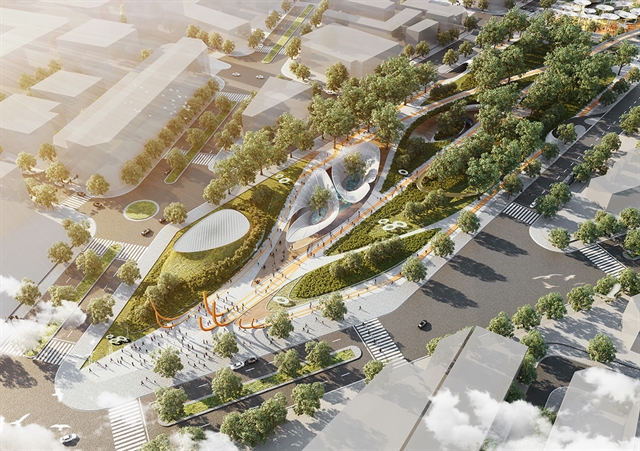
The most significant progress over the years is how cultural and memorial public spaces in HCM City are increasingly linked to the city’s traffic growth and broader urban systems. They are no longer isolated green areas but are being redefined as active connectors within the urban fabric — supporting mobility, social life and economic activity simultaneously.
One specific case study is September 23 Park, which was originally conceived as a relatively casual park for social gathering, but is now being envisioned as a key node in the future metro and bus system. With the integration of the underground metro station, surrounding transport links, and potential retail and pedestrian networks, the park is evolving into a multi-layered urban hub.
The second improvement is the growing integration of nature-based solutions with technology to enhance comfort and usability in public spaces, particularly in response to the tropical climate. There is a clear shift toward designing environments that are not only green, but also performative — managing heat, water, and energy in intelligent ways.
Inner Sanctum: With your experience working across major cities in Asia, how do you view HCM City’s trajectory toward becoming a “megacity”?
Drawing on my living experience and past projects in cities such as Sydney, Beijing and other global urban centres, I’ve observed defining characteristics of megacities, which include a constant tension between density and livability, rapid infrastructure expansion and the challenge of balancing mobility with quality public space.
HCM City has its own distinct identity, shaped by its tropical climate, its fine-grain urban fabric and its highly active street life.
Unlike more formally planned cities, HCM City operates through a dynamic, almost organic system of movement and interaction. Its canals, rivers, and informal public spaces already function as a living network.
The opportunity for HCM City is not to replicate other megacities, but to refine and elevate what already exists — strengthening connections between water, greenery, and mobility, while enhancing comfort and accessibility. If done well, it can become a model for how rapidly growing tropical cities evolve by amplifying their natural and cultural assets rather than overriding them.
Inner Sanctum: If you were to take on the role of a master planner for HCM City, what architectural plans would you propose for the city’s development?
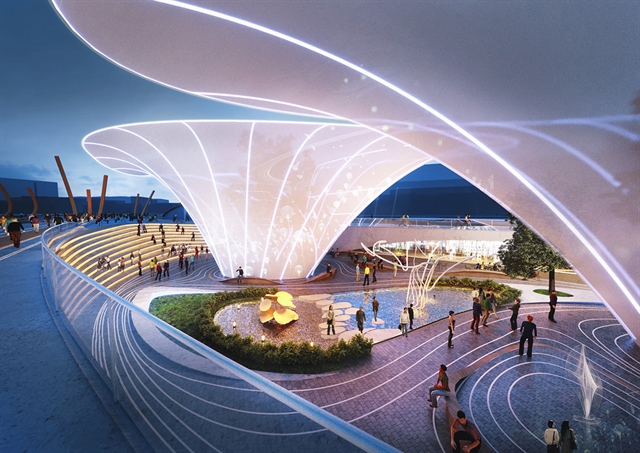
Public spaces in HCM City have the potential to become more sustainable, digitally enabled, and socially inclusive, evolving into central hubs for multicultural exchange. With the right balance between nature and technology, these spaces can respond to climate, support diverse user groups, and reflect the city’s open and dynamic character. They can move beyond static parks toward adaptive environments that provide comfort, connectivity, and identity.
In the coming years, we could see the emergence of projects that integrate riverfront revitalisation with continuous pedestrian networks, smart mobility systems and climate-responsive landscapes.
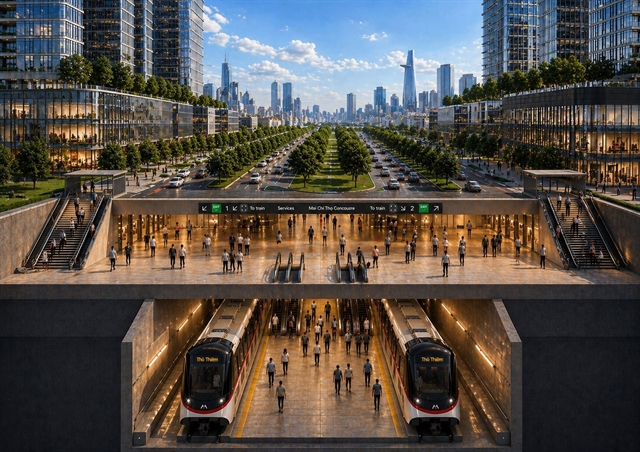
In the long term, architectural development for public spaces could focus on areas such as integrated blue-green infrastructure, where rivers, canals and parks form a connected ecological network; adaptive microclimates using canopy systems, water and vegetation; and lightweight, modular structures that enable efficient construction and long-term flexibility. There is also strong potential in combining public space with mobility infrastructure to create multi-level, multi-use environments that connect metro systems, pedestrian flows, and commercial activities.
There is also a critical need to address mobility as part of the public space agenda, particularly the transition from petroleum-based motorbikes and cars toward electric, shared, and low-emission systems. In a city like HCM City, where mobility and street life are deeply intertwined, this shift is not only a technical upgrade, but a fundamental transformation of urban experience.
For HCM City, the opportunity is unique. The city already has a strong culture of two-wheel mobility. This makes it easier to transition from petrol motorbikes to electric scooters and shared systems without fundamentally changing behaviour. If supported by infrastructure such as charging stations, shaded parking, and integration with metro and bus networks, this shift can happen relatively quickly.
In parallel, public space design can actively support this transition. Parks, riverfronts and key urban corridors can incorporate charging hubs, micro-mobility stations, and seamless connections to public transport. Streets can be rebalanced to prioritise pedestrians, cyclists and electric mobility, creating safer and more inclusive environments. Reduced traffic pressure also frees up space for greenery, social activity, and local commerce.
Ultimately, the move toward electric shared mobility is not just about transport — it is about city-making. It creates a cleaner, healthier, and more connected urban environment. — VNS
