Weather:
- Ha Noi 35oC
- Da Nang 26oC
- Ho Chi Minh 32oC
Võ Dung
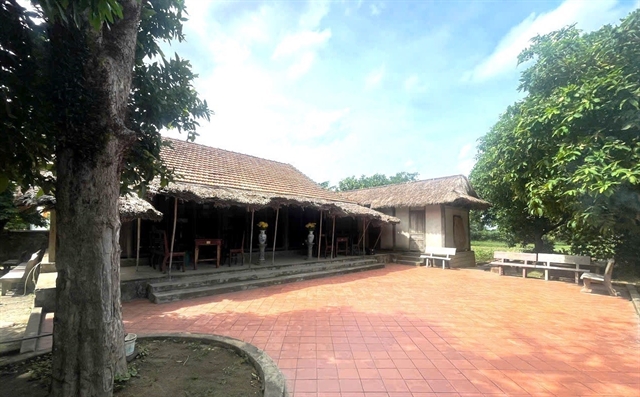
QUẢNG TRỊ — In An Xá in Lệ Thủy Commune, the old wooden house where General Võ Nguyên Giáp spent his childhood continues to draw visitors from across Việt Nam, more than a century after his birth.
For many, the house in the former province of Quảng Bình, now part of the enlarged Quảng Trị Province, is more than a memorial. It is a place to retrace the general’s early footsteps, hear stories of the boy who grew up to become one of Việt Nam’s most revered military leaders of the 20th century, and reflect on the legacy he left behind.
As the country marks Gen Giáp’s 115th birthday on August 25, people young and old are once again making their way to An Xá to burn incense, pay their respects and learn more about the life behind one of the most celebrated figures in modern Vietnamese history.
Each visitor has a different journey and story, but when standing before the house where the general was born and raised, differences in age and hometown seem to fade away, replaced by shared respect and pride.
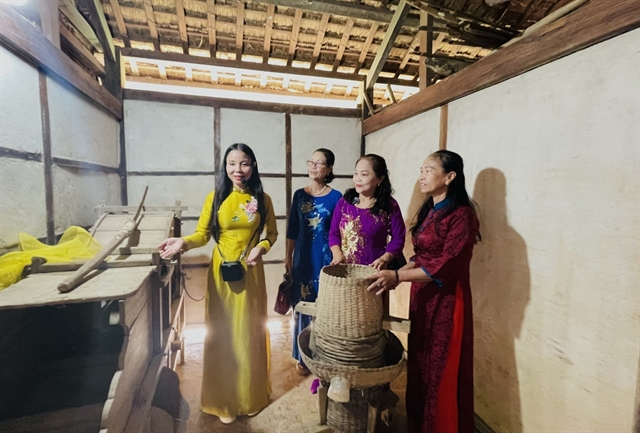
According to Nguyễn Thị Thu Hoài, a tour guide at the memorial site, the site receives around 100 visitors a day on average. Visitors come from across the country, while overseas delegations, organisations, individuals and Vietnamese expatriates also come to pay tribute to the general.
During peak periods such as Lunar New Year, major national holidays and the general’s birthday, the number of visitors can exceed 1,000 a day, she said.
Shared memories
Hoài said what impressed her most while welcoming and guiding visitors was the sincere and profound affection people hold for Gen Giáp.
“Images of war veterans have left an especially lasting impression on me. Some are elderly and once fought on fierce battlefields, while others met General Võ Nguyên Giáp when they visited his ancestral home in Lệ Thủy," she said.
“They cannot hold back their emotions or tears as they recall memories of the general with the deepest affection, respect and admiration.”
Võ Thị Phương, a resident of Lệ Thủy Commune, said: “My friends and I from the 1983-1985 school cohort, now living in different provinces and cities, had the opportunity to reunite here and visit the General Giáp memorial house. It is an opportunity to burn incense in remembrance of and express gratitude to an outstanding son of our homeland and country.”
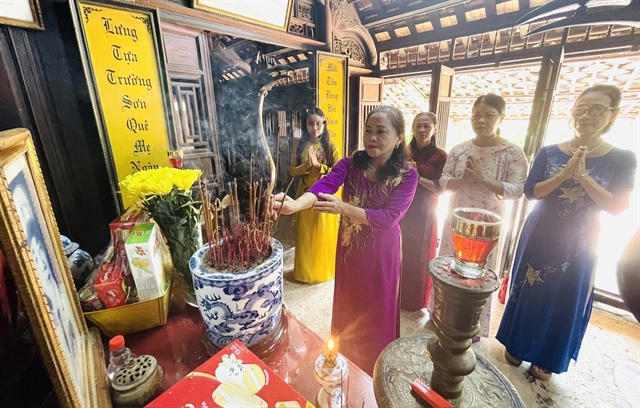
She said it was the land, people and traditions of his homeland that helped nurture Gen Giáp, a man of great character, intellect and heart.
“Returning here today is a way to remember the general and also remind ourselves to live in a way worthy of our homeland and roots,” she said.
Trần Hoài Thanh, 55, from Đà Nẵng, said he had returned to the general’s homeland in Lệ Thủy several times, but this visit held special significance.
“This time, I brought my mother, wife and children to visit the memorial site. It is an opportunity for different generations of my family to experience first-hand the place associated with the life of one of the nation’s great generals," Thanh said.
"I hope this will help nurture my children’s love for their homeland and country and their national pride, while giving them additional motivation to study and improve themselves.”
Passing history on
For people in Lệ Thủy, as well as visitors from across the country, the memorial house is a place to express their affection, pride and deep gratitude for the nation’s distinguished general.
For those working as guides at the site, every story about the general is an opportunity to pass history on to younger generations.
“It is an honour and a source of pride for me to personally welcome visitors and introduce them to the general’s homeland, life and career," said tour guide Hoài.
"I am fully aware that this is a special responsibility, so I always strive to carry out my work with dedication and a strong sense of responsibility, paying close attention to accuracy in every detail of my presentations.”
Carrying the legacy
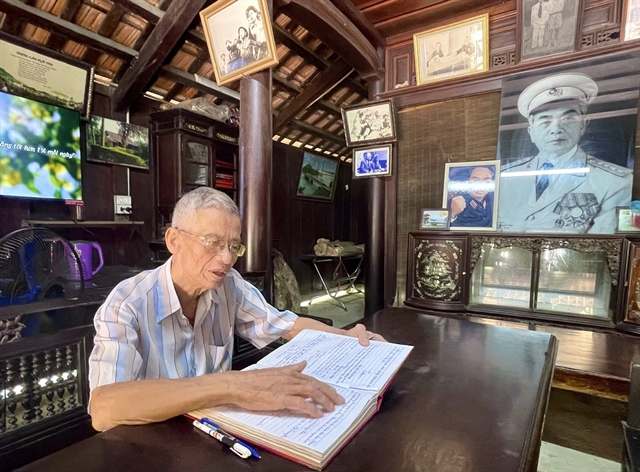
Võ Đại Hàm, 83, a relative of Gen Giáp, has spent much of his life caring for and preserving the family traditions associated with the general’s childhood in Lệ Thủy. He still remembers vividly the general’s advice.
“General Giáp always had deep affection for his homeland and regularly showed concern for the lives of local people. Whenever he returned home, he urged residents to focus on production and develop their household economies," Hàm said.
"General Giáp always gently reminded local officials to maintain solidarity, support one another and work together to build increasingly progressive and civilised villages, so that people could enjoy better lives.”
"The general also stressed that officials must care for the people through concrete actions, focus on economic development, help people overcome hunger and reduce poverty, gradually improve their living standards and protect the environment so that people can enjoy increasingly prosperous lives."
Phan Thanh Cường, secretary of the Lệ Thủy Commune Communist Party Committee and chairman of the commune People’s Council, said the pride associated with the general’s homeland was being translated by the local Party organisation, authorities and residents into determination to develop the locality rapidly and sustainably.
“We are always deeply aware that pride must go hand in hand with responsibility. That means the responsibility to build an increasingly developed homeland and improve people’s lives,” he said.
Home to nearly 50,000 residents, Lệ Thủy Commune is focusing on economic development and improving people's living standards, tapping its strengths in agriculture, trade and services, as well as its central location.
The locality aims to develop agriculture towards higher value and efficiency and establish value-chain links, while promoting trade and services and upgrading and expanding the commune's central area to create more jobs and raise incomes.
Lệ Thủy aims to meet all criteria for a new-style rural commune, move towards becoming a modern new-style rural commune by 2030, and gradually develop into an urban area covering the entire commune.
Alongside economic development, the locality is focusing on developing its people, educating younger generations and preserving traditional cultural values.
Cultural values such as the boat-racing and swimming festival on the Kiến Giang River, Lệ Thủy folk singing and other intangible cultural heritage associated with the homeland of General Võ Nguyên Giáp have been identified as important resources for development. — VNS
