Weather:
- Ha Noi 30oC
- Da Nang 30oC
- Ho Chi Minh 33oC
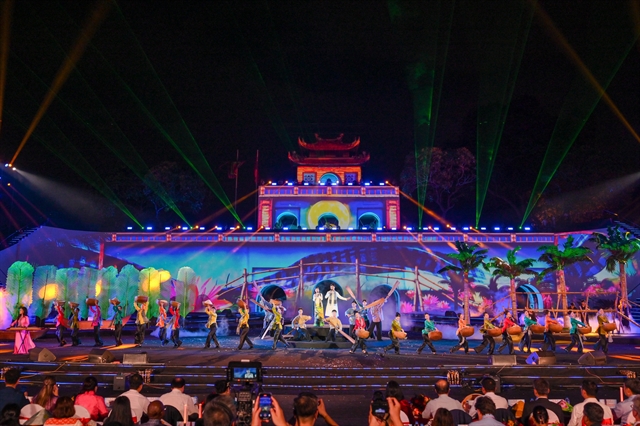
HÀ NỘI — The capital has pledged to become the country's leading centre of tourism, a "nucleus" in ushering and coordinating connections of regional tourism development, and one of the three national tourism "growth poles", according to the city's authority.
The target is set out in a plan signed and issued this week by the Hà Nội People's Committee to implement Action Programme No 20-CTr/TU dated October 9, 2026, of the city's Party Committee following the Politburo's Resolution No 26-NQ/TW dated August 22, 2026, on developing Vietnamese tourism into a key economic sector in the 2026-30 period.
According to the plan, Hà Nội also aims to become a centre for cultural and heritage tourism, creativity, events, and high-quality tourism services in the region and the world. It will develop tourism in a smart, modern, green, and sustainable direction, as a key economic sector, an important driver of economic growth and restructuring, and a means of promoting the image and enhancing the capital's and the country's position and soft power.
Specifically, by 2030, the city vows to welcome and serve about 47-50.5 million tourists with an average growth rate of 7.0-8.5 per cent per year during the 2026-30 period, including 13-15 million foreign visitors and 34-35.5 million domestic tourists.
Total revenue from tourism is projected to reach approximately VNĐ295-340 trillion (about US$11.4-13.2 billion) with an annual average growth rate of 17-21 per cent during the 2026-30 period and contribution to the city's GRDP expected to reach 7.5-8 per cent. The number of tourist accommodation rooms is targeted to increase by at least 10,000 high-end rooms in the four and five-star category.
It also set a goal of having three tourist destinations recognised as National Tourist Sites, including Hoàn Kiếm Lake with its surrounding areas and the Hà Nội Old Quarter; Ba Vì tourist area; Hương Sơn National Special Monument and Scenic Area; and other tourist areas that meet the criteria.
Under the plan, the capital will establish at least three craft villages and ancient villages as high-quality tourist destinations that can compete regionally and globally and meet appropriate international criteria, titles, and awards.
Currently, the ancient village of Đường Lâm in Sơn Tây Town has achieved the title of best tourist village in the world, while the Vạn Phúc silk weaving village in Hà Đông Ward and Bát Tràng ceramic village have achieved international titles for craft village tourism.
Hà Nội will fundamentally establish a synchronised smart tourism ecosystem, a database, and a digital tourism platform for the capital city connected to the national tourism database in a green and sustainable direction and strive to digitise and complete data connection for 70 per cent of tourist areas, attractions, and key destinations.
To achieve the targets, the plan outlines several key tasks and solutions to be implemented in the coming period, such as regulations on developing interdisciplinary coordination in handling licensing and approval procedures for cultural, tourism, sports, trade, and international events in the city.
It should review and shorten licensing times for organising conferences, seminars, and international events; upgrade and improve some of Hà Nội's typical tourism products and other regional tourism products by train.
A programme will be organised to enhance tourism culture, build a tourism environment, and promote the spirit of "every Hanoian is a tourism ambassador", linked with building an image of elegant and civilised Hanoians.
The plan will also focus on effectively implementing the Hà Nội People's Council Resolution No. 34/2026/NQ-HĐND on developing the night-time economy; review and select areas with sufficient conditions; and develop a pilot tourism-entertainment-commerce model operating for the full day.
Centres for commerce, tourism and shopping destinations with a high proportion of international visitors meeting service inquiries will be selected for implementing the value-added tax refund mechanism while coordinating with central agencies and relevant units to prepare the necessary conditions for implementation in accordance with current regulations.
Hà Nội vows to complete investment conditions for recognising three national tourist areas of Ba Vì; Hương Sơn National Special Monument and Scenic Area; Hoàn Kiếm Lake area, its surrounding area, and Hà Nội Old Quarter.
It will complete the establishment and implementation of the detailed planning project at a scale of 1/500 and the project on preserving and developing craft, ancient villages, and cultural spaces combined with tourism in key communes and wards to become tourist destinations meeting international standards.
The destinations include craft villages of Vạn Phúc silk weaving, Bát Tràng ceramics, mother-of-pearl inlay, Chuyên Mý lacquerware, Đường Lâm ancient village, and Minh Châu local cultural and historical space.
Cultural industry products with brands of the capital, national, and international brands are developed relevant to specific market segments in Hoàn Kiếm and Cửa Nam wards.
The plan will also focus on building new cultural industry centres and business and cultural districts in the 2026-2030 period, linked to tourism.
The development of culinary tourism centres and organising annual festivals of food and craft villages and streets will be among the city's goals, along with promoting exports of the culinary value chain and brand to the world market.
Three to five new pedestrian streets will be established linking with culinary streets, cultural performances, and night tourism, while three to five new agricultural and rural tourism models and two to three professional sports tourism complexes are also built, according to the plan.
Cultural, tourism, and entertainment spaces around Hoàn Kiếm Lake and West Lake will be developed to attract approximately 5 million visitors annually. The ecosystem of products 'Hà Nội 12 Months-12 Colours of Experience' and the brand 'Autumn Hà Nội' will also be built to connect heritage, cuisine, craft villages, art, green tourism, shopping, accommodation, conferences, and events.
The HanoiGo platform is tasked with completion, operation, and data integration in Q4/2026, providing multilingual information on products, schedules, destinations, services, businesses, reference prices, and contact/booking methods.
HanoiGo platform, a digital touchpoint, will be completed and put into operation to provide information and interaction with tourists while the city's tourism product catalog is standardised and integrated onto the digital platform in a multilingual format, providing unified information on products, itineraries, destinations, services, businesses, reference prices, and contact/booking methods.
Cultural and artistic events and festivals associated with tourism development will be elevated, including Thăng Long-Hà Nội Festival, Hà Nội Creative Design Festival, and World Culture Festival in Hà Nội. The capital will conduct research and organise other events such as international music and street art festivals.
Regarding digital transformation, Hà Nội aims to have 70 per cent of tourist areas, attractions, and key destinations digitised and data-connected by 2030; and to fundamentally establish a synchronised smart tourism ecosystem connected to the national tourism database.
It will constantly boost digitisation of tourist destinations and build a shared data platform to support tourism services, while also developing tourism businesses, forming linkages and dialogue mechanisms, and building and implementing the Green Tourism Action Programme for the period 2026-2030. — VNS
