Weather:
- Ha Noi 30oC
- Da Nang 29oC
- Ho Chi Minh 28oC
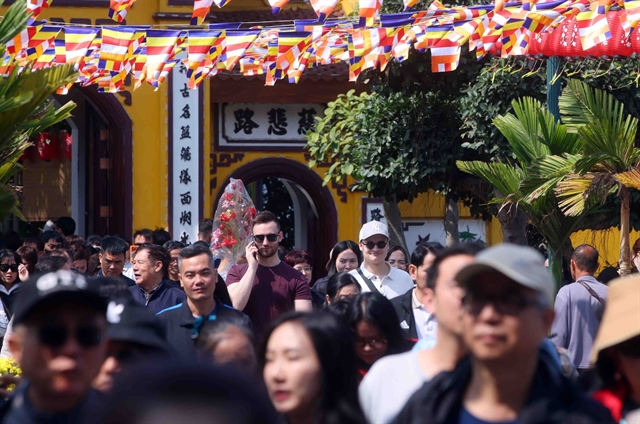
HÀ NỘI — Hà Nội is estimated to welcome about 1.34 million travellers during the nine-day Lunar New Year (Tết) holiday from February 14–22, up 36.3 per cent year-on-year, according to the municipal Department of Tourism.
The department reported that the capital city served 217,000 foreign tourists and 1.13 million domestic travellers during this period, representing year-on-year increases of 55 per cent and 33.2 per cent, respectively, while total tourism revenue reached VNĐ4.87 trillion (over US$187.5 million), up 40.2 per cent.
This strong growth underscores Hanoi’s robust tourism appeal from the start of the new year. The structure of international source markets continued to expand, with key markets, including China, the Republic of Korea (RoK), India, France, the UK, the US, Germany, and the Philippines.
The average room occupancy rate for hotels and serviced apartments reached about 66.8 per cent, up 1.2 percentage points year on year, while the 4–5-star hotel segment recorded occupancy of over 72 per cent. Many accommodation establishments reported strong early bookings and longer stays throughout the Tết holiday.
A key highlight of Hà Nội's tourism during this year’s Tết holiday was the stronger focus on cultural experiences, interactivity of products at tourist sites. A series of heritage sites and cultural spaces hosted activities rich in traditional Tết atmosphere, combining folk art performances with introductions to craft villages and intangible cultural heritage.
A range of new tourism products integrating modern technology were also introduced, adding distinctive appeal. Notable examples include the “Ký Ức Cột Cờ" (Flag Pole Memories) tour featuring 3D mapping performances at the Thăng Long Imperial Citadel; a “digital historical site and festival space” model piloted at the Cổ Loa Festival; and the rollout of e-ticketing, QR code control and AI-powered cameras at the Hương Pagoda Festival.
In addition, night-time urban tourism products, night cycling tours and cultural experience tours themed continued to attract visitors, helping extend their stays and boost spending.
Visitor numbers surged at key attractions during the period from February 14–20. The Văn Miếu–Quốc Tử Giám (Temple of Literature) site welcomed nearly 120,000 visitors, followed by the Hương Pagoda with more than 76,600, the Thăng Long Imperial Citadel with over 49,000, and the Cổ Loa Citadel with more than 38,800.
In addition, free admission at 17 heritage sites facilitated greater access for residents and tourists to visit and experience the capital’s cultural spaces.
To achieve these results, direction and management were implemented early and in a coordinated manner, the municipal Department of Tourism issued a series of directives to improve service quality at key tourist sites, particularly special national relics; strengthen the management and organisation of festivals in connection with tourism development; and step up tourism promotion during the Tết holiday.
Accommodation facilities, shopping centres and qualified food and beverage establishments proactively prepared infrastructure and manpower, decorated spaces with Tết themes, and organised cultural experience activities such as rural-style markets, food fairs and traditional art performances. Many hotels rolled out promotional packages, including complimentary room upgrades combined with cultural experiences, to attract longer-staying guests.
The impressive growth recorded during the Tết holiday provides an important foundation for Hà Nội's tourism sector to sustain its growth momentum in 2026, move towards sustainable development, and enhance the capital’s position on the regional and international tourism map. — VNA/VNS
