Weather:
- Ha Noi 29oC
- Da Nang 28oC
- Ho Chi Minh 30oC
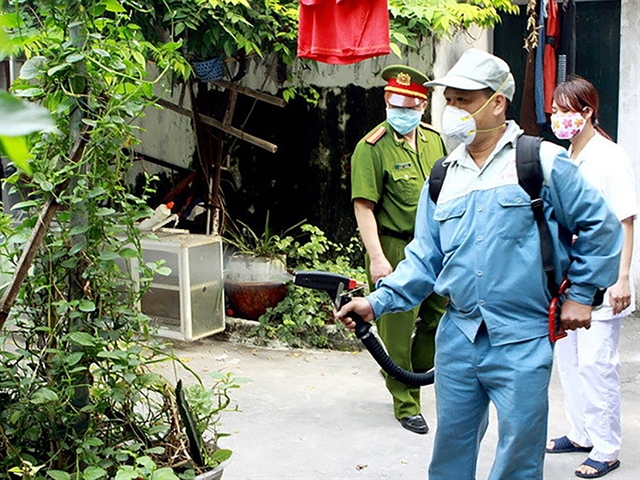
HÀ NỘI — As the Law on Disease Prevention is set to take effect on July 1, 2026, Hà Nội’s health care system has been stepping up efforts to improve the quality of preventive medicine.
Local authorities have identified this period as a crucial window to standardise data and personnel, and to ensure the city is fully prepared to take advantage of upcoming policies.
The year 2025 ended with both positive and challenging developments in the capital’s preventive health care landscape. The most notable success was the effective control of dengue fever, with 6,628 cases recorded — nearly a 30 per cent decrease compared to 2024, and no deaths reported.
However, measles saw a strong resurgence, with 4,532 positive cases, a sharp increase from just 573 cases the previous year. The rise mainly occurred in rapidly urbanising areas, where high population mobility has created gaps in community immunity.
Although total dengue cases declined significantly over the year, epidemiological developments toward the end of the year showed unusual patterns, raising concerns for disease prevention and control.
Võ Hải Sơn, deputy director of the Việt Nam Administration of Disease Prevention, said climate change is disrupting traditional epidemiological patterns.
“Over the past year, natural disasters, storms and floods were complex and prolonged from May to October. This is one of the reasons some infectious diseases, especially dengue fever, continued to rise contrary to usual patterns,” he said.
The challenge lies not only in fluctuations in case numbers, but also in unpredictable environmental changes and risk factors, forcing the preventive health system to remain on constant alert.
Data shows that many communes and wards are severely lacking equipment and chemicals for epidemic prevention and control. Ten communes and wards currently have no operational ultra-low volume chemical sprayers, while 73 have not met the minimum requirement of three machines per unit. Five communes and wards have no mosquito-killing chemicals, and 42 units have run out of larvicide.
Hà Nội Department of Health director Nguyễn Trọng Diện identified shortcomings in data management as a major bottleneck.
“Software systems are not synchronised, causing many indicators to be reported on different platforms and overloading the commune level. In 2025, there were cases of incorrect disease reporting, with confusion between seasonal influenza and Influenza A/H5N1 due to this overlap,” he said.
He also pointed to personnel difficulties, noting that many cultural and social affairs divisions lack medical professionals yet must manage numerous sectors, from social welfare to food safety. This poses significant risks in the event of health incidents and needs to be addressed before the Law on Disease Prevention takes effect, he added.
The Law on Disease Prevention, which will replace the Law on Prevention and Control of Infectious Diseases, is scheduled to take effect on July 1, 2026, alongside Resolution 72-NQ/TW of the Politburo of the Communist Party of Việt Nam on breakthrough measures to strengthen the protection, care and improvement of public health.
To prevent prolonged and widespread outbreaks in Hà Nội, the local health sector has been implementing synchronised technological and workforce solutions, Sơn said.
Diện added that digital transformation has been identified as a key solution.
“The city’s health sector is building an integrated software platform that unifies management systems from preventive health care and population management to food safety, reducing reporting burdens at the local level,” he said.
Hà Nội will also apply artificial intelligence based on big data to analyse disease patterns and support more accurate policymaking. Enhancing workforce capacity also remains a top priority, he said. — VNS
