Weather:
- Ha Noi 28oC
- Da Nang 27oC
- Ho Chi Minh 28oC
Hà Nội has unveiled its 100-year master plan, aiming to transform the capital into a global hub for innovation and liveability through a shift towards a multi-centred urban model and the development of the Red River as a key economic and ecological corridor. Vietnam News reporter Thanh Nga spoke with James Chew of enCity Urban Solutions in Singapore, part of the planning consortium, for further insights.
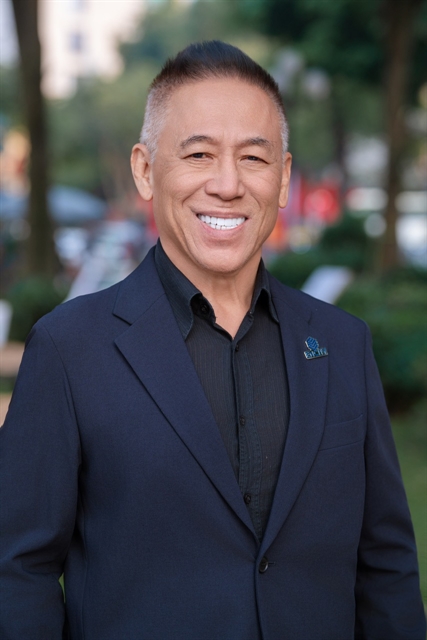
Inner Sanctum: What is your connection to this historic planning initiative for Hà Nội?
I specialise in sustainable urban implementation, governance and investment solutions. I spent more than a decade with the Singaporean Government working on Singapore’s Master Plan and Concept Plan – the very frameworks that guided the development of the Singapore we see today. Before that, I worked for the British government, contributing to master planning in metropolitan London.
Currently, I am representing enCity Urban Solutions in Singapore. We specialise in high-impact development strategies and urban solutions. We are deeply honoured to have served as part of the international consulting consortium that collaborated closely with local authorities to co-author this historic Hà Nội 100-Year Vision Master Plan.
Our focus has been to infuse the best global practices in sustainable development and urban governance to help Hà Nội gracefully navigate its next economic era while strictly preserving its priceless cultural soul.
Inner Sanctum: In practical terms, what does this high level of ambition mean for the capital’s immediate development priorities?
It represents a radical and deliberate shift away from simple geographic expansion toward high-value, quality-driven development. The city's investment priorities are immediately shifting toward building smart, resilient infrastructure and a robust technology ecosystem with the Hòa Lạc Hi-Tech Park serving as the core research and development engine.
For the everyday citizen, this brings genuine hope for a vastly improved quality of life. The plan commits to multi-dimensional targets such as expanding the digital economy's share to 50 per cent of GRDP, drastically boosting urban greenery, and achieving a 100 per cent urban wastewater treatment rate by 2035. It means prioritising human well-being, public health, and a cleaner environment over raw industrial scale.
Inner Sanctum: The plan outlines a structural shift toward a multi-centred urban model. How realistic is this transition, given the city’s current dense urban layout and population concentration?
It is a highly realistic and entirely necessary transition because it is backed by a powerful technical framework: a mass transit backbone. The plan maps out nine distinct growth poles and an expansive railway network organised around a "ring-and-radial" layout.
Crucially, this transition does not attempt to forcibly displace communities. Instead, it leverages transit-oriented development (TOD) to anchor highly attractive, self-contained sub-centres outside the historic core. By connecting these hubs via high-speed mass transit that reaches the centre within 15 minutes, we create a practical "15-minute city" reality.
This naturally decompresses inner-city density, offering citizens modern amenities, shorter commutes, and greener environments right on their doorsteps.
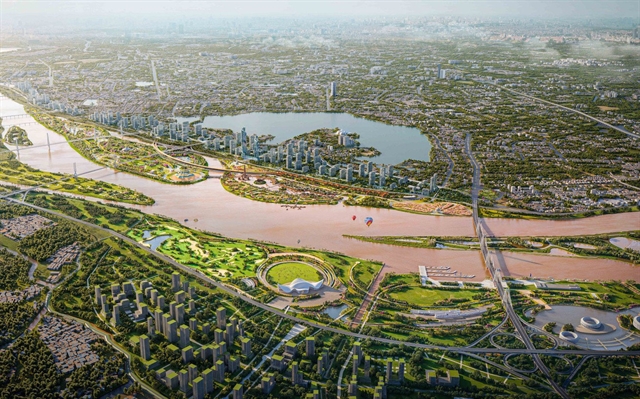
Inner Sanctum: The Red River is identified as a central ecological and economic corridor. What specific opportunities does this create for the capital, and what risks must be managed?
The opportunity it creates is magnificent: transforming an under-utilised geographic barrier into a vibrant, central green landscape boulevard that unites the northern and southern sectors into a single capital fabric. It unlocks public spaces for iconic cultural parks, continuous pedestrian paths, running trails, and a booming, low-impact eco-tourism river economy.
The core risk that must be meticulously managed is hydrological safety and climate resilience. Any waterfront development must strictly respect natural floodways and safeguard existing dikes.
Inner Sanctum: The riverfront is expected to blend public green spaces with commercial and service developments. How can Hà Nội successfully balance economic use with environmental sustainability and flood control?
The key lies in adopting the principle of living with nature rather than fighting against it.
Along the riverbanks and natural floodplains, development should strictly prioritise low-density eco-parks, linear forests, and public sports fields that can safely accommodate seasonal water level fluctuations. Premium commercial and service landmarks should be stepped back onto higher ground and linked tightly with transit nodes.
Furthermore, by piloting nature-based solutions alongside multi-functional underground stormwater retention facilities, Hà Nội can capture early-season heavy rainfall, significantly reducing inner-city waterlogging while naturally recharging its groundwater.
Inner Sanctum: Hà Nội’s historic core remains under intense pressure from urban growth. Under this new plan, how can the city better manage the delicate balance between urban redevelopment and heritage preservation?
The plan introduces a framework to address this exact tension. In the historic core – including the Old Quarter, French Quarter and ancient citadel areas – heritage preservation is absolute. The plan tightly controls high-rise additions and purposefully lowers building coverage to free up land for green parks and public utilities.
This balance can be achieved by transferring development pressures away from the historic core and toward the newly planned outer urban rings and TOD station areas. Furthermore, degraded blocks should undergo smart, compact redevelopments under strict architectural codes.
This restores safety and introduces modern comforts for residents without erasing the timeless charm, character, and romance of Hà Nội's historic streets.
Inner Sanctum: Based on your experience, which elements are most applicable to Hà Nội, and where do you foresee constraints?
The most directly applicable elements are Singapore's hallmark strategies in meticulous long-term land stewardship, optimised underground utility networks, and high-impact TOD execution. Concentrating high-density skyscrapers precisely at mass transit nodes to safeguard widespread public green space is transferable and has been incorporated into this plan.
The primary constraint lies in the sheer scale, historical layering, and complex land realities of Hà Nội compared to Singapore. The local leadership will need to exhibit immense institutional agility, leveraging specific new mechanisms under the Capital Law to effectively manage urban regeneration and mobilise public-private partnerships without disrupting citizen livelihoods.
Inner Sanctum: From your experience working on master plans across Vietnamese cities, what are the biggest challenges in ensuring that a century-long vision is implemented consistently over time?
The single greatest challenge for any 100-year vision is institutional friction and policy drift across different political tenures. To prevent this, the plan must be successfully institutionalised beyond physical paper.
This is why Hà Nội’s current launch of the digital 3D digital twin platform is such a brilliant breakthrough. By digitalising the city's zoning, infrastructure capacity, and investment data, the plan can be managed transparently and in real time, driven by data, rather than administrative discretion.
Moving forward, the critical task will be maintaining strict, independent technical oversight and training an agile, professional leadership cadre that treats urban growth as an enabling force rather than a bureaucratic constraint.
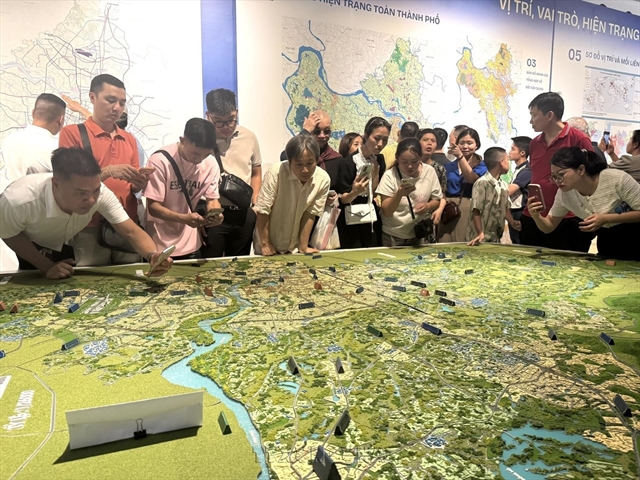
Inner Sanctum: How does a 100-year vision serve as a practical framework rather than just a symbolic milestone?
A 100-year vision is not a rigid, unchanging blueprint; rather, it establishes an enduring strategic framework. True urban planning must solve immediate daily challenges while protecting the long-term habitat for future generations.
When we look a century ahead, we are defining what is non-negotiable for a healthy life: preserving vital green spaces, adapting to a changing climate, and safeguarding basic resource security.
Major infrastructure like transit lines and public parks takes years to build but shapes a city's destiny for generations. By setting a permanent, clear vision, the city government gives communities and businesses immense predictability, ensuring that short-term growth never compromises the long-term well-being of our children.
Inner Sanctum: Looking ahead 20 or 30 years, what indicators will show that Hà Nội is successfully moving towards its vision of a liveable global capital, and what signs would suggest it is falling short?
In that time, success will be measured directly by the everyday experiences of Hà Nội's citizens. The clear indicators of success will include public transit ridership reaching 40-45 per cent; inner-city rivers like the Tô Lịch and the Nhuệ running clear and clean; a top-tier rating on the global Human Development Index; and young global tech innovators and creatives choosing Hà Nội as their premier operating hub in Asia.
Conversely, the signs of falling short would be the continuation of chronic localised flooding, stagnant traffic congestion along the ring roads, unmanaged sprawl eating away at the designated green corridors and a lack of data transparency that turns away high-calibre international investment.
However, looking at the profound political will and the advanced digital governance tools deployed today by the Hà Nội administration, I have immense hope and confidence that the city is firmly steering toward a highly liveable, magnificent future. — VNS
